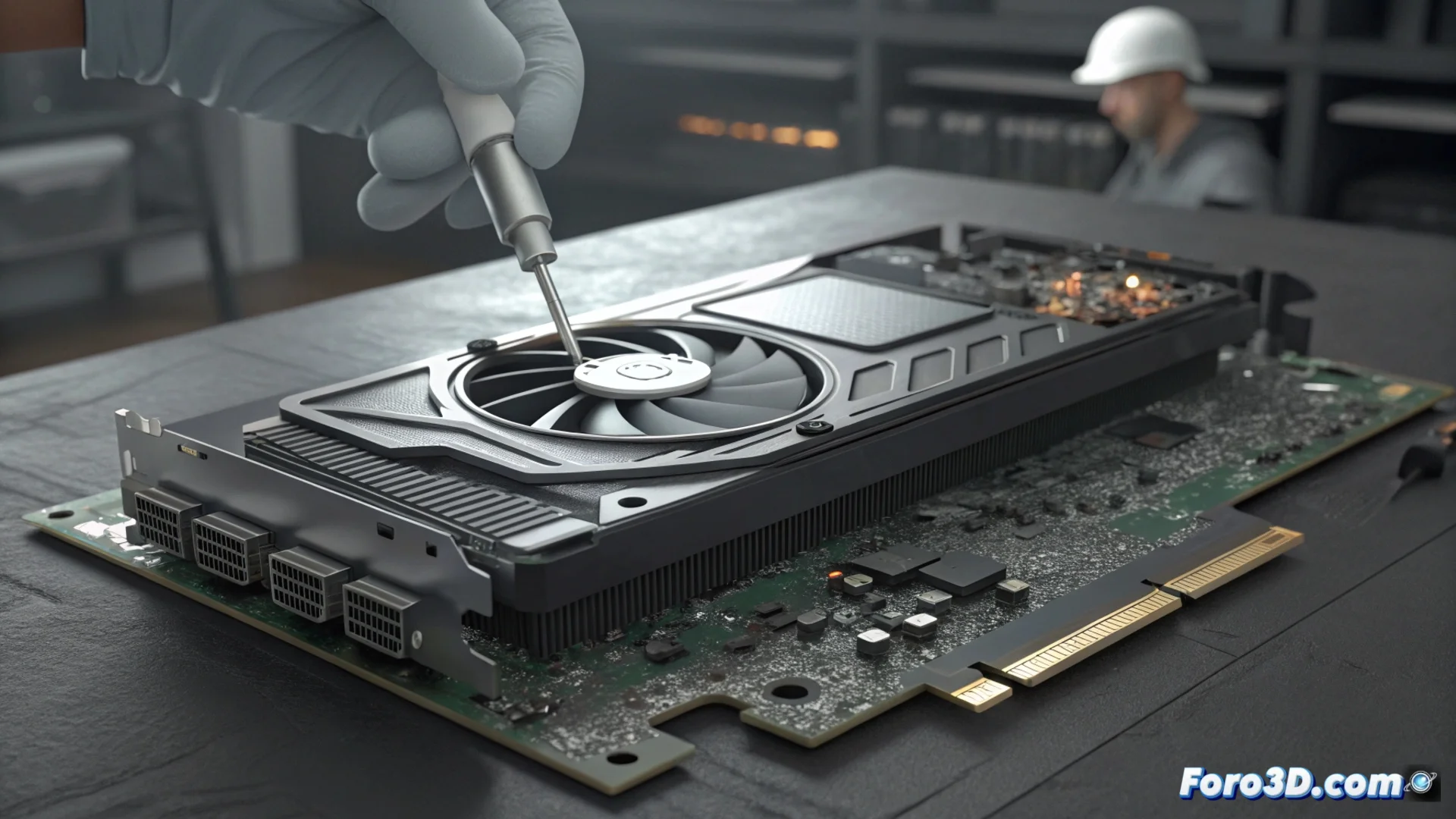
Gigabyte Changes the Thermal Material in Its New RTX 50
Gigabyte corrects its cooling strategy for the next generation of GPUs. The company confirms that its RTX 50 models, starting with the RTX 5070 Ti WINDFORCE OC V2, will stop using the phase-change compound that caused problems and will return to conventional thermal pads. A significant shift to ensure thermal stability. 🔄
The Failure of the "Server-Grade" Compound
The material that Gigabyte promoted as high-end server thermal gel turned out to be a source of issues. Numerous RTX 40 series card owners reported that, with heating and cooling cycles, the compound would shift away from the GPU core. This phenomenon, known as "thermal pumping," caused the chip temperature to rise progressively, degrading performance.
Key problems reported by users:- Migration of the material away from the contact area with the graphics chip.
- Progressive increase in operating temperatures with use.
- Need to manually replace the compound to fix the issue.
It seems the lesson about not experimenting with critical materials in consumer products has finally been learned.
Back to Proven: Thermal Pads
For the Blackwell architecture and RTX 50, Gigabyte will opt for a more conservative solution. Silicone or graphite thermal pads are an industry standard precisely because of their reliability and predictable behavior. This change is a direct response to the negative feedback from the community and aims to provide consistent thermal performance throughout the product's lifespan.
Advantages of using thermal pads:- They do not migrate or pump out of position with temperature cycles.
- They maintain more stable thermal conductivity over time.
- Their factory application is generally more uniform and controlled.
A Necessary Change to Regain Trust
This move by Gigabyte is seen as an attempt to correct a design error and regain user trust. While some may consider it a late decision, especially for those who had to intervene in their new graphics cards, it sets a precedent for the next generation of products to be more robust and reliable from day one. 🛠️