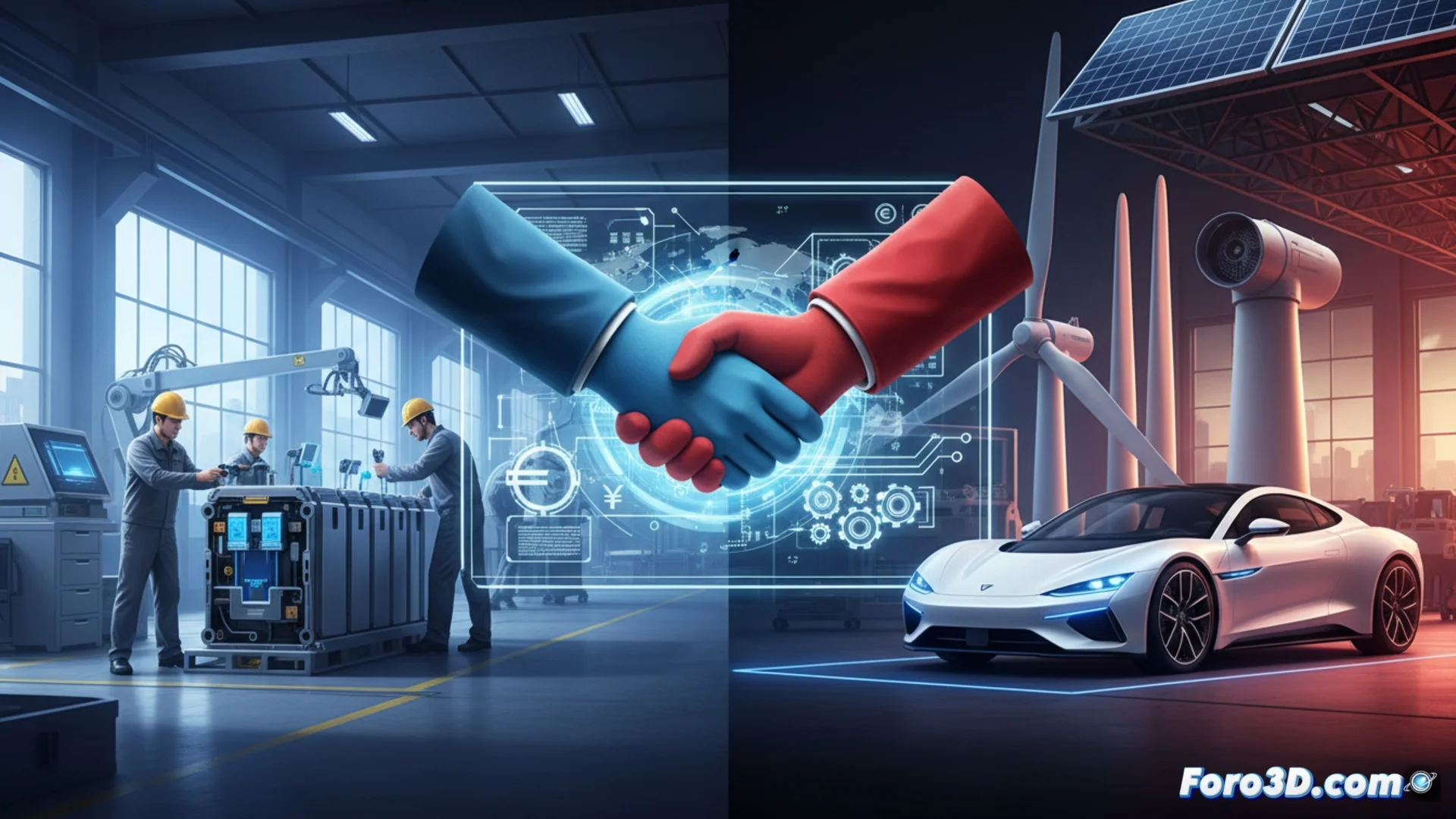
Germany Analyzes the Growing Chinese Industrial Presence in Its Territory
German authorities are closely examining how Chinese corporations are increasing their operations within their borders. Companies like CATL are already building plants to manufacture batteries, bringing their supply chains closer to the heart of Europe. This phenomenon creates a complex landscape of opportunities and challenges for the German economy. 🏭
Opportunities and Benefits of the Chinese Arrival
The establishment of these factories brings direct investment and creates local jobs. Additionally, it stimulates collaboration in technological fields, establishing links between universities and research centers from both nations. For Germany, this represents a way to strengthen its electric mobility ecosystem and accelerate its transition to clean energies.
Key Positive Impacts:- Create employment in regions where the new manufacturing plants are installed.
- Attract foreign capital that modernizes existing industrial infrastructure.
- Facilitate exchanges of knowledge between academic and scientific institutions.
Inviting a competitor to set up its factory next door is like asking a shark to teach you how to swim: you might learn quickly, but you never know when it will decide you're part of the menu.
The Competitive Challenge for German Industry
At the same time, China's rapid progress in strategic sectors such as machinery, renewable energies, and electric vehicles exerts significant pressure. State initiatives like Made in China 2025 and massive investment in research have enabled the Asian giant to match or surpass Western rivals in several fields. German manufacturers, with their historical dominance in these markets, now face aggressive competition backed by vast financial resources. ⚡
Factors Driving Chinese Competition:- Government programs that subsidize and prioritize key industrial sectors.
- An intensive focus on research and development of proprietary technology.
- The ability to scale and produce at very high volumes with reduced costs.
The Regulatory Debate in the European Union
This context leads Germany and the European bloc to actively debate how to regulate foreign investment and safeguard their technological advantage. Analysts point out that Chinese advances have been fueled by state aid and mechanisms for technology transfer. The central goal is to find a balance: allow beneficial cooperation without risking European strategic industrial autonomy and capacity. This involves establishing clearer rules on investment, know-how sharing, and defining the limits of Chinese participation. 🛡️