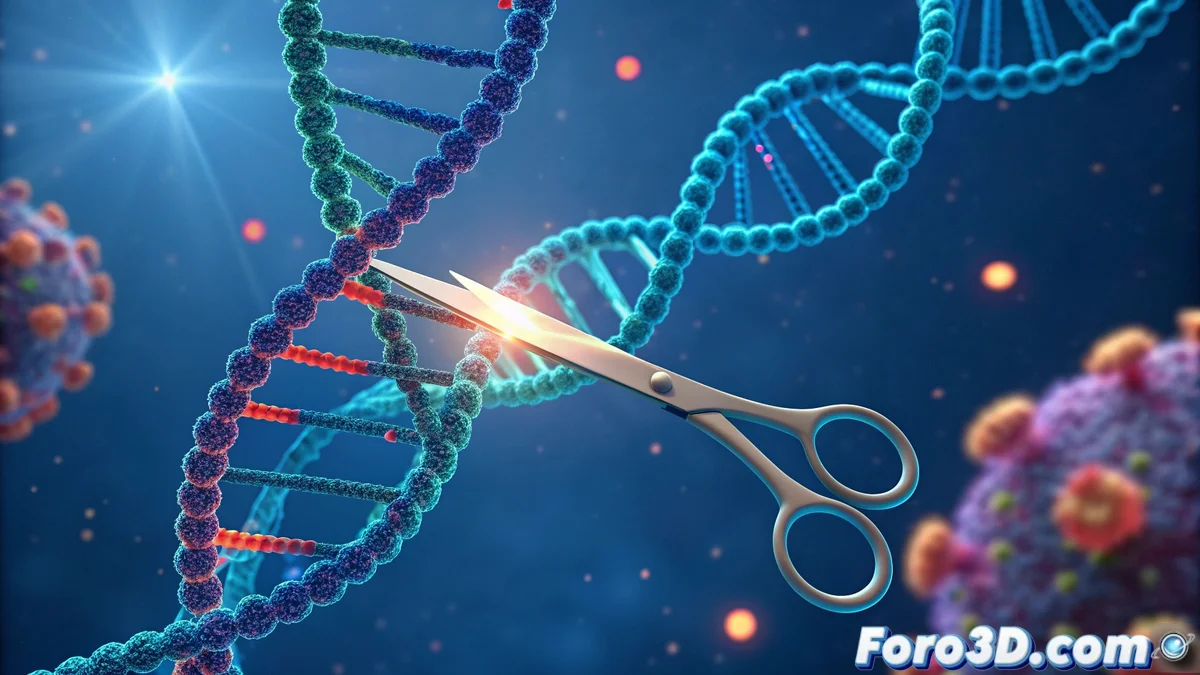
Genetic Revolution with CRISPR-Cas9: Applications and Ethical Dilemmas
The CRISPR-Cas9 system represents one of the most significant scientific advances of the 21st century, functioning as high-precision molecular scissors that allow modifying specific DNA sequences in living organisms. This technology, originally discovered as a defense mechanism in bacteria, has completely revolutionized research approaches in molecular biology and medicine. 🧬
Transforming Biomedical Research
The unique versatility of CRISPR-Cas9 has opened completely new horizons in the study of genetic diseases, allowing researchers to identify and modify specific genes with unprecedented efficiency. This tool has exponentially accelerated the understanding of the molecular bases of numerous pathologies, facilitating the development of innovative therapeutic approaches that previously seemed like science fiction.
Transformative applications:- In the medical field, it enables correcting mutations responsible for diseases such as cystic fibrosis and sickle cell anemia, in addition to advancing cancer therapies
- In agriculture, it enables the development of crops more resistant to pests and extreme weather conditions without introducing external DNA
- It improves global food security through precise genetic modifications that avoid traditional transgenic methods
The power to rewrite the code of life confronts us with unprecedented responsibilities in the history of modern science
Recognition and Ethical Reflections
The revolutionary impact of this technology was recognized with the 2020 Nobel Prize in Chemistry for Emmanuelle Charpentier and Jennifer Doudna, highlighting the importance of women's contributions in science. However, this capacity to alter fundamental genetic information generates profound ethical debates about the limits of human intervention in nature.
Crucial considerations:- Modification of the human germline raises questions about hereditary changes that would affect future generations
- There is a thin line between therapeutic use and non-medical genetic enhancement applications
- The scientific community faces the challenge of establishing clear ethical boundaries while advancing research
Balance Between Precision and Responsibility
As CRISPR-Cas9 technology continues to evolve, the scientific community navigates between the enthusiasm for its potential benefits and the necessary prudence regarding its ethical implications. The analogy of using a pneumatic hammer to repair a Swiss watch perfectly reflects the challenge of applying such a powerful tool with the delicacy required for genetic code manipulation. The future of this genetic revolution will depend on our ability to balance innovation with ethical responsibility. ⚖️