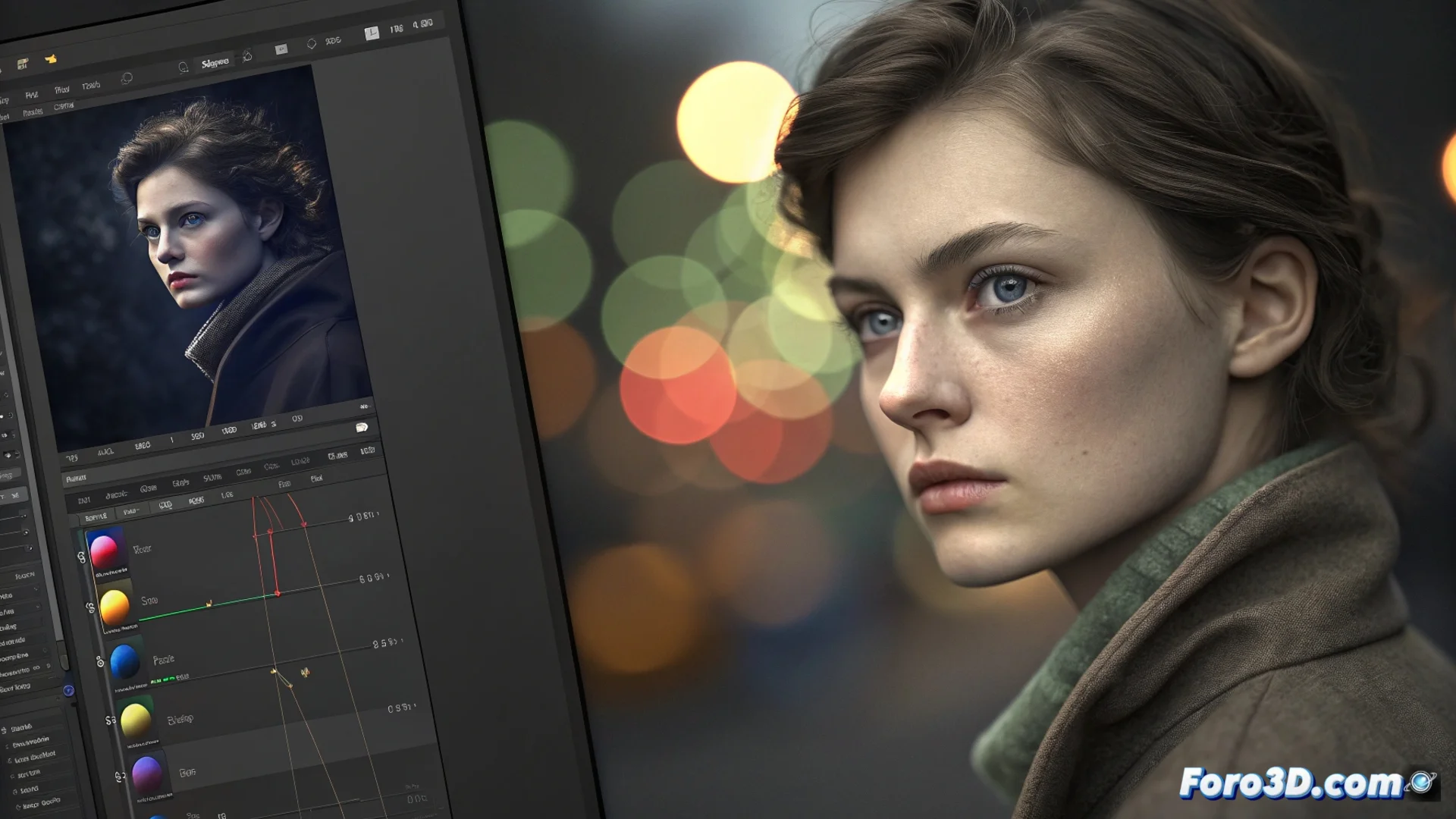
Generative Refocusing Adjusts the Focus Plane from a Single Image
Computational photography takes a leap with methods that allow redefining the focus after capturing the image. Generative Refocusing represents this advancement, using artificial intelligence to manipulate the depth of field and the characteristic background blur from a single file. 🎯
Two Specialized Neural Network Architecture
The system is based on a two-stage architecture, where each neural network performs a distinct and critical function. This separation allows for more precise handling of the complex optical problems involved in simulating a new focal plane.
Main Components of the Workflow:- DeblurNet: Its task is to process the input photo to remove any unwanted blur, delivering a completely sharp version that serves as an ideal base.
- BokehNet: Takes the clarified image and generates a high-quality blur effect over it. This blur is not fixed, but the user can adjust its parameters interactively.
- Semi-supervised Training: The model learns by combining large volumes of synthetic data with real photographs containing EXIF metadata, teaching it to replicate the behavior of physical lenses.
Separating the task of sharpening the image from applying the blur is key to achieving flexible and visually precise results.
Advanced Control via Text and Custom Shapes
Beyond traditional numerical controls, this technique integrates intuitive control interfaces. Users are not limited to sliders, but can guide the effect using natural language or define the blur aesthetic in novel ways.
Creative Control Modalities:- Text-guided: Allows describing the desired effect type with words (e.g., "soft and creamy bokeh"). The system interprets this instruction to generate the corresponding blur.
- Custom Aperture Shapes: Supports creating bokeh effects that are not circular. Users can generate star-shaped, hexagonal, or other pattern flares, mimicking the result of specialized lens diaphragms.
- Parametric Adjustment: Also offers direct control over blur intensity and focus plane position, providing technical precision.
Implications for Photographic Post-production
This method significantly expands creative possibilities in editing. It is no longer necessary to capture multiple shots with different apertures; the depth of field becomes a fully malleable element in post-production. It allows correcting focus errors or, more commonly, exploring aesthetic alternatives not considered at the time of capture. The ability to simulate expensive optics or specific effects with just software democratizes tools previously exclusive to professional studios. 🔧