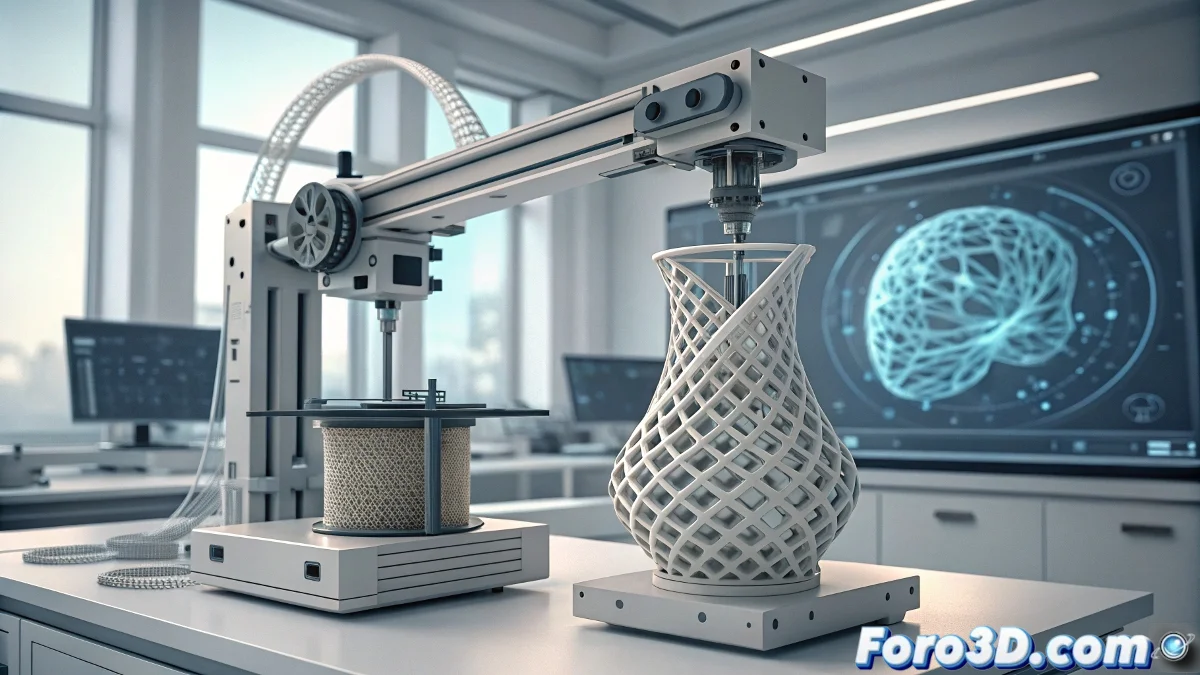
Generative design is radically transforming the field of medicine, enabling the creation of personalized medical implants that perfectly adapt to the unique anatomy of each patient. This technology combines advanced algorithms with artificial intelligence to produce geometries that no human designer could conceive manually. 🏥
What began as a tool for optimizing industrial components has found its most valuable application in the human body. AI-generated implants not only fit better but also distribute stress more efficiently, reduce weight, and significantly accelerate manufacturing processes through 3D printing.
Biomechanical precision reaches previously unimaginable levels.
The Technological Ecosystem Behind the Medical Revolution
Several specialized platforms have emerged as standards in this emerging discipline. Autodesk Fusion 360, nTopology, and Materialise 3-matic lead the market, offering integrated workflows that range from medical scanning to the final manufacturing file.
The key capabilities of these tools include:
- stress analysis and structural simulations 🔧
- automatic topological optimization
- generation of internal lattice structures
- validation of biomechanical criteria
Tangible Benefits for Patients and Professionals
In orthopedic, maxillofacial, and dental applications, clinical results have shown significant improvements. Recovery times shorten, integration with bone tissue improves, and rejection rates decrease notably thanks to the millimeter-perfect fit offered by this technology.
The most notable advantages for the healthcare sector:
- reduction of postoperative complications
- mass customization at accessible costs
- less invasiveness in surgical procedures
- better quality of life for patients
The Paradox of Medical Additive Manufacturing
Interestingly, while healthcare systems struggle to maintain accessibility, this technology democratizes high-end treatments. A personalized implant can cost the same as a standard one but offers radically superior results thanks to algorithmic optimization.
And so we arrive at the point where an algorithm can design a prosthesis that integrates so naturally into the body that the patient forgets it is artificial. The perfect irony of our digital age: we entrust our most precious well-being to non-human intelligences that understand our physiology better than we do ourselves. 🤖