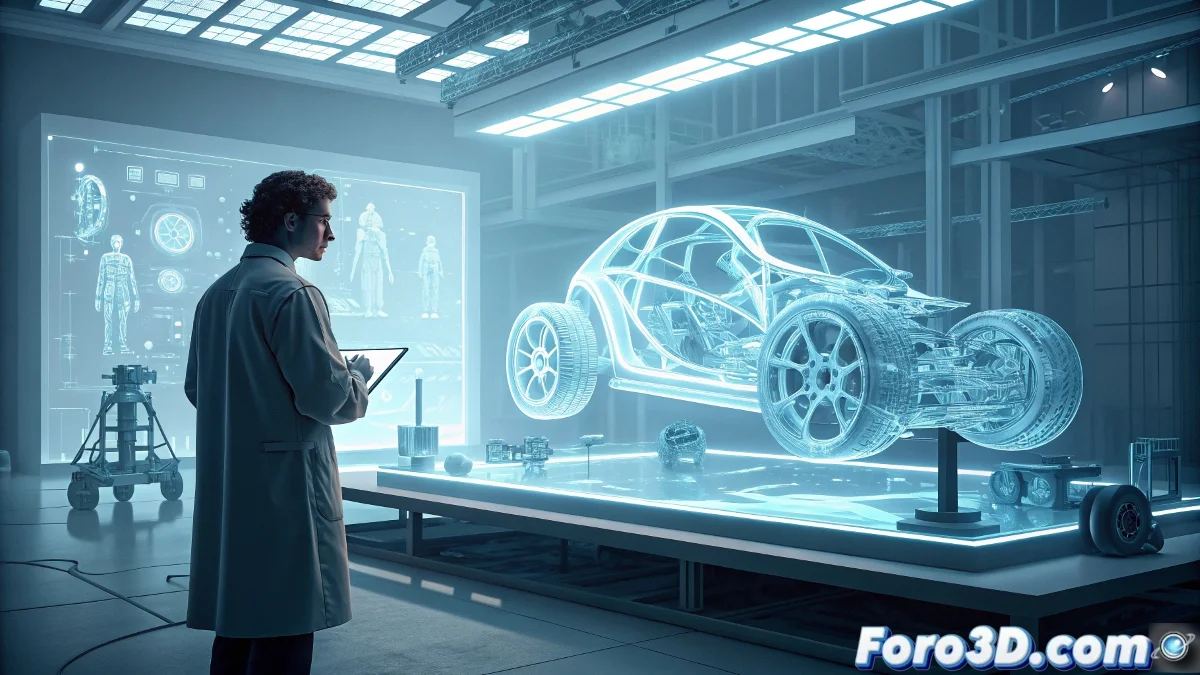
The Silent Revolution in Assisted Design
Generative design is radically transforming the world of CAD, positioning itself as the undisputed future of modern engineering. This methodology, powered by artificial intelligence algorithms, enables the creation of optimized forms that surpass traditional designs in efficiency and performance. The most advanced software already integrates these capabilities, automatically generating thousands of variants of the same component until finding the ideal solution for specific requirements.
AI does not replace the designer; it amplifies their creative capacity
How This Algorithmic Magic Works
The process begins by defining the essential parameters: prohibited spaces, structural loads, anchor points, and available materials. The artificial intelligence then systematically explores the universe of possibilities, testing configurations that no human designer would consider due to their apparent extravagance. The result are structures that seem to come from nature, with a material efficiency that defies conventional logic.
Key Advantages for Engineers and Designers
- Automatic optimization of weight and structural strength
- Drastic reduction in development times
- Exploration of counter-intuitive yet efficient solutions
- Material minimization without compromising functionality
Practical Applications in Industry
From aerospace components to medical prosthetics, generative design is proving its value in sectors where every gram counts. Leading companies report reductions of up to 40% in weight of their components while maintaining or improving their mechanical characteristics. This technology allows the creation of parts that would be impossible to manufacture with traditional methods, but are perfectly viable with additive manufacturing.
The organic forms are not just aesthetic; they are mathematically perfect
Additive manufacturing has become the ideal partner for generative design, allowing the materialization of those complex geometries that AI proposes. Together they are redefining what we consider possible design, opening doors to solutions that perfectly balance functionality, efficiency, and aesthetics.
Integration into Existing Workflows
- Direct connection with traditional CAD software
- Native compatibility with industrial 3D printing
- Integrated structural analysis in real time
- Automatic generation of technical documentation
And while AIs design parts that seem created by biomechanical aliens, we human engineers keep looking for the undo button for when the machine gets too clever with its creations ⚙️