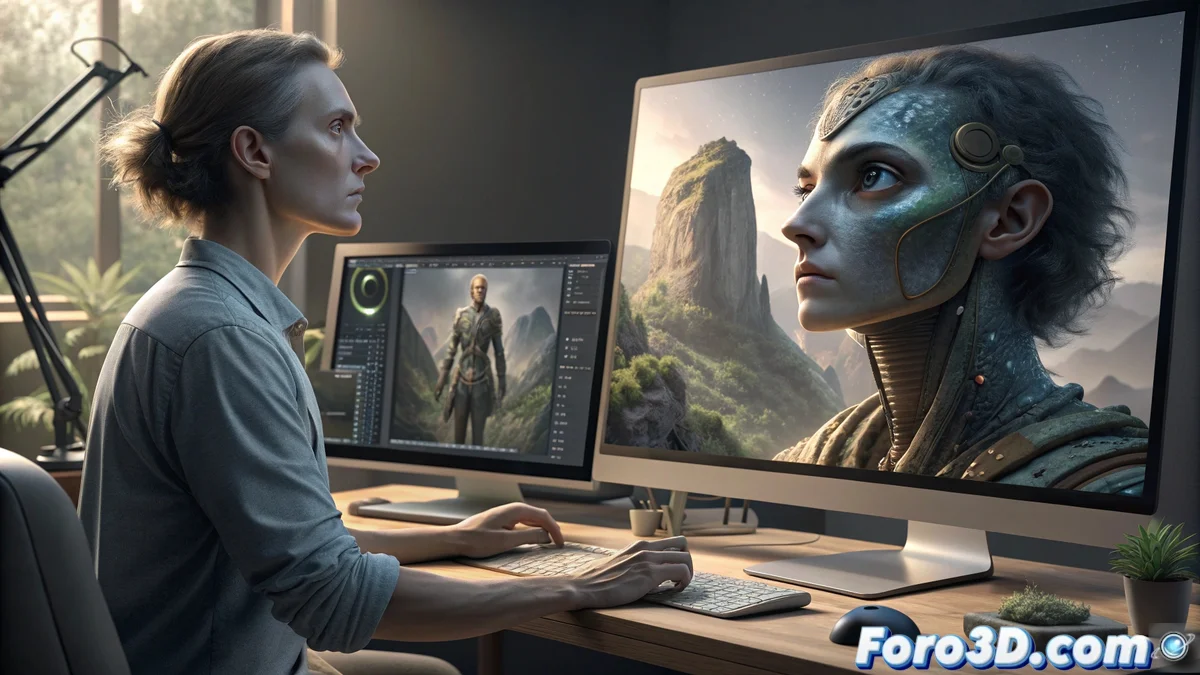
Generative Artificial Intelligence for Artists: Stable Diffusion vs Krita with Plugins
Generative artificial intelligence has revolutionized the current creative landscape, offering artists and designers two fundamental methodologies to incorporate these technologies into their processes. On one hand, we find Stable Diffusion as a standalone application specialized in visual creation, while its integration into Krita through plugins represents a completely different paradigm of creative assistance. 🎨
Stable Diffusion: Specialization in Autonomous Generation
This tool stands out for its ability to generate complete images starting exclusively from textual descriptions, providing absolute control over all creation parameters without intermediaries. Its independent architecture allows producing coherent and finished results in a single execution, ideal for those who need quick concepts or final images without manual post-processing. The potential disadvantage lies in its separation from the traditional artistic process, which may limit creators who prefer to intervene directly in each development stage.
Main Features of Stable Diffusion:- Generation from scratch using textual prompts without prior requirements
- Granular control over technical parameters such as sampling steps and guidance scale
- Immediate results usable as final products or bases for other projects
"The real magic happens when technology amplifies human creativity without replacing it" - Reflection from a contemporary digital artist
Krita with AI Plugins: Seamless Integration into the Creative Workflow
The incorporation of AI capabilities within the Krita environment transforms artificial intelligence into just another tool in the creative kit, coexisting with conventional brushes, layers, and filters. This hybrid approach allows generating content directly on the work canvas, maintaining the ability to paint, modify, and manually adjust the obtained results. The competitive advantage of this system lies in using AI for specific tasks such as completing areas, generating backgrounds, or creating textures, while the artist retains total creative direction over the work. ✨
Advantages of Integration in Krita:- Partial generation over selected areas of the canvas
- Experimentation with styles on specific layers without altering the base work
- Overcoming creative blocks through contextual assistance
The Creative Debate: Technological Assimilation vs Traditional Purity
It is fascinating to observe how the artistic community is divided between purists who reject AI intervention and innovators who adopt it as the natural evolution of digital tools. This dichotomy reflects that in the creative realm, what remains fundamental are the final results rather than the methods employed, where technology acts as a catalyst rather than a replacement for human skill. The synergy between traditional technique and artificial intelligence establishes an organic workflow that allows rapid iterations and controlled experimentation within the same environment where the integral artistic process develops. 🚀