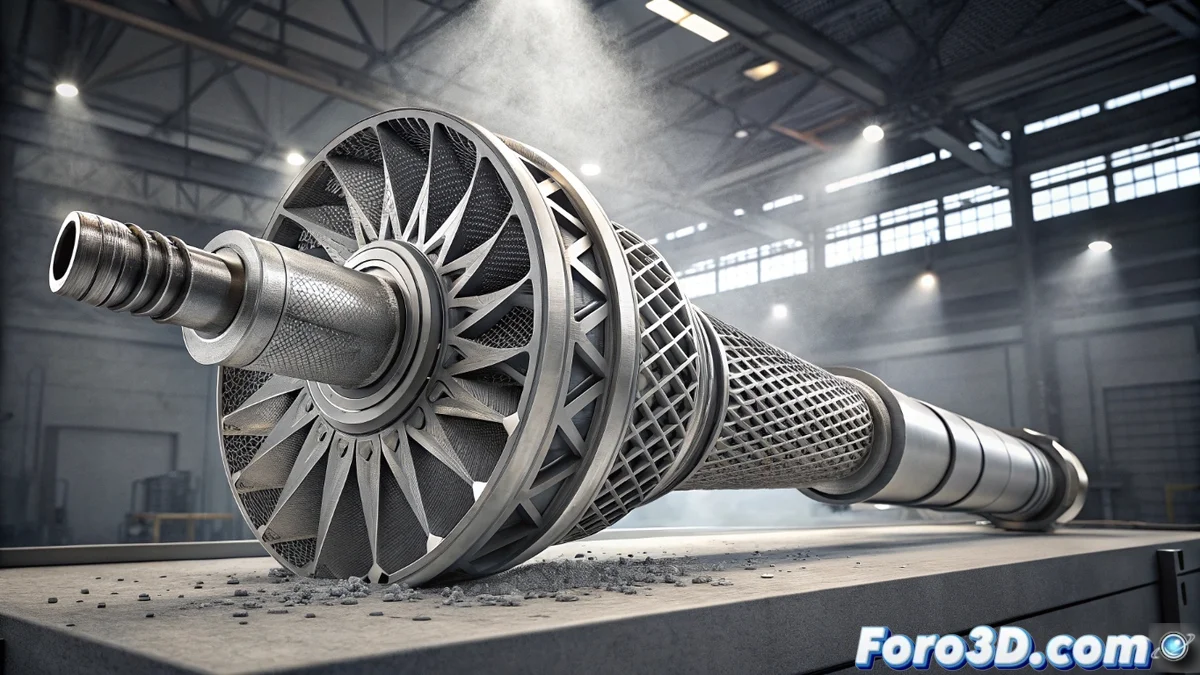
General Electric Aviation Manufactures Fuel Nozzles with 3D Printing
The aviation division of General Electric has adopted additive manufacturing as a key process to produce a critical component: fuel injection nozzles in its engines, such as those widely used in the LEAP family. This technology allows for a radical transformation in how these parts are built, shifting from an assembly of multiple parts to a monolithic structure printed in a single operation. 🛩️
Redesigning Internal Complexity
The main advancement lies in the freedom to design internal geometries that were previously impossible to machine. Engineers can create channels and passages with organic and optimized shapes that direct fuel flow and manage cooling with unprecedented precision. This is not just a process change; it is a redefinition of engineering possibilities.
Key Advantages of Integrated Design:- Consolidate Components: Replaces dozens of welded and joined parts with a single one, eliminating weak interfaces.
- Create Complex Channels: Allows curved and branched internal flow paths that optimize air and fuel mixing.
- Improve Robustness: By eliminating welds and joints, potential fatigue crack initiation points are removed.
To innovate in propulsion, sometimes you have to stop assembling and start printing from scratch.
Tangible Impact on Performance and Efficiency
The benefits of this methodology translate directly into engine performance metrics. A more complete and homogeneous combustion, facilitated by optimized mixing, increases overall efficiency. This leads to lower specific fuel consumption and, crucially, a significant reduction in emissions. In a sector where every gram counts, the advantage is decisive.
Direct Operational Results:- Reduce Weight: The consolidated part is noticeably lighter than its assembled equivalent, contributing to lighter engines.
- Increase Durability: The monolithic structure and use of high-performance alloys improve resistance to extreme temperatures and pressures.
- Simplify the Supply Chain: Producing one part instead of manufacturing and assembling many simplifies logistics and production.
The Future is Printed
GE Aviation's application of metal 3D printing for fuel nozzles demonstrates a profound industrial transition. It is not just about replacing a manufacturing tool, but about enabling new design paradigms that offer systemic improvements in efficiency, reliability, and sustainability. This technology is redefining the limits of what is possible to build to propel tomorrow's aviation. ✈️