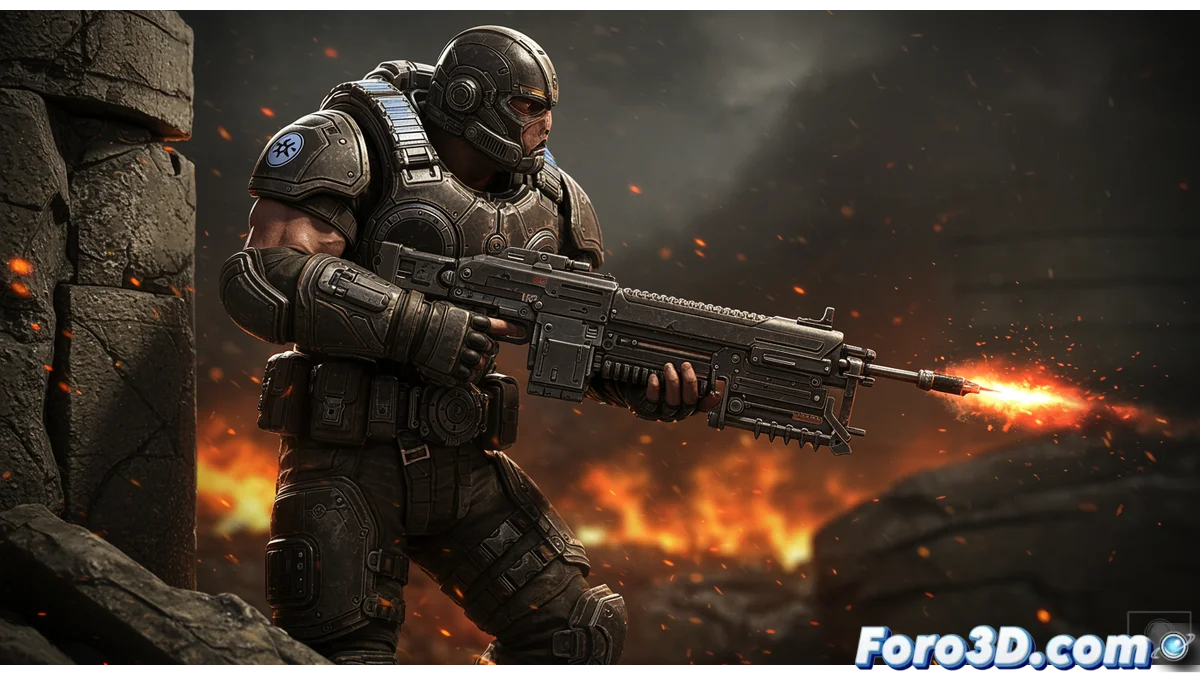
Gears of War: Reloaded, a Hybrid Remasterization Between UE3 and UE5
The release of Gears of War: Reloaded is shaping up as a fascinating case study in the evolution of graphics engines. Instead of opting for a from-scratch development or a simple asset update, the team has chosen a technically bold path: building upon the robust architecture of Unreal Engine 3 and grafting onto it, through reverse engineering and adaptation, key components of the modern Unreal Engine 5. 🛠️
The Fusion of Two Generations of Graphics Engine
This development strategy is not a simple remasterization. It is a deep reverse engineering process, where specific systems from UE5, particularly those related to rendering and lighting, have been disassembled and reassembled to function within the older UE3 framework. The goal is clear: achieve a high-impact visual transformation without altering the core gameplay, controls, or physics that defined the original experience. This method represents a unique balance between preserving classic gameplay and contemporary visual ambition.
Technical Pillars of Modernization:- Dynamic Global Illumination: Implementation of techniques inspired by UE5's Lumen, allowing light to interact realistically with materials and the environment in real time.
- Improved Rendering Pipeline: Adaptation of the rendering system to handle new light sources, reflections, and shadows with much higher fidelity.
- Advanced Post-Processing: Integration of full-screen effects that enhance the atmosphere, contrast, and realism of each scene.
The result is a game that looks notably improved where it matters most: in the atmosphere and realism of its scenes.
Advantages and Limitations of the Technical Approach
This hybrid model entails a series of trade-offs. On one hand, it offers proven stability by maintaining the UE3 core, ensuring that the emblematic gameplay of tactical combat and cover movement remains intact. The iconic character models and their animations remain unaltered, but now benefit from cinematic lighting. On the other hand, the UE3 architecture imposes natural limits. Revolutionary UE5 technologies like Nanite for micro-polygonal geometry or a complete global simulation system are extremely difficult, if not impossible, to integrate. All technical effort is therefore channeled into making lighting the protagonist of the remasterization.
Consequences of the Hybrid Design:- Advantage: Stable gameplay and performance inherited from a refined code base.
- Advantage: Visual leap concentrated on elements that transform perception (light and shadow).
- Limitation: Exclusion of other cutting-edge UE5 technologies beyond light rendering.
- Limitation: Development complexity in forcing coexistence of systems from different generations.
The Final Impact on the Player Experience
For the fan and the new player, Gears of War: Reloaded will offer a fascinating visual paradox. They will instantly recognize the scenarios, characters, and gameplay feel of the classic, but these elements will be bathed in a completely new light. The claustrophobic Locust tunnels, the ruined cities of Sera, and the devastated landscapes will gain renewed depth and atmosphere, approaching the standards of current titles. The brutal and visceral essence of the saga remains, but now presented with state-of-the-art technical makeup that promises to redefine immersion. This remasterization demonstrates that sometimes innovation is not about starting over, but wisely reinventing what already works. 🎮