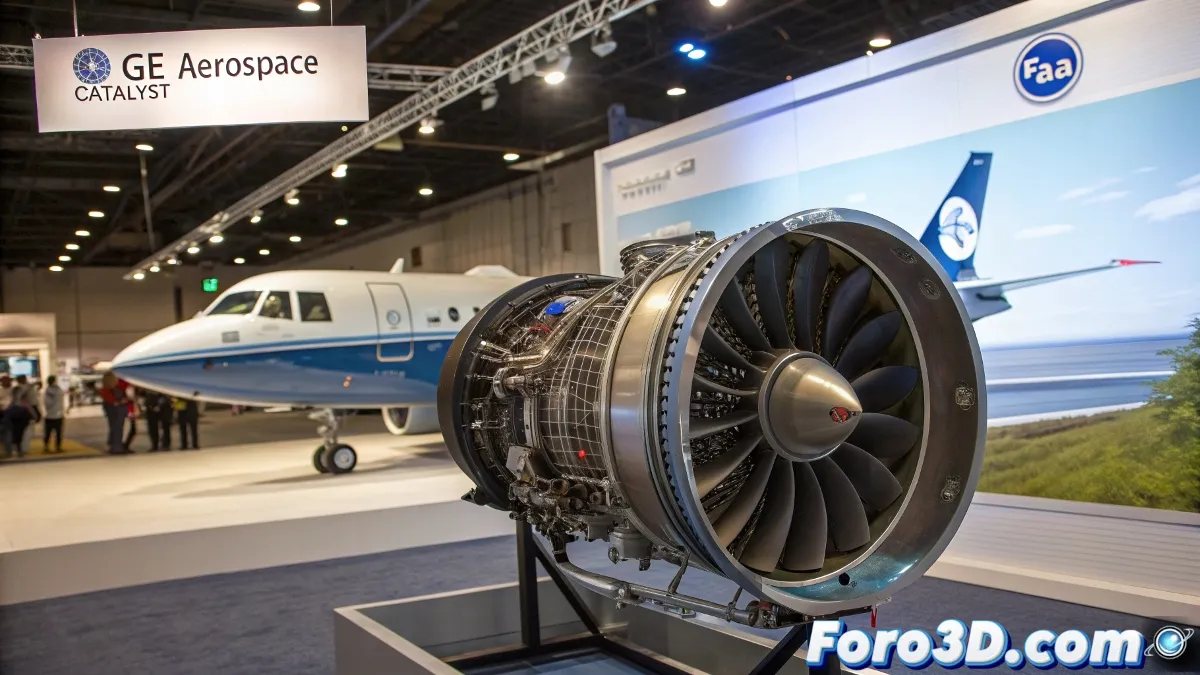
A New Chapter in Aviation: GE Aerospace's Catalyst Engine
A Milestone in Aeronautical Engineering
The aviation industry has witnessed a historic advancement with the certification of the Catalyst engine by the Federal Aviation Administration (FAA). This achievement not only validates GE Aerospace's innovative design but also sets a new standard in turboprop engine manufacturing. The certification process, which followed the rigorous requirements of the FAR Part 33 regulations, included exhaustive testing on 23 engines and over 190 components, accumulating more than 8,000 hours of operation. These figures reflect the reliability and high performance of the Catalyst.
The First Turboprop Engine of the 21st Century
The Catalyst is not just another engine; it is the first completely new turboprop engine design certified this century. This milestone is even more significant because the certification process incorporated over 20 updated requirements, making it the first engine of its kind to meet these modernized standards. This advancement not only marks a before and after in the industry but also lays the foundation for future innovations.
"The certification of the Catalyst is a moment of pride for everyone who has dedicated their efforts to the design, development, and testing of this engine." - Riccardo Procacci, GE Aerospace
Technology That Defines the Future
Among the most outstanding features of the Catalyst are:
- A global compression ratio of 16:1, enabling up to 18% more efficient fuel consumption.
- 10% more power during cruise, surpassing similar engines.
- Innovations such as two stages of variable stator vanes and cooled high-pressure turbine blades.
- Components manufactured using additive manufacturing technology, positioning it at the forefront of aeronautical engineering.
These features not only improve performance but also reduce environmental impact, which is increasingly important in the aviation industry.
An International Project
The development of the Catalyst has been a collaborative effort involving several European countries. GE Aerospace facilities in Italy, Czech Republic, Poland, and Germany have been key in the design and manufacturing of this engine. Once operational, the Catalyst will power the Beechcraft Denali aircraft, whose certification process is currently underway by Textron Aviation.
A Collective Achievement
Riccardo Procacci, President and CEO of Propulsion and Additive Technologies at GE Aerospace, has highlighted that the certification of the Catalyst is a moment of pride for all team members. This achievement not only reinforces GE Aerospace's position as a leader in innovation but also opens new possibilities for the future of regional and commercial aviation.
In summary, the Catalyst is not just an engine; it is a demonstration of what can be achieved when engineering, international collaboration, and innovation come together to push the limits of the possible.