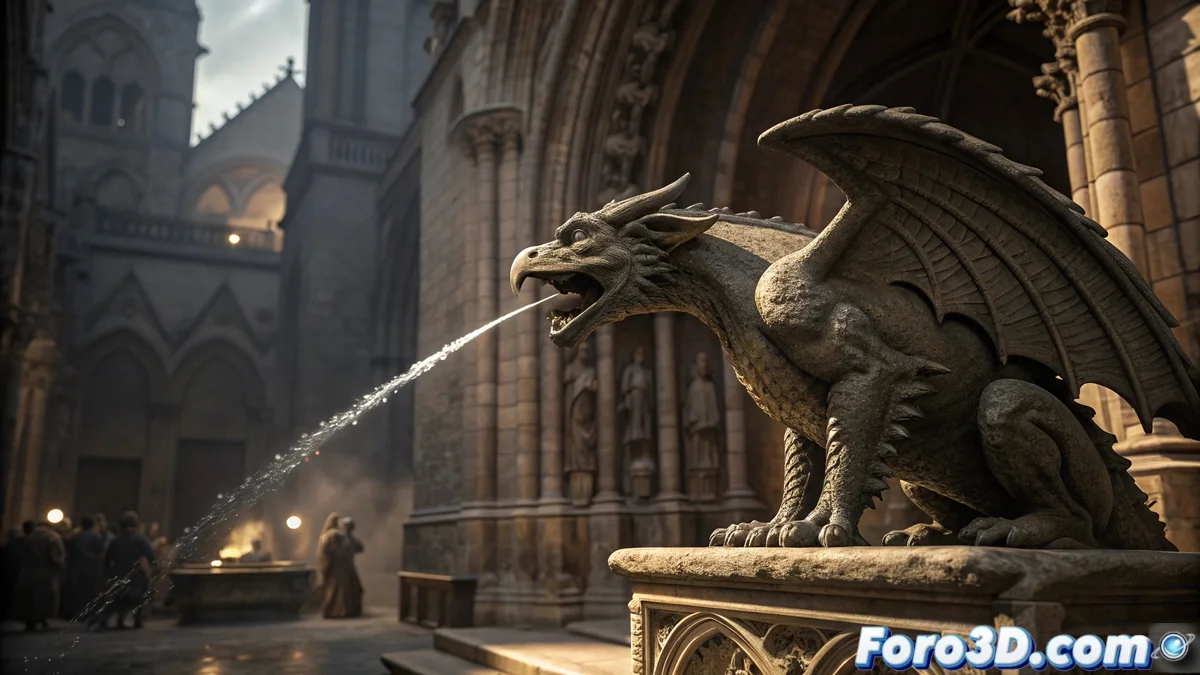
When Stone Comes to Symbolic Life
The walls of Burgos Cathedral are decorated with a fantastic bestiary of dragons, griffins, and basilisks that transcend their ornamental function. These sculpted creatures possess deep religious symbolism: gargoyles represent evil and sin, symbolically expelling impure water away from the temple, while other figures on tombs and architectural elements symbolize divine protection and the victory of good. For digital artists, this sculptural ensemble offers a fascinating field for creative exploration. 🐲
Recreating the Gothic Bestiary in the Digital World
Houdini presents itself as the ideal platform to bring these medieval creatures to digital life, allowing combining historical precision with artistic freedom. The technical challenge consists not only in modeling the organic forms of these figures, but in capturing the symbolic essence given to them by 13th-century artisans. It is a perfect exercise for mastering organic modeling and architectural integration.
Key Elements for an Authentic Recreation
Achieving the transmission of the symbolic power of these creatures requires attention to multiple technical and conceptual aspects.
- Fantastic Anatomy: Fuse real animal characteristics with mythological elements.
- Gothic Style: Respect the sculptural conventions of the medieval period.
- Historical Patina: Simulate six centuries of erosion and natural wear.
- Symbolic Hierarchy: Visually differentiate evil creatures from protective ones.
Gothic art transformed stone into visible theology, where each creature told a moral story.
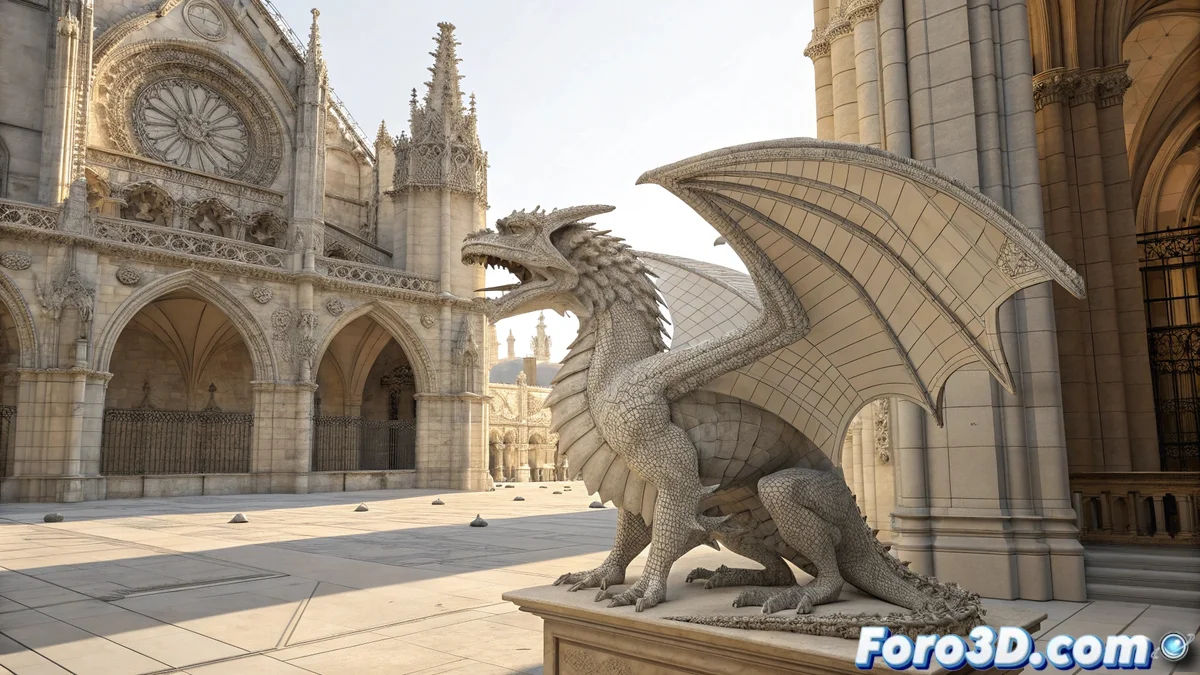
Technical Guide in Houdini
Begin by meticulously organizing the project in Houdini. Save the file as gargolas_burgos.hip and set the units to the metric system to maintain realistic proportions. Establish network nodes for each category: Gargolas_Exteriores, Criaturas_Interiores, Arquitectura_Base, Sistema_Iluminacion. This modular structure will be crucial for handling complexity. 🏰
Modeling the Fantastic Creatures
For each creature, start with basic geometric shapes that capture their essential volume. Use polygonal modeling to block out the main proportions before refining details with digital sculpting tools. For gargoyles, pay special attention to mouths and drains, ensuring they are hydraulically functional as well as aesthetically impactful.
Precise Architectural Integration
The creatures must integrate organically with the Gothic structure of the cathedral. Use photographic references to place each figure in its correct historical location, whether on cornices, buttresses, or capitals. Adjust scale and orientation so they appear as natural parts of the architecture instead of later additions.
Texturing and Historical Materials
Create limestone materials using custom shaders with wear layers. Combine base color maps with overlays of moss, erosion, and accumulated dirt in protected areas. For interior creatures, develop polished marble materials with natural veins that reflect their higher decorative status.
Symbolic and Dramatic Lighting
Set up a lighting system that accentuates the moral dualism of the figures. Use hard light and marked shadows for exterior gargoyles, creating a more threatening appearance, while interior protective creatures deserve softer, more celestial lighting. The play of lights must guide the viewer's symbolic interpretation. 💡
Subtle Animation and Atmospheric Effects
For animated sequences, implement fluid simulations for water flowing from the gargoyles during rain. Add dust and leaf particles that interact with the architecture, creating life around the static figures. Slow and dramatic camera movements can emphasize the monumental scale and artistic detail.
Render and Final Post-Production
Use the Mantra or Redshift engine for rendering, setting high sampling to capture the carved stone surface details. In post-production, adjust contrast to highlight sculptural volumes, apply color correction toward historically appropriate earth tones, and add subtle luminance effects in strategic areas to guide the viewer's gaze.
While these stone creatures have been warding off evil spirits for centuries, 3D artists continue to battle the modern demon of the render that never ends. Some battles are eternal. 😅