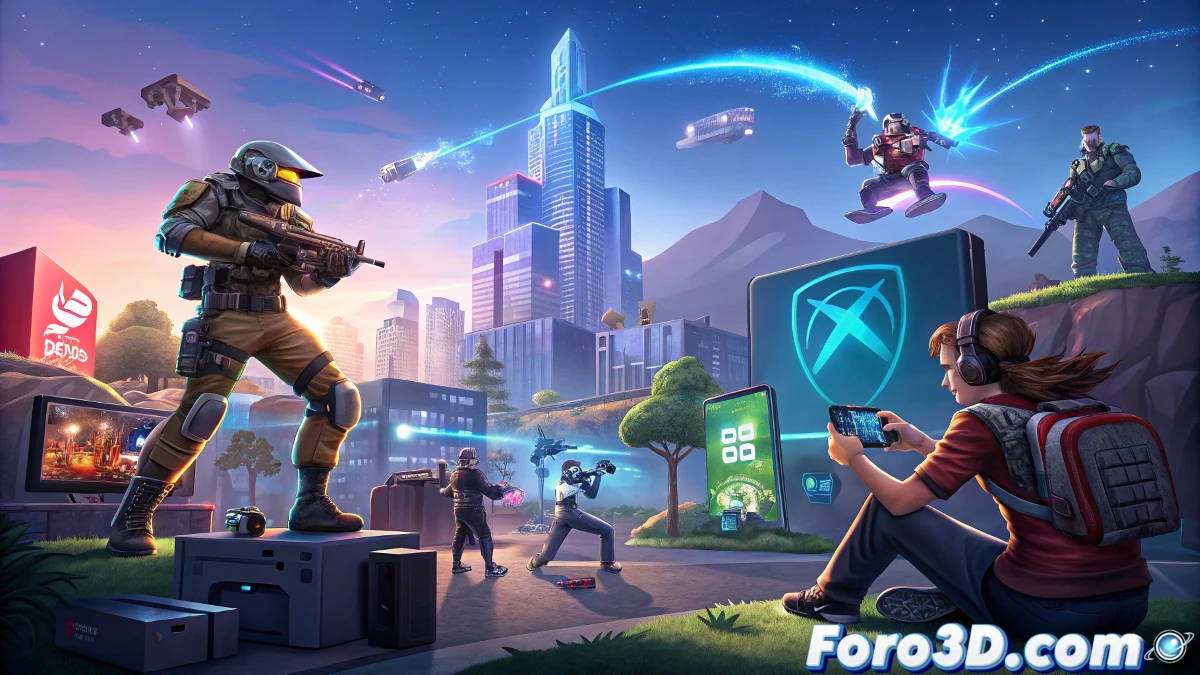
A Model That Redefines the Gaming Experience
Games as a service have revolutionized the video game industry, offering experiences that evolve over time and keep players engaged for years. Titles like Fortnite, Call of Duty Warzone, and Roblox have changed the way users interact with video games, creating a model that combines constant updates, live events, and an active community.
Market Dominance
These games have not only gained popularity but have also begun to overshadow traditional titles. According to a recent report, more than 40% of playtime on next-generation consoles like PS5 and Xbox Series X/S was dedicated to just 10 games as a service during January 2025. This data reflects how a few giants monopolize players' attention and time, leaving little room for new releases.
"Games as a service are not a fad; they are the future of the industry." – Video game analyst
Competition in a Saturated Market
The influence of these games is such that more than 70% of active users played at least one of these 10 titles during the same period. This not only underscores their popularity but also the difficulty other games face in competing in an increasingly saturated market dominated by these ongoing experiences.
- Call of Duty HQ: A leader in the shooter genre.
- GTA V: A classic that continues to attract players.
- Fortnite: The king of live events and collaborations.

The Titles Leading the Landscape
Among the games dominating the market are names like Call of Duty HQ, GTA V, NBA 2K25, Marvel Rivals, Roblox, Minecraft, Madden NFL, Destiny 2, Rocket League, Apex Legends, and Fortnite. The latter, in particular, has been highlighted as the main rival to any AAA game, as its ability to keep players engaged makes it difficult for other releases to succeed.
The Industry's Response
In response to this landscape, companies like Sony, EA, and Ubisoft have intensified their efforts to develop games as a service. This approach not only seeks to capture players' attention but also to ensure recurring revenue through microtransactions and additional content. However, this model is not without criticism, especially regarding its impact on the industry's diversity and creativity.
An Uncertain Future for the Industry
As games as a service continue to dominate the market, the question arises of how the industry will evolve in the coming years. While these titles offer dynamic and constantly evolving experiences, they also pose challenges for independent developers and single-player games. The balance between innovation, competition, and diversity will be key to the future of video games.
"The future of video games is not written, but games as a service have already left their mark." – Independent developer
In summary, games as a service have redefined the industry, offering experiences that keep players engaged for years. However, their market dominance poses challenges for diversity and creativity, making the future of video games as exciting as it is uncertain.