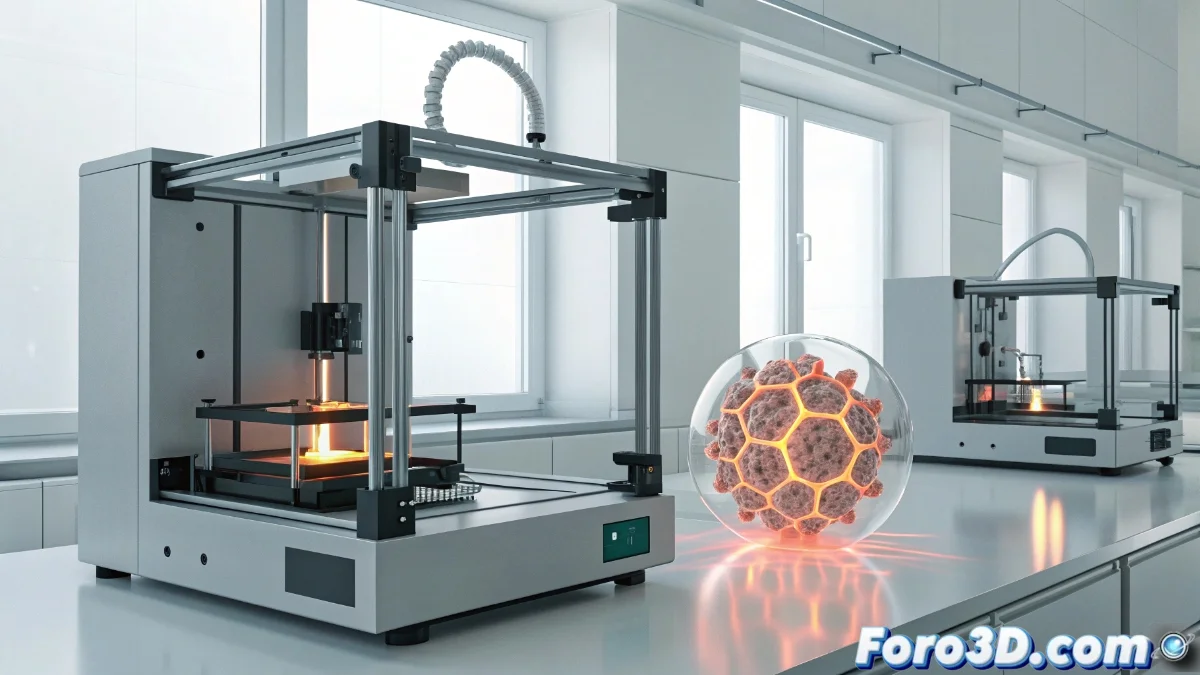
Gameet revolutionizes assisted reproduction with advanced 3D printing
The company Gameet is transforming the field of assisted reproduction by incorporating cutting-edge three-dimensional printing technologies into its medical protocols. This disruptive innovation enables the manufacturing of custom biological structures that emulate human tissues, optimizing treatments for couples facing fertility challenges and enhancing their effectiveness. 🧬
Advances in 3D bioprinting for embryology
Gameet uses specialized 3D bioprinters that operate with biocompatible biomaterials and living cells, called bio-inks, to build three-dimensional cellular scaffolds. These devices ensure exceptional resolution, depositing successive layers that are customized according to each patient's individual characteristics. The technology incorporates temperature and humidity control systems to preserve cell viability throughout the process, a crucial factor for the integrity of the generated tissues. Additionally, computer-aided design algorithms are employed to model the structures with precision, based on medical imaging data such as MRIs or CT scans, ensuring complete adaptation and minimizing the risks of immune rejection. 🔬
Key features of bioprinting at Gameet:- Layer-by-layer printing with high precision for customized cellular scaffolds
- Use of bio-inks with living cells and biocompatible materials that promote embryonic development
- Advanced environmental control (temperature and humidity) to maintain cell viability during manufacturing
The integration of 3D printing in assisted reproduction is redefining the boundaries of regenerative medicine, offering hope where there were previously only obstacles.
Transformative impact on fertility treatments
The application of 3D printing in this field is radically changing the medical approach to infertility, providing solutions that previously seemed reserved for science fiction. Gameet actively collaborates with clinics and researchers to perfect these techniques, focusing on the creation of functional reproductive organs in the laboratory, such as artificial ovaries, which could restore fertility in cases of irreversible damage. This not only diversifies options for those wishing to start a family but also fosters research on early fetal development and the underlying causes of miscarriages. As the technology advances, it is anticipated to reduce dependence on donors and improve outcomes in complex interventions, laying the foundations for a new era of regenerative medicine in gynecology. 💡
Highlighted benefits of this technology:- Increase in success rates in procedures such as in vitro fertilization through controlled environments
- Reduction in waiting times and associated costs, making treatments more accessible globally
- Expansion of options for patients with severe infertility or irreversible organ damage
Future and ethical considerations in assisted reproduction
Imagining a future where ordering a custom-made baby is as simple as commissioning furniture, but with much greater ethical responsibility, reflects the potential and challenges of these innovations. Gameet not only focuses on technical advancement but also on addressing moral implications, ensuring that the technology is used in a safe and equitable manner. The continuous evolution in bioprinting promises not only to revolutionize reproductive medicine but also to establish higher standards of personalization and effectiveness in healthcare. 🌍