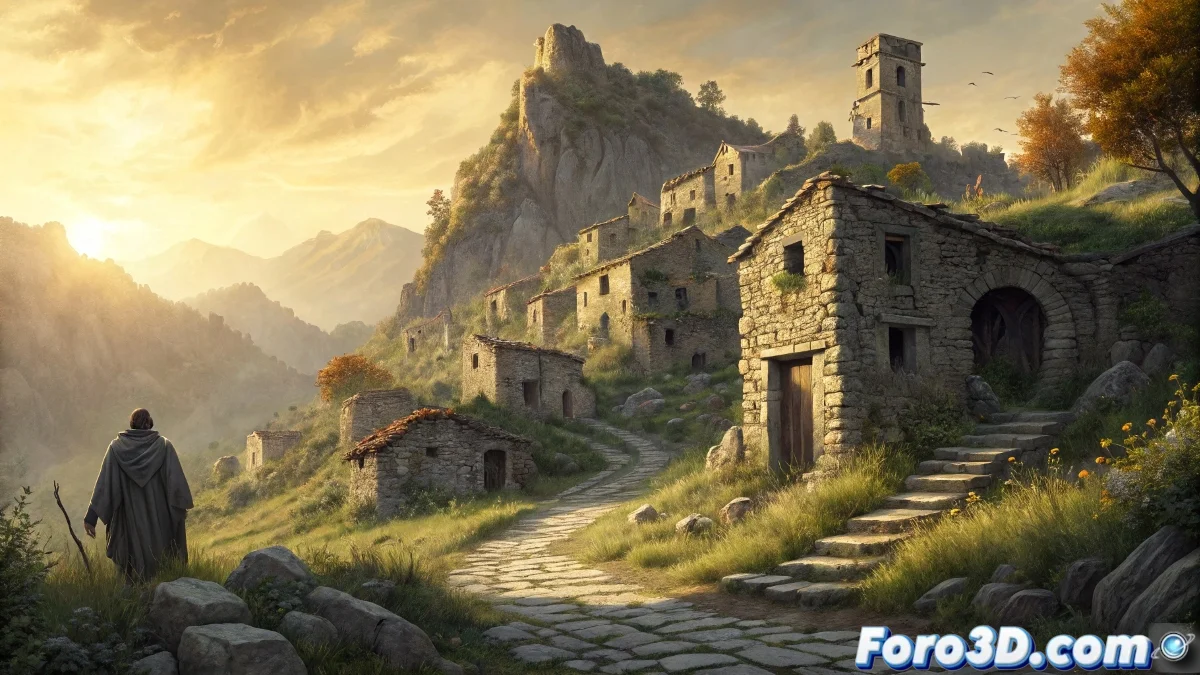
In the mountains of Tarragona, the ruins of Gallicant whisper stories of a past that nature is determined to erase. Recreating this abandoned village in Animation Master is not just a technical exercise, but an act of digital archaeology that preserves what time is eroding. 🏔️
The real challenge in recreating Gallicant lies in capturing that delicate boundary between human work and the natural realm. Every collapsed stone, every collapsed roof, and every path invaded by weeds tells a story of abandonment that goes beyond simple geometry.
Where the stones end, the whispers of the past begin
The Geometry of Abandonment
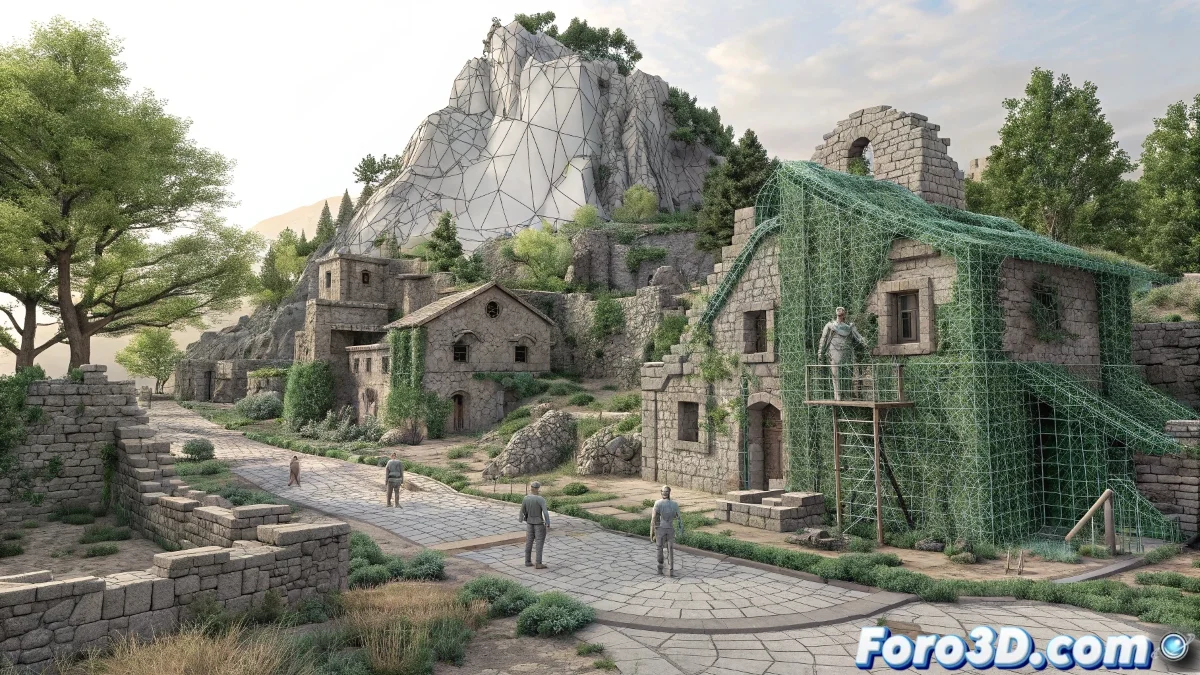
Modeling believable ruins requires understanding how buildings age and collapse. In Animation Master, we must avoid artificial perfection and seek those imperfections that give authenticity to abandoned structures.
Modeling techniques for believable ruins:
- strategic use of booleans to create gaps and collapses
- manual deformations on walls and roofs
- scattering of debris with particles or instances
- attention to limestone-specific erosion
Lighting That Tells a Story
The light in Gallicant must feel like another character in the scene. It's not just about illuminating geometry, but using light to emphasize the passage of time and the melancholy of the place.
Lighting setup for atmosphere:
- directional light with low angle for elongated shadows
- fill lights with cool tones in shaded areas
- strategic point lights in windows and doors
- careful contrast control to avoid overexposure
Texturing: The Skin of Time
Textures in an abandoned village must show layers of history. It's not enough to apply a stone texture: we need moss in damp areas, erosion in exposed areas, and those patinas that only decades of abandonment can create.
And so, among vertices and splines, we discover that recreating decay can be more complex than recreating perfection. The beautiful paradox that to give digital life to a dead village, we need to deeply understand how it lived. 🕰️