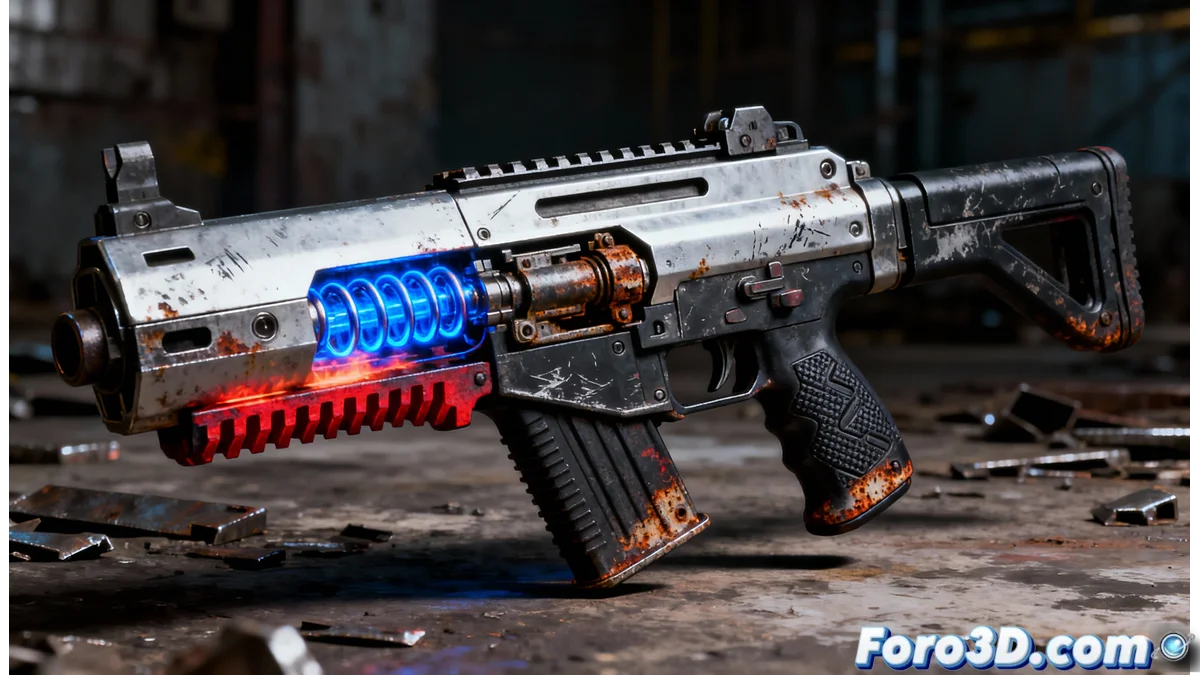
Functional Design in Vehicles and Weapons: Utility Over Aesthetics
Functional design prioritizes utility over aesthetics, making the form derive directly from the function. In vehicles and armament, this manifests through elements like angular surfaces to deflect threats, exposed cooling systems in high thermal stress areas, and quick-access ammunition compartments. This approach ensures that every component serves a specific practical purpose, eliminating any adornment that does not contribute to performance. 🛡️
Logical Integration of Mechanical Systems
Mechanical systems are organized following logical operational paths. Cooling ducts run through areas prone to overheating, such as combustion chambers or weapon barrels, exhibiting dissipation fins where heat is most intense. Structural joints are reinforced at maximum stress points, developing visible wear patterns that indicate high-friction areas. Reloading mechanisms are positioned ergonomically, allowing the operator quick access without losing control of the device, with movements that follow the natural motion of the hand. 🔧
Key Features of Integrated Systems:- Cooling ducts in critical zones, with visible fins where heat is maximum
- Structural reinforcements at high-stress points, showing friction wear patterns
- Ergonomic reloading mechanisms that facilitate quick access and control during use
Functional design produces objects so honestly ugly that they become beautiful, like a rifle made from workshop scraps that works perfectly after falling down a ravine.
Credible Materials and Wear Patterns
Material selection responds directly to functional requirements. Metallic alloys are used in structural components, showing controlled oxidation on exposed edges. Polymer surfaces are used in grips and casings, developing shine in frequently contacted areas. Wear accumulates logically: deep scratches near moving mechanisms, thermal discoloration around gas outlets, and erosion on drag edges. These patterns are not random but visually narrate the object's usage history. 🎨
Representative Wear Patterns:- Deep scratches near moving mechanisms, indicating continuous friction
- Thermal discoloration around gas outlets, reflecting heat exposure
- Erosion on drag edges, showing the impact of repetitive use
The Beauty of Pure Functionality
Sometimes, functional design creates objects that, though aesthetically rough, possess an intrinsic beauty derived from their effectiveness. Elements like seemingly improvised rifles, yet capable of operating flawlessly after extreme situations, exemplify how utility can transcend conventional aesthetics. This approach not only optimizes performance but also communicates an authentic visual narrative about the durability and purpose of each component. 💪