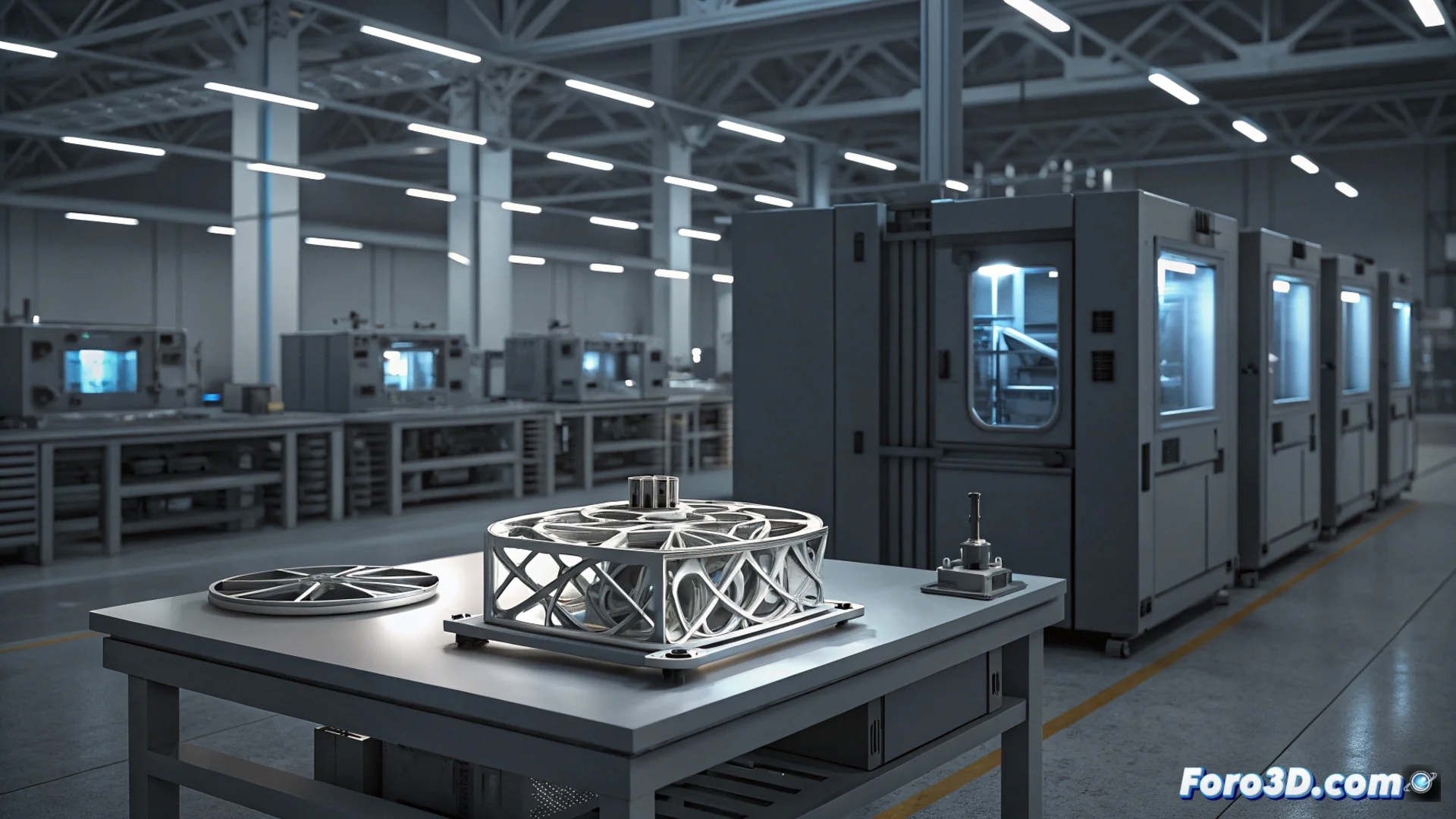
From Prototype to Serial Production: Scaling Industrial 3D Printing
Making the leap from creating prototypes in a laboratory environment to manufacturing end-use components on a large scale represents a significant challenge for many companies. Methods that operate reliably on test benches often encounter obstacles in consistency and reliability when scaling up volume. This is mainly due to the fact that conditions in a real manufacturing plant are far from those in a controlled space. 🏭
Ensuring Uniformity and Mastering the Process
To overcome this challenge, it is essential to master every factor involved in the printing cycle. Parameters such as air temperature, humidity level, equipment calibration status, and filament properties directly influence the quality of the part. Integrating continuous monitoring tools and establishing precise maintenance routines helps ensure that every unit produced meets the defined technical criteria for its final application.
Critical variables to monitor:- Manufacturing area environmental conditions (temperature and relative humidity).
- Printer axis calibration and alignment status.
- Consistent material properties across different supply batches.
A prototype that behaves impeccably on the design bench can fail spectacularly when it must operate uninterrupted for multiple work shifts.
Validate and Qualify to Bridge Both Worlds
Before committing to mass manufacturing, it is essential to verify the process and certify the equipment for the specific task. This step involves running batteries of tests that emulate prolonged production, checking that the items pass the required mechanical, thermal resistance, and longevity tests. Meticulously recording each phase generates a history that simplifies diagnosing issues and preserves uniformity across different manufacturing runs. 📊
Key actions in the validation phase:- Run test series that simulate continuous production workload.
- Verify resulting parts through destructive and non-destructive tests.
- Document all process parameters and obtained results for traceability.
The Bridge to Reliable Manufacturing
Successful transition depends on a systematic approach that prioritizes absolute control and thorough verification. It's not just about the machine working, but about it doing so predictably and repeatably thousands of times. Implementing this discipline is what ultimately allows a rapid prototyping technology to establish itself as a robust industrial additive manufacturing solution. ✅