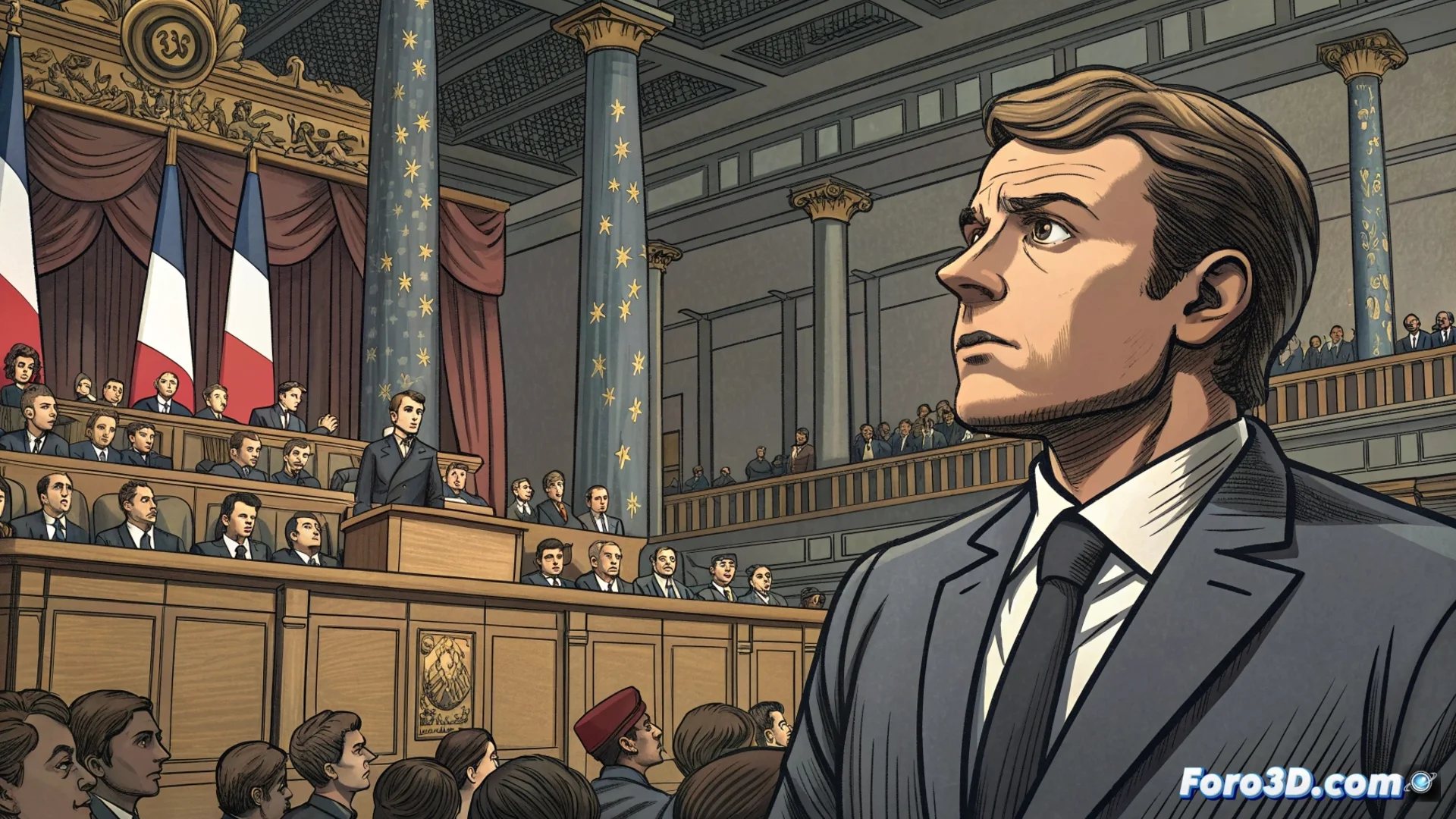
France Faces Persistent Political Instability
The political landscape in France appears extremely fragile, with the executive accumulating a succession of crises that generates a perception of paralysis in the country's administration. This situation of weakness intensifies following the recent departures of key government figures. 🏛️
Cabinet Departures Deepen the Weakness
The resignation of important ministers such as Michel Barnier and François Bayrou creates power vacuums that are complex to fill. Each change in the council of ministers forces the government to renegotiate alliances and seek new internal balances. This constant drip of abandonments erodes the authority of both the president and the acting prime minister.
Immediate Consequences of the Crisis:- The political opposition takes advantage of this vulnerability to increase its pressure and hinder daily management.
- The atmosphere inside the Élysée Palace remains in a state of permanent tension.
- Renewing the confidence and cohesion of the government team becomes an increasingly arduous task.
The climate in the Élysée Palace is one of permanent tension.
The Rejected Budget Halts the Economy
The National Assembly overwhelmingly rejected the 2026 budget bill, a plan based on austerity. This rejection blocks the country's financial roadmap and generates strong uncertainty among economic actors. Without a budget law in force, the government's capacity to manage economic policy is severely limited.
Impact of the Financial Blockade:- Investors watch with concern as the political stagnation prolongs.
- The inability to implement key economic measures affects market predictability.
- The lack of basic agreements in the legislature reflects the depth of division in the French political class.
An Uncertain Political Future
While deputies continue debating without reaching consensuses, time advances and the country's structural problems await unresolved. This institutional paralysis leaves the executive in a complicated position, where governing becomes a daily challenge. The persistent political instability consolidates as the main feature of the current landscape, with consequences yet to be defined for the near future. 🇫🇷