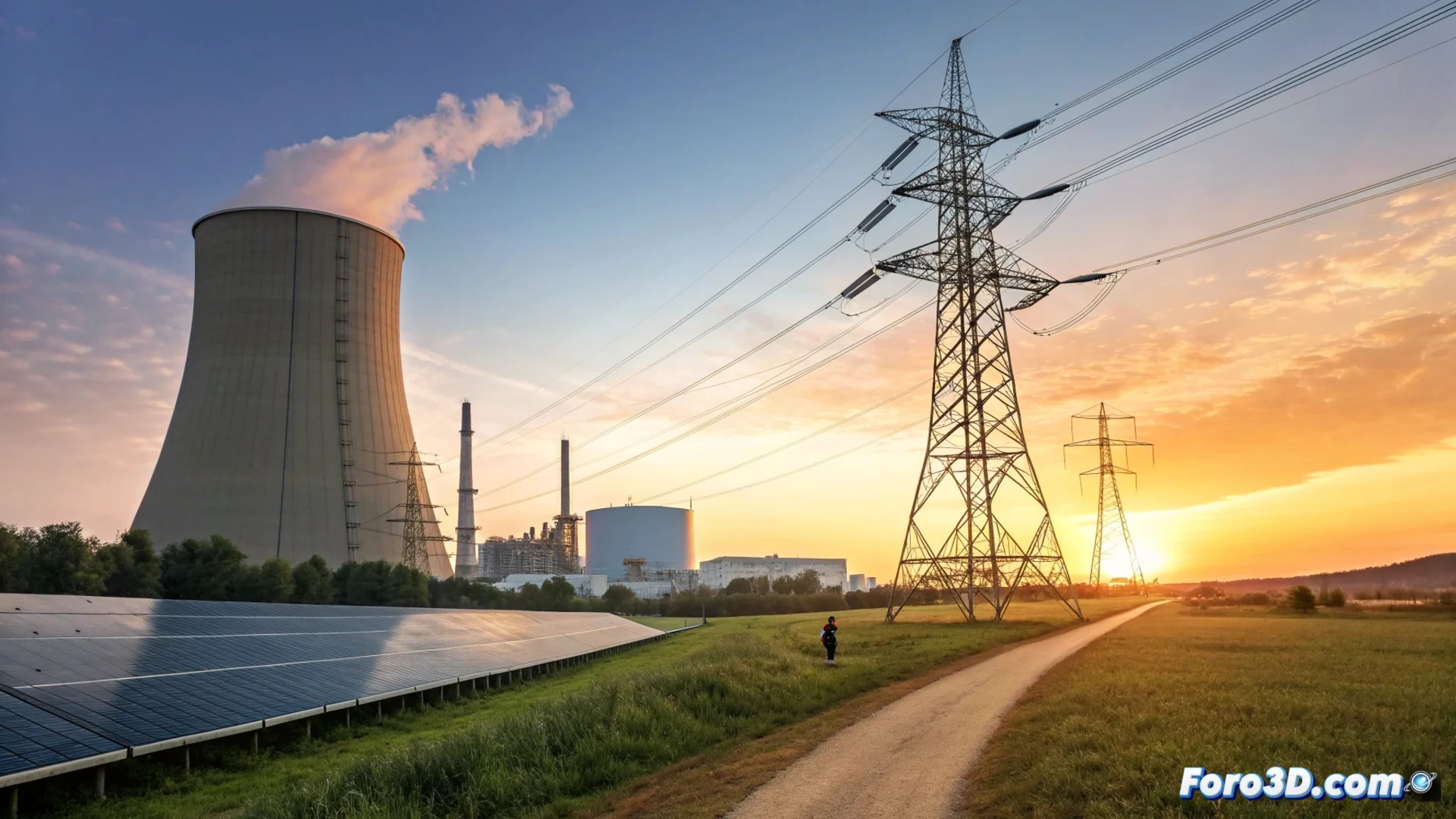
France Balances Its Energy Dependence with EU Policies
France's energy autonomy is directly influenced by the common policies designed by the European Union. Although the country produces most of its electricity with nuclear energy, it must align its strategy with a community framework that seeks to boost renewables and ensure supply for all members. This constant interaction shapes how France manages its transition and its links with continental networks. ⚡
The French Nuclear Framework Under European Scrutiny
France operates an extensive fleet of nuclear reactors that mitigates its need to import fossil fuels. The European Commission, by including nuclear energy in its green taxonomy, allows it to be financed but also requires compliance with strict safety standards and waste management. The country must coordinate its decisions on extending the life of its reactors or building new ones with the EU's collective climate legislation, which often generates friction between national sovereignty and supranational governance.
Key Points of Adaptation:- The EU's green taxonomy conditions investments in nuclear energy, demanding high standards.
- France must harmonize its long-term nuclear planning with the bloc's decarbonization objectives.
- There is a permanent tension between French strategic autonomy and community regulations.
Paradoxically, the country that boasts the most energy independence on the continent must ask Brussels for permission to define it, while exporting electrons to its neighbors who criticize its atomic bet.
The Limits of Autonomy in an Integrated Grid
The French electricity grid is deeply interconnected with those of its neighboring countries. This system allows it to export surpluses, but it also makes it dependent to maintain grid stability and cover demand peaks. The rules of the single energy market, driven by the EU, dictate trading mechanisms and how costs are shared, limiting France's ability to decide independently on its energy mix or internal prices.
Factors Limiting Unilateral Action:- The pan-European physical architecture of the grid requires constant coordination to avoid outages.
- The rules of the single market determine trade flows and prices, reducing national room for maneuver.
- Supply security is a collective objective that prevails over the individual preferences of each state.
The Future of Energy Transition in a Community Context
France's energy transition is therefore negotiated on a dual level. Internally, it must manage its nuclear heritage; externally, it must integrate into the EU's green objectives and energy solidarity. This complex balance between sovereignty and integration will define not only France's energy future, but also its role as a central actor in building an energy-resilient Europe. 🌍