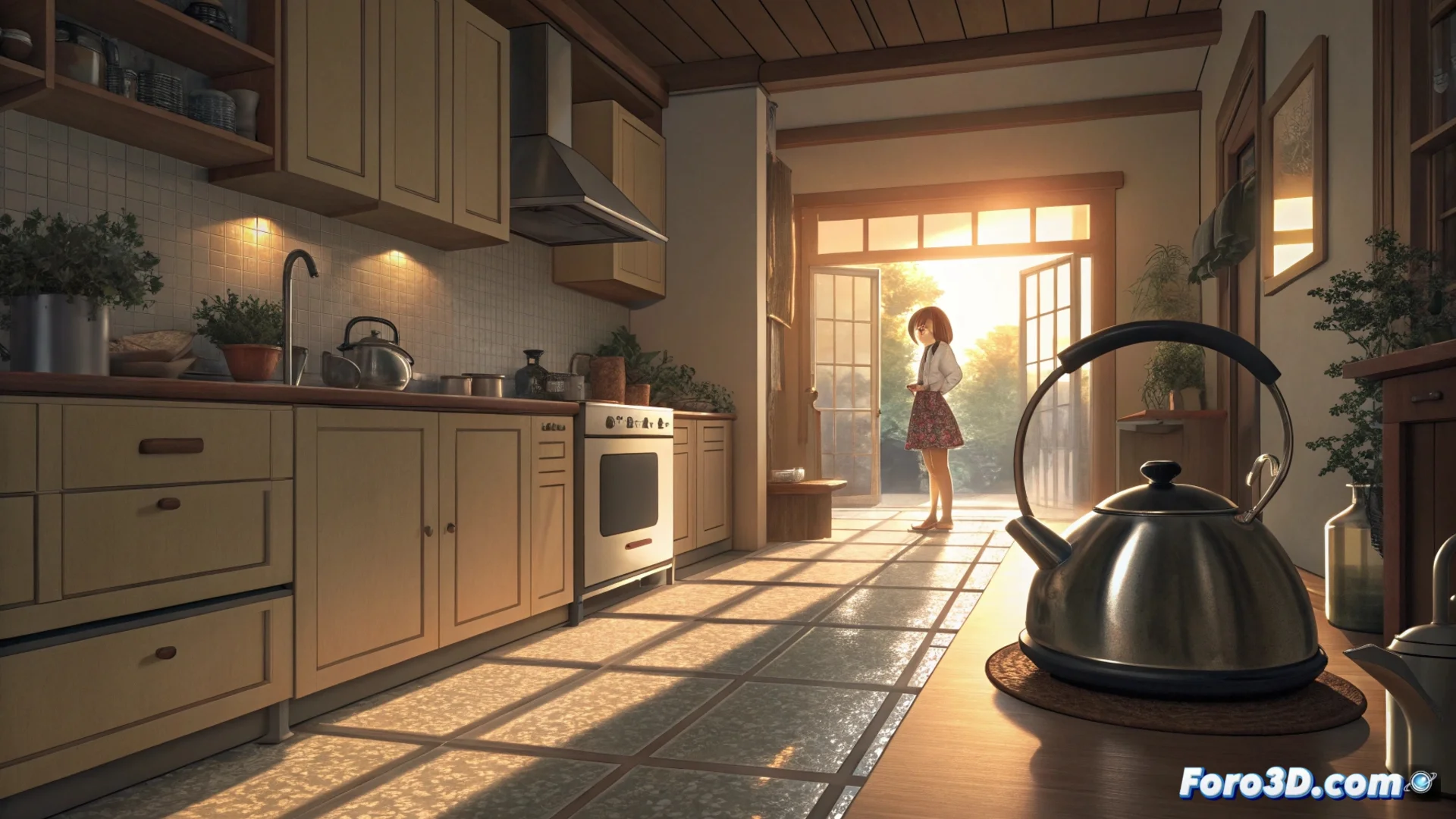
Fractured Blooms mixes life simulator and psychological horror
A new indie project, Fractured Blooms, is taking shape with Unreal Engine 5 to offer a unique experience. This title combines the technical precision of photorealism with the visual expressiveness of anime, placing the player in an apparently normal domestic setting that hides a deep unease. 🏠➡️👁️
Unreal Engine 5 powers the visual contrast
The graphics engine is used here to create a deliberate aesthetic juxtaposition. Home spaces are rendered with meticulous detail, where Lumen lighting and high-definition textures build a tangible realism. On this base, elements like characters adopt a stylized anime design, generating a sense of visual disconnection. This technical choice is not decorative; it serves to make the familiar gradually perceived as strange and threatening.
Technical and aesthetic pillars:- Domestic photorealism: Natural lighting, detailed textures, and recognizable spaces that immerse the player.
- Anime-style characters: Stylized designs that intentionally clash with the realistic environment to create strangeness.
- Unreal Engine 5: Allows implementing Nanite for complex geometry and Lumen for dynamic lighting, essential for the contrast.
The true nightmare is not a monster in the closet, but discovering that you have spent real hours polishing the same floor while a shadow watches you from the hallway.
Routine as a tension generator
The core of the game consists of doing household chores like cleaning, organizing, and maintaining a house. These repetitive and mundane actions are framed in a narrative that reveals information subtly. Small anomalies, out-of-place sounds, and minimal changes in the environment slowly erode the sense of normality. The player does not combat explicit threats, but processes a growing unease while performing their routines.
Mechanics that build the horror:- Simulated household chores: Everyday activities that serve as the main vehicle for interaction and normality.
- Environmental narrative: The story is told through subtle visual and auditory changes, not through explicit dialogues.
- First-person perspective: Increases the