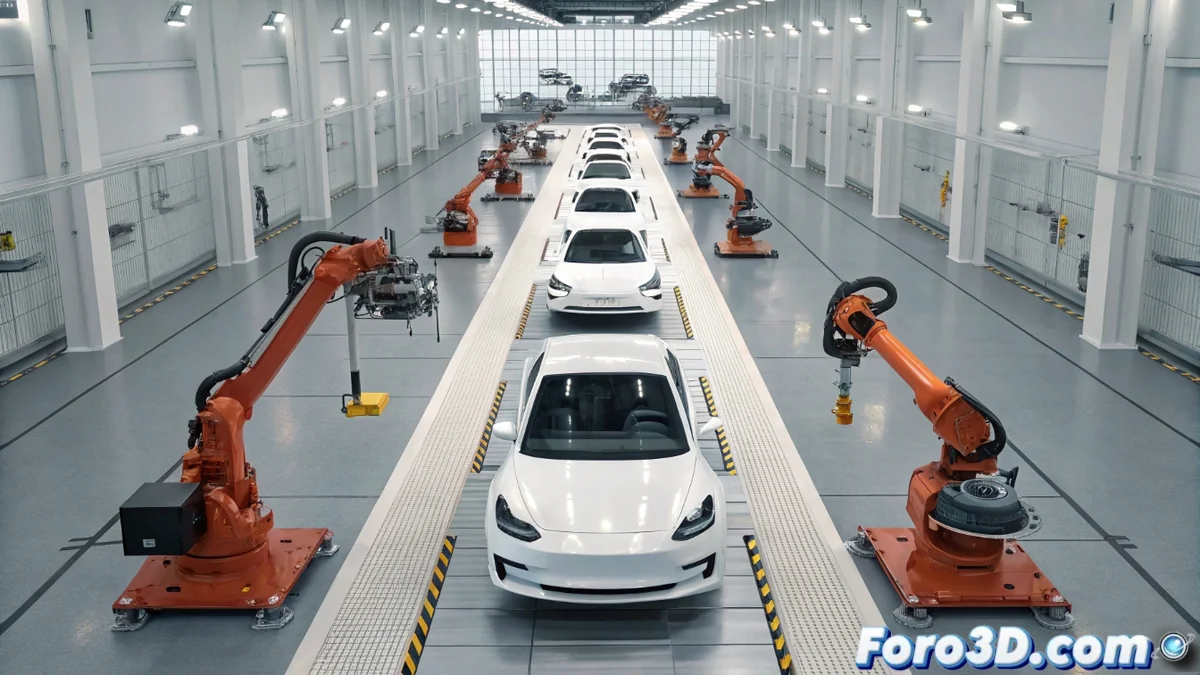
Former Tesla Executive Confirms Adoption of Chinese Techniques in Electric Vehicle Manufacturing
Recent revelations from a former Tesla sales executive have confirmed that the American company has been actively observing and integrating production methodologies perfected by Chinese automakers. This acknowledgment comes during a period of intensified competition in the global electric vehicle market, demonstrating how even industry pioneers learn from their rivals to improve processes and control costs. 🚗
Chinese Influence on Tesla's Manufacturing Strategies
The company led by Elon Musk has systematically incorporated operational approaches that include streamlining assembly lines and implementing more economically accessible materials. These tactics have been refined by Chinese companies like BYD and NIO to achieve more competitive prices in the market. This technological exchange highlights the dual nature of the contemporary industry, where collaboration and rivalry coexist to accelerate innovation through mutual observation among corporations.
Transformations Implemented by Tesla:- Restructuring of assembly lines to reduce operational complexity
- Replacement of expensive components with economically viable alternatives
- Adaptation of quality control protocols inspired by Chinese manufacturing
"In today's industrial evolution, cross-inspiration between competitors has become a fundamental driver for technological progress" - Industry Analyst
Repercussions on the Global Automotive Ecosystem
The assimilation of these manufacturing practices could enable Tesla to reduce production times and operating costs, eventually resulting in more affordable vehicles for end consumers. However, this phenomenon raises questions about innovative authenticity and how companies balance external inspiration with internal development. In the long term, this dynamic could reconfigure the fundamental parameters of manufacturing within the electric mobility sector.
Anticipated Consequences in the Industry:- Possible decrease in final prices of electric vehicles
- Intensification of global competitive standards
- Redefinition of corporate intellectual property strategies
New Philosophy of Industrial Development
It seems evident that in the contemporary automotive landscape, the strategic assimilation of proven methodologies by competitors is not always met with criticism, but is often rewarded with substantial improvements in efficiency and operational results. This paradigmatic evolution suggests that the future of industrial innovation may increasingly depend on the hybridization of knowledge among global players. 🔄