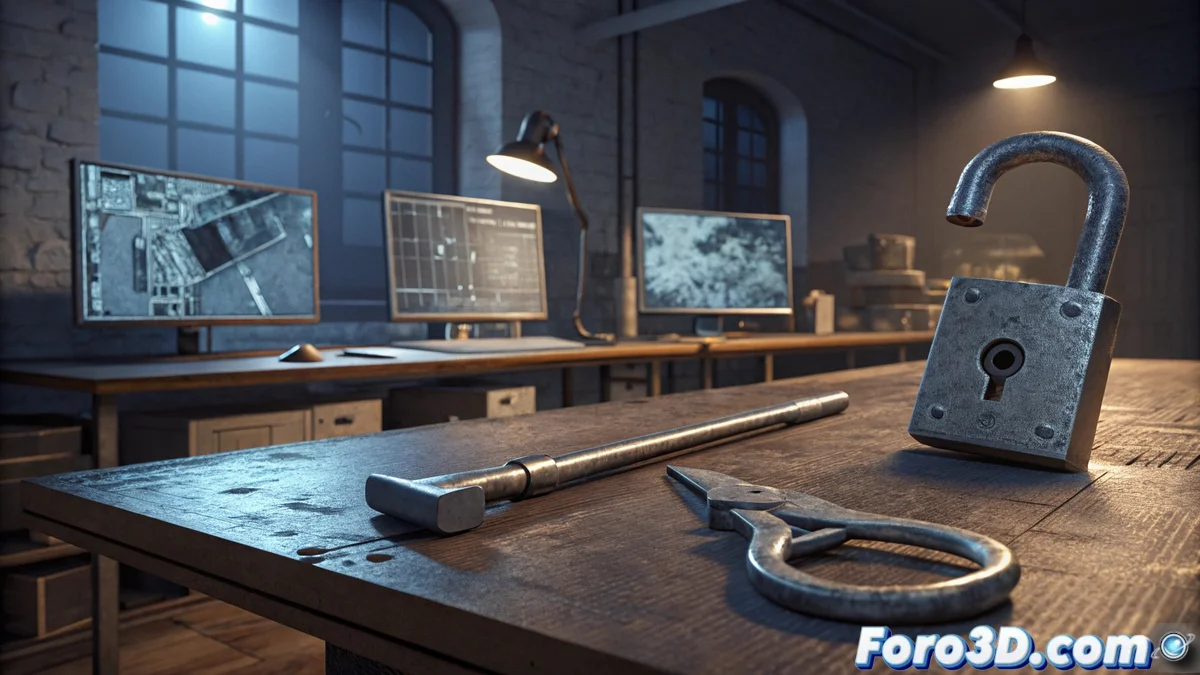
Forensic Science Uses 3D Models to Link Tools with Break-Ins
Modern criminal expertise integrates three-dimensional technology to solve property crimes. When a door is forced, the metal of the tool and the lock exchange unique microscopic traces. Experts can now capture and compare these marks with unprecedented precision. 🔍
Digitalizing physical evidence is the first step
To begin the analysis, it is necessary to digitalize the surface topography of the damaged lock and the suspect tool. A high-resolution 3D scanner, such as the Artec Micro, is used, which records every microstriation, nick, and wear pattern, generating an extremely dense and precise point cloud.
Data capture and preparation process:- Capture the physical evidence with a metrological 3D scanner.
- Generate a detailed digital model of the surface of both objects.
- Process the data in specialized software like GOM Inspect or PolyWorks to clean and prepare the models.
The most compelling evidence is sometimes not what is left behind, but what is carried away stuck to the tip of a crowbar.
The key stage: searching for the unique match
The core of the method consists of overlaying and aligning the 3D models of the mark left at the scene and the tip of the seized tool. Experts adapt striation comparison algorithms, similar to those used in ballistics, to evaluate the congruence between the surfaces at a microscopic level.
Evaluating pattern matching:- Align the 3D models of the mark and the tool digitally.
- Evaluate the congruence of crests, valleys, and wear patterns.
- Establish a link if the match exceeds all reasonable doubt.
An irrefutable physical link
If the microscopic patterns match exclusively, a direct physical connection is established between the seized object and the criminal act. This technique transforms a simple crowbar, which a suspect might claim to use for prying tomatoes, into key material evidence for the investigation. ⚖️