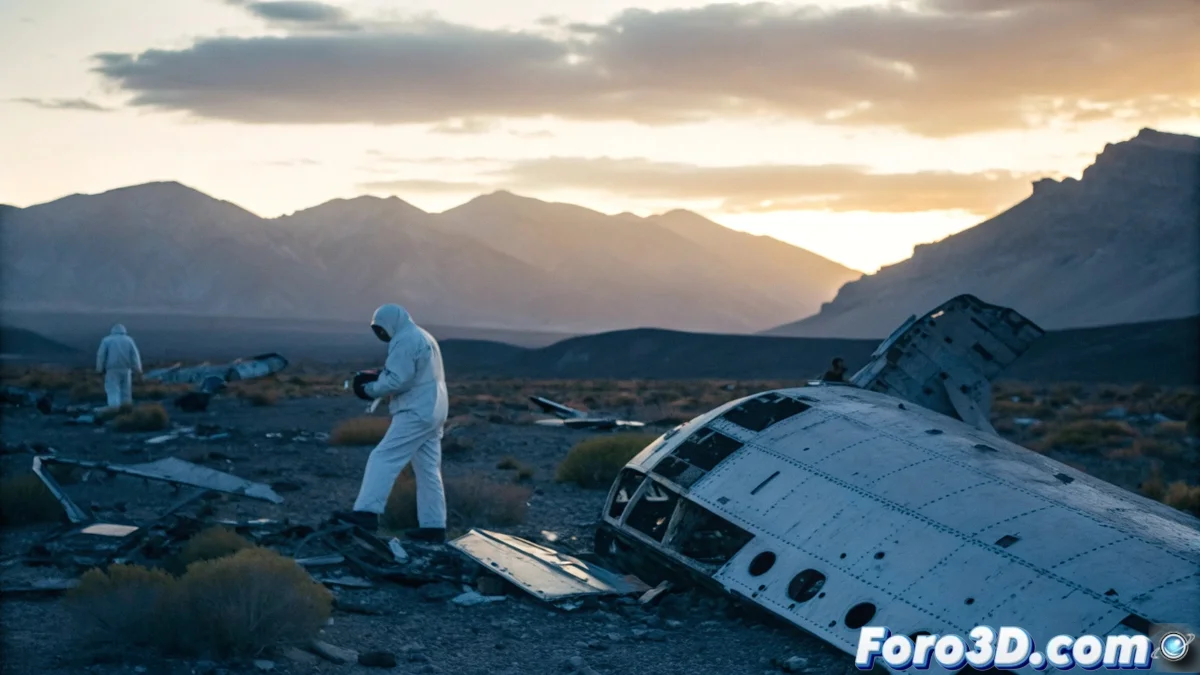
Digital Forensic Reconstruction of Air Accidents Using 3D Technologies
Modern forensic investigation of air accidents has evolved significantly with the incorporation of three-dimensional digitization technologies. This meticulous process combines advanced data capture with specialized software to reconstruct catastrophic events with millimeter precision. 🚁
Topographic Documentation with Specialized Drones
The initial phase involves a comprehensive survey of the crash area using unmanned aerial vehicles equipped with high-definition capture systems. These devices perform systematic flights over complex terrains, generating thousands of overlapping images that are subsequently processed in applications like RealityCapture and Pix4D to create georeferenced three-dimensional models of the debris field.
Applied Photogrammetry Processes:- Systematic aerial capture with complete coverage of the affected area
- Generation of dense point clouds and textured polygonal meshes
- Identification of dispersion patterns and fragment distribution
"Each forensic reconstruction is like assembling the most complex and saddest puzzle, where each piece holds a story we would prefer not to have to decipher."
Digitalization and Forensic Analysis of Components
Once the significant structural elements have been recovered, they are subjected to three-dimensional digitalization using high-precision scanners. Each component is meticulously captured and processed in platforms like Geomagic Control X, where specialists perform exhaustive dimensional inspections and identify deformations, fractures, and evidence of material fatigue.
Dimensional Analysis Methodologies:- Digital alignment of components with original design geometries
- Systematic comparison with certified engineering drawings
- Detection of structural deviations and critical failure points
Virtual Reconstruction and Dynamic Simulations
With the complete three-dimensional database, engineering teams use advanced CAD/CAE software such as Siemens NX and CATIA to virtually reconstruct the aircraft. This computational reassembly allows visualization of interconnections between fragments and determination of the primary structural failure point. Subsequently, the models are exported to solutions like LS-DYNA to run dynamic simulations that recreate the final moments of the flight, analyzing impact forces and failure sequences under multiple hypothetical scenarios.
This comprehensive forensic engineering approach represents the convergence between 3D technology and scientific analysis, providing crucial insights to improve future aeronautical safety while honoring the memory of those who suffered these tragedies. ✈️