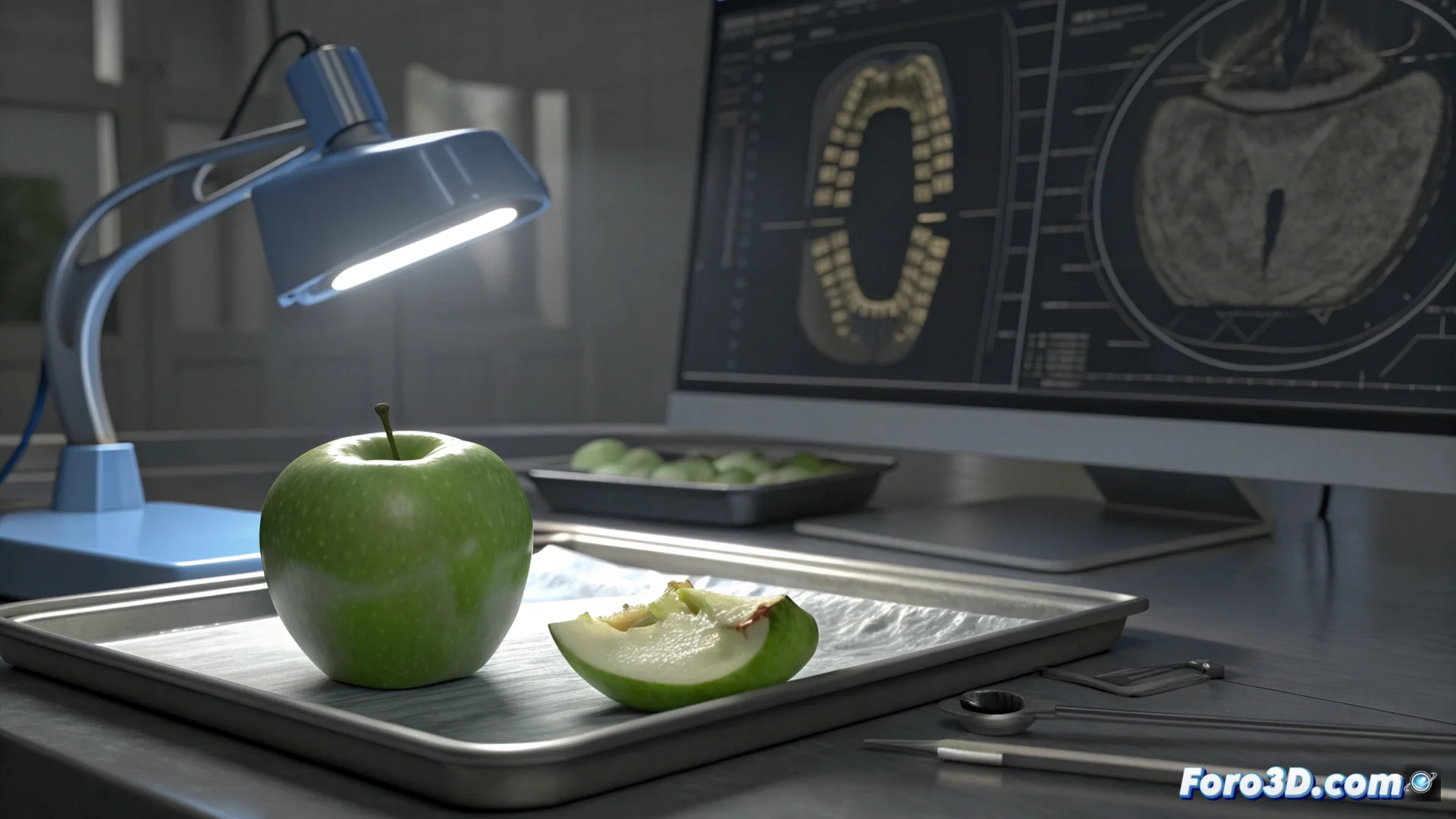
Forensic dentistry uses 3D scanners to analyze bite marks
Forensic experts now integrate three-dimensional scanners to capture and analyze the marks left by a bite on objects like fruits or cheese. This technological advancement transforms a perishable physical evidence into a permanent digital file, which does not degrade and can be studied with metric precision. 🔍
Technical process of digital capture and comparison
To digitize the mark, a structured light or laser 3D scanner is used. This device records the topography of the bite without physical contact, preserving the food as evidence. Specialized software processes the captured point cloud to build a detailed polygonal mesh. In parallel, the dentition of a possible suspect is digitized, either from their mouth or using existing dental molds.
Key steps in forensic comparison:- Analysis programs overlay the bite model with the suspect's dentition scan.
- Distances, angles, and the alignment of each dental piece are measured with exact precision.
- The system calculates the statistical probability that the mark comes from that specific dentition, searching for unique patterns that are difficult to replicate.
The key lies in identifying the individual characteristics of each dentition, which act as a buccal fingerprint.
Advantages of implementing 3D models in investigations
This methodology clearly overcomes the limitations of traditional forensic photography, which can distort perspective and does not record real depth. A 3D model of the evidence can be rotated, virtually sectioned, and measured from any angle without manipulating the original object.
Main benefits of the three-dimensional technique:- Preserves the original evidence indefinitely in a digital file that does not spoil.
- Allows sending the evidence to other experts for consultation without risk of damaging the physical element.
- Provides a metric and objective database that supports the expert's conclusions.
Limitations and practical considerations of the method
Although it is a powerful tool, the success of this analysis depends on the quality of the original mark. If a person bites a very soft food, like a puree, the resulting mark will lack the necessary definition for a reliable comparison. Therefore, this technology is used for Related Links