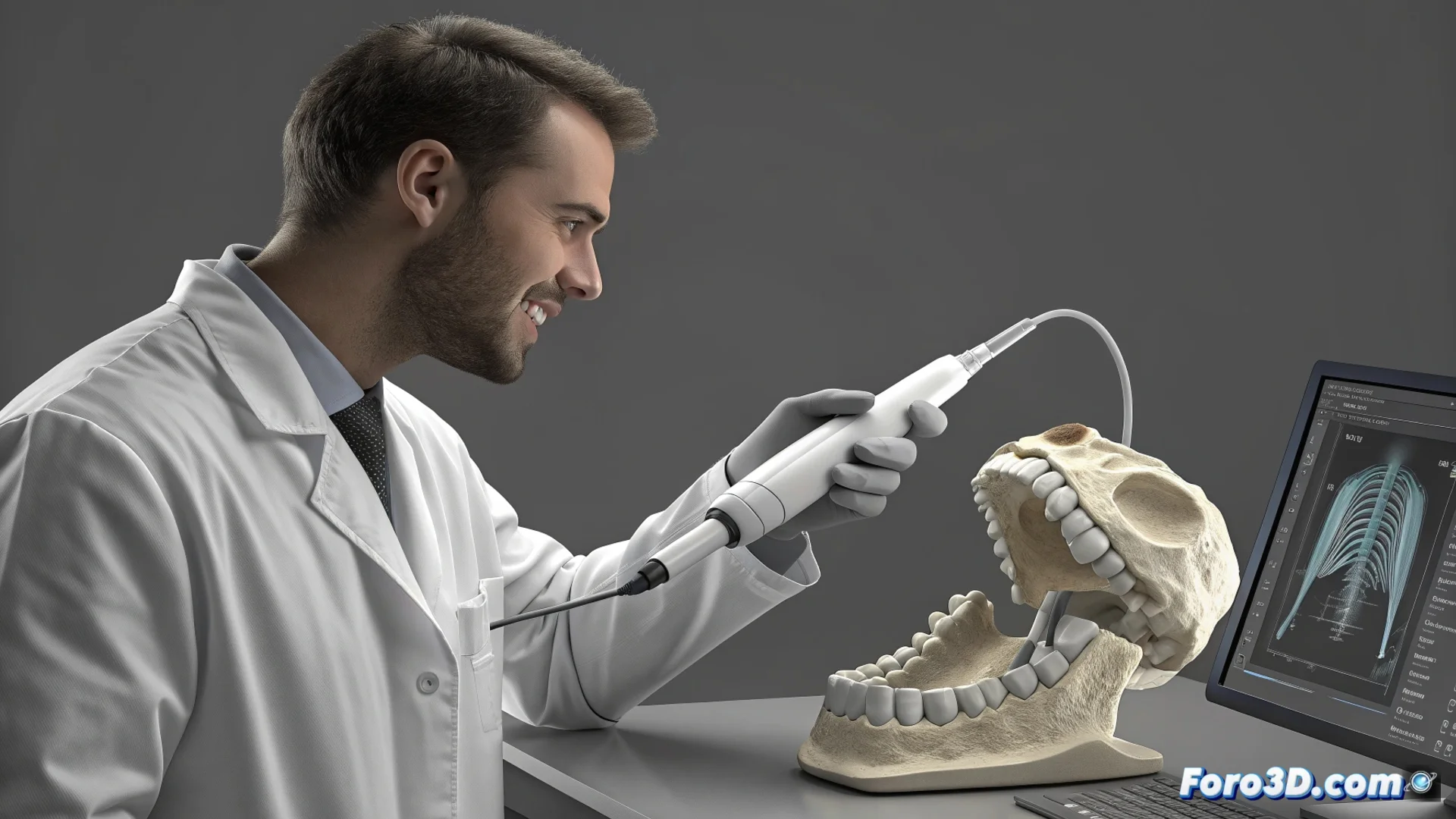
Forensic dentistry uses 3D intraoral scanners to identify people
Experts in forensic dentistry now use 3D intraoral scanners to process dental remains with unprecedented precision. This technology revolutionizes how cases of missing persons or disaster victims are resolved, transforming the oral cavity into key evidence. 🔍
Capturing the unique dental fingerprint in 3D
The method relies on a 3D intraoral scanner that records an extremely detailed point cloud of the entire arch. This device captures the morphology of each tooth, the contour of restorations like fillings, and even microscopic details in the enamel. The result is a three-dimensional digital model that serves as an individual's exclusive biometric pattern.
Key advantages of forensic 3D scanning:- Records data with millimetric accuracy, eliminating distortions.
- Significantly reduces the margin of error that a human might introduce when measuring.
- Generates a digital file that can be stored, shared, and analyzed with specialized software.
Triangulation of information turns the dental set into an almost infallible digital fingerprint, especially useful where other methods fail.
Comparing and confirming identities with historical data
The true power of the system emerges when comparing the newly created 3D model with the deceased's old dental records. Forensic software automatically aligns and overlays the new scan with digitized panoramic radiographs or scanned plaster models. It searches for objective matches in root canal treatments, implants, or the exact position of a cavity.
Integrated workflow:- The dental remains are captured with the 3D intraoral scanner.
- The software processes the data and creates a high-fidelity digital model.
- Historical records (radiographs, clinical charts) are imported and digitized.
- The algorithm calculates matches, confirming or ruling out an identity based on solid evidence.
A decisive tool in complex investigations
This application of 3D technology drastically accelerates the identification process, which previously relied more on visual expertise. Its reliability is crucial in mass disaster scenarios, where speed and certainty are vita