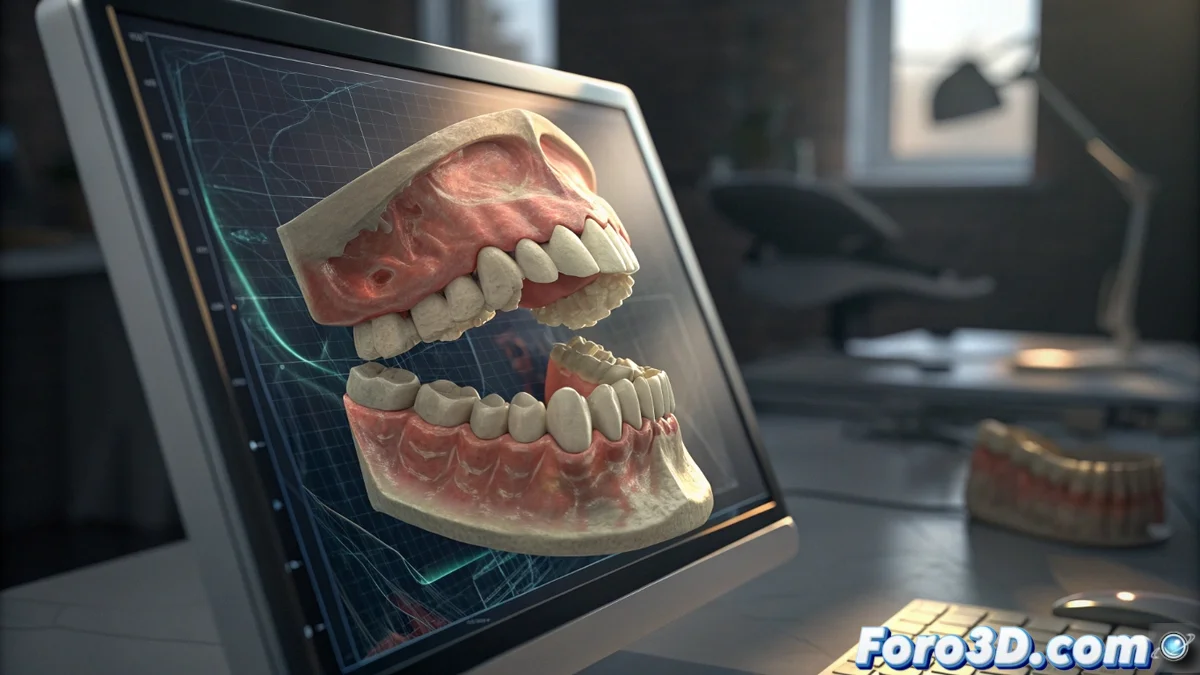
Forensic Dentistry Revolutionizes Its Analysis with a 3D Digitization Pipeline
Forensic science is undergoing a radical transformation thanks to the integration of three-dimensional digitization technologies. In critical cases, such as bite mark analysis, a comprehensive technological pipeline has been implemented that replaces traditional methods with a digital, objective, and quantifiable process. This advancement allows physical evidence to be converted into high-fidelity 3D models, ushering in a new era for justice. 🔬
Digital Capture of Physical Evidence: The First Link
The process begins with the precise digital acquisition of the two key elements. On one hand, an ultra-high-resolution 3D scan of the wound left on the victim's skin is performed. For this task, devices such as the Artec Micro desktop scanner are used, whose ability to capture micrometric-level details is essential. Simultaneously, an exact digital replica of the suspect's dentition is obtained. This is commonly achieved through a traditional dental impression that is subsequently digitized with a 3D scanner, or through direct intraoral capture. These two digital files become the pillars of modern forensic analysis.
Key Components of the Capture Process:- Wound Scanning: Use of structured light or laser technology to record the complete topography of the bite mark, preserving its geometry permanently.
- Dentition Digitization: Creation of a 3D model of the suspect's dental arch, which will serve as a virtual comparison element.
- Preservation of Chain of Custody: Digital files are unalterable and traceable, strengthening evidence integrity from the very beginning.
The 3D digitization pipeline creates a robust digital chain of custody and reproducible analysis that strengthens scientific evidence.
Objective Analysis: Alignment and Statistical Metrics
Once the models are digitized, the phase of objective scientific comparison begins. The files are imported into specialized 3D metrology software, such as Geomagic Control X or the open-source tool CloudCompare. The crucial stage is surface registration or alignment, where the dentition model is virtually positioned over the bite mark, seeking the best possible geometric correlation. Through iterative algorithms, the software adjusts the position and orientation to minimize deviations. After alignment, a distance analysis is performed that calculates, point by point, the differences between both surfaces. The result is visualized through color maps indicating contact, penetration, or separation, and is translated into a statistical value, such as a match percentage, providing a quantifiable metric of correspondence. 📊
Stages of Comparative Analysis:- Iterative Alignment: Automated or semi-automated process that seeks the optimal overlay between the two 3D models.
- Deviation Analysis: Mathematical calculation of distances between surfaces, generating objective data on the fit.
- Report Generation: Creation of technical documentation with color maps and numerical values that support the conclusions.
Persuasive Presentation for the Legal Arena
The final phase of the pipeline focuses on the effective communication of technical findings to a jury or judge. Here, visualization and content creation tools like Blender play a starring role. This software not only allows for fine visualization adjustments and the creation of photorealistic renders of the overlay, but it is also ideal for producing explanatory animations. These animations can show, from multiple angles, how the suspect's dentition fits or does not fit the victim's bite mark, transforming complex data into a clear and compelling visual narrative. This comprehensive approach, from capture to presentation, elevates forensic evidence to a level of objectivity and clarity without precedent, leaving behind the subjectivity of merely visual comparisons. 🎬