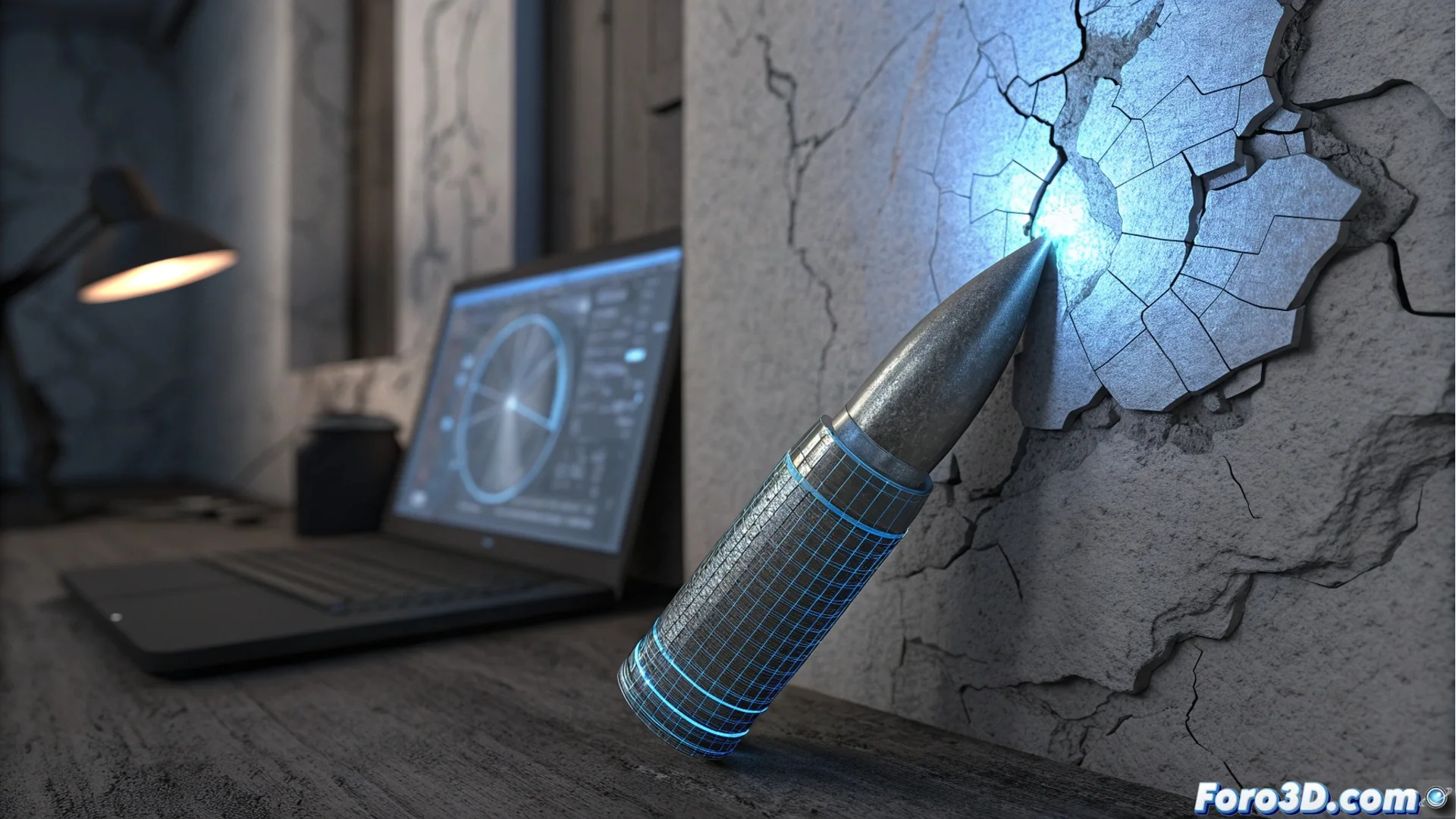
Forensic Ballistics Transformed by Reverse Engineering and 3D Simulation
The field of forensic ballistics is undergoing a revolution by adopting reverse engineering methods and computational physical simulation. It's no longer enough to examine the rifling marks on a projectile to link it to a weapon. The key now lies in deciphering the story told by its deformation after impact. 🔍
From Physical Object to Precise Digital Model
The process begins when a deformed projectile is recovered or the entry hole is located. A high-resolution 3D scanner, such as the Artec Micro, is used to capture the exact geometry of both elements. This step generates three-dimensional digital models that serve as a reliable geometric base for analysis. The altered shape of the bullet encodes vital information about how it interacted with the material it penetrated, data that traditional visual examination cannot fully extract.
Key Phases of Digitization:- Capture the Geometry: The projectile and the hole are scanned to obtain an accurate point cloud.
- Generate the 3D Mesh: Scanner data is processed to create a surface or volumetric model ready for simulation.
- Preserve the Evidence: The digital model allows analysis without manipulating or damaging the original physical object.
Sometimes, the answer is not in what the bullet says, but in the way it falls silent after crashing into a wall.
Simulate the Impact to Reveal the Trajectory
The 3D models are imported into finite element analysis software like Abaqus or LS-DYNA. In this environment, a high-speed ballistic impact simulation is configured and executed. This computational recreation reproduces the physical conditions of the collision, allowing the deduction of the exact angle at the moment of impact. Once this direction vector is defined, it is possible to trace a straight line in 3D space from the entry point.
Specialized Software in This Workflow:- Abaqus / LS-DYNA: To simulate the physics of impact and deformation.
- FARO Zone 3D: To analyze ballistic trajectories and reconstruct scenes.
- Blender or Meshmixer: Sometimes used in preliminary phases to process and repair scanned 3D models.
Triangulate the Shooting Origin with Quantifiable Evidence
The final phase occurs in 3D trajectory analysis software. The calculated entry angle vector is entered and crossed with other scene data, such as the height of the hole and the location of obstacles. The system processes this information and calculates the probable zones from where the shot could have been fired. This method drastically reduces the search area for investigators, transforming what were once conjectures into objective and measurable evidence. The integration of these technologies marks a before and after in criminal investigation. 🎯