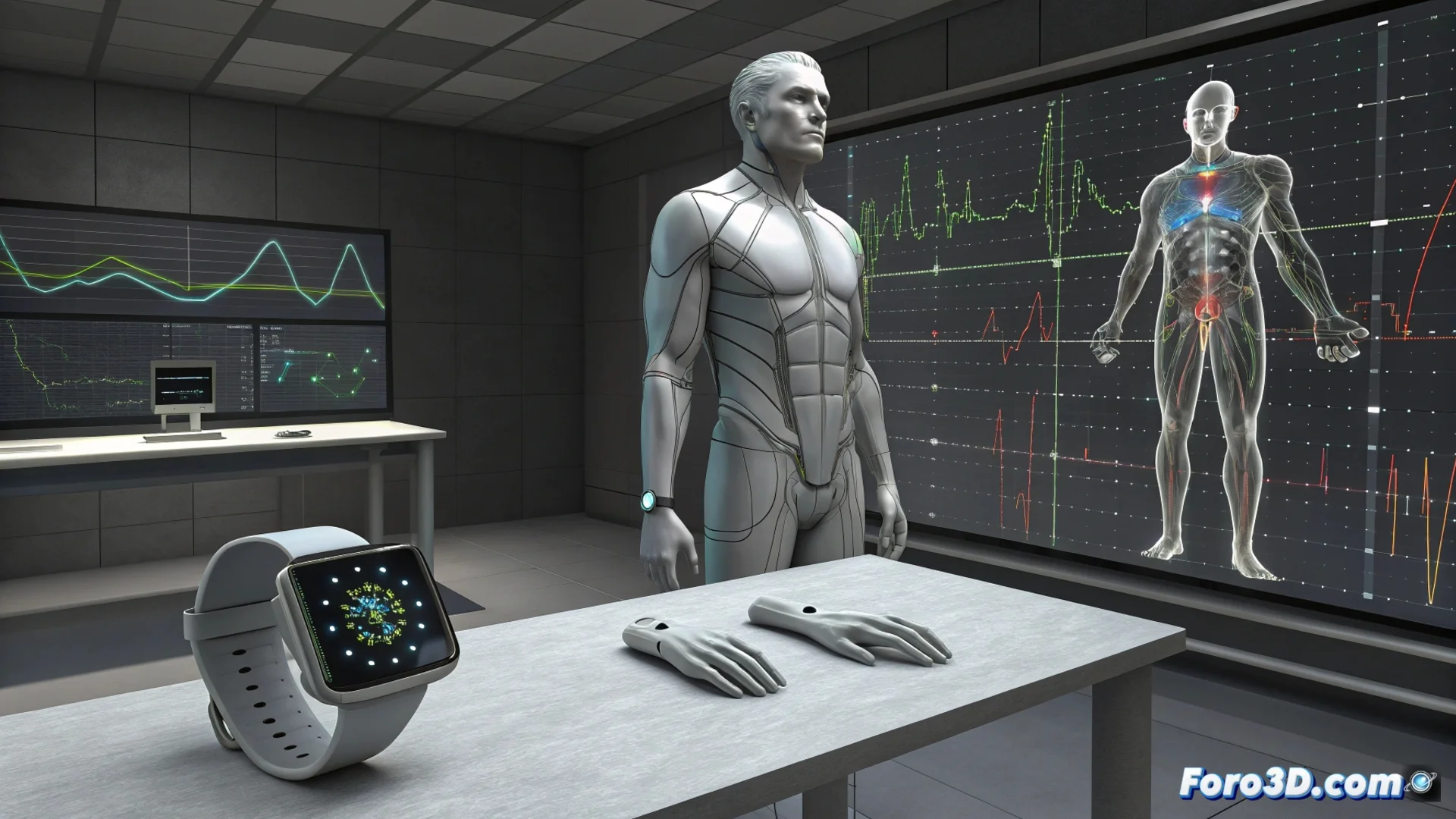
Forensic Animation Verifies Alibis with Smartwatch Data
In the field of criminal investigation, wearable technology has become a silent witness. When a suspect claims they were sleeping at the time of a crime, experts can now extract and analyze the records from the accelerometer and gyroscope of their smartwatch. These sensors continuously capture wrist movement and orientation, generating a digital trail of activity that can be contrasted with a statement. 🔍
From Raw Data to an Animated 3D Avatar
The process begins by filtering and processing raw sensor readings using specialized software like MATLAB. Subsequently, this refined data is imported into a game engine, such as Unity or Unreal Engine. There, the information is applied to a 3D human avatar, linking sensor values to the digital model's wrist movements. The resulting animation visually reconstructs how the arm moved and, by inference, the individual's entire body during the period under scrutiny.
What the animation reveals:- If the avatar remains in a state of relative rest, with slow and sporadic movements.
- The presence of rhythmic and regular oscillations, characteristic of walking.
- The detection of sudden and chaotic accelerations across multiple axes, typical of a struggle or tussle.
The animation translates complex numbers into a visual narrative that investigators and juries can intuitively perceive.
Contrasting Sleep with Physical Action
Forensic analysis focuses on differentiating patterns. Movements during sleep are limited in range and speed. In contrast, activities like walking generate a clear signature of predictable oscillations in the accelerometer data. A physical altercation produces a completely different pattern: high-intensity accelerations, disordered and simultaneous across the X, Y, and Z axes. The 3D animation visualizes these differences objectively, allowing evaluation of whether the recorded activity resembles sleeping or actions incompatible with sleep.
Key advantages of the method:- Provides an objective and reproducible representation of sensor data.
- Facilitates understanding of technical evidence for a non-specialized jury.
- Allows investigators to identify transitions between activity states (rest, movement, agitation).
Digital Precision as a Legal Tool
This convergence of wearable technology, data processing, and 3D animation is redefining how alibis are verified. The animated recreation serves as powerful supporting evidence that can corroborate or refute a version of events based on quantifiable physical evidence. Sometimes, the most accurate representation of a suspect's movements can be the most uncomfortable and revealing proof. ⚖️