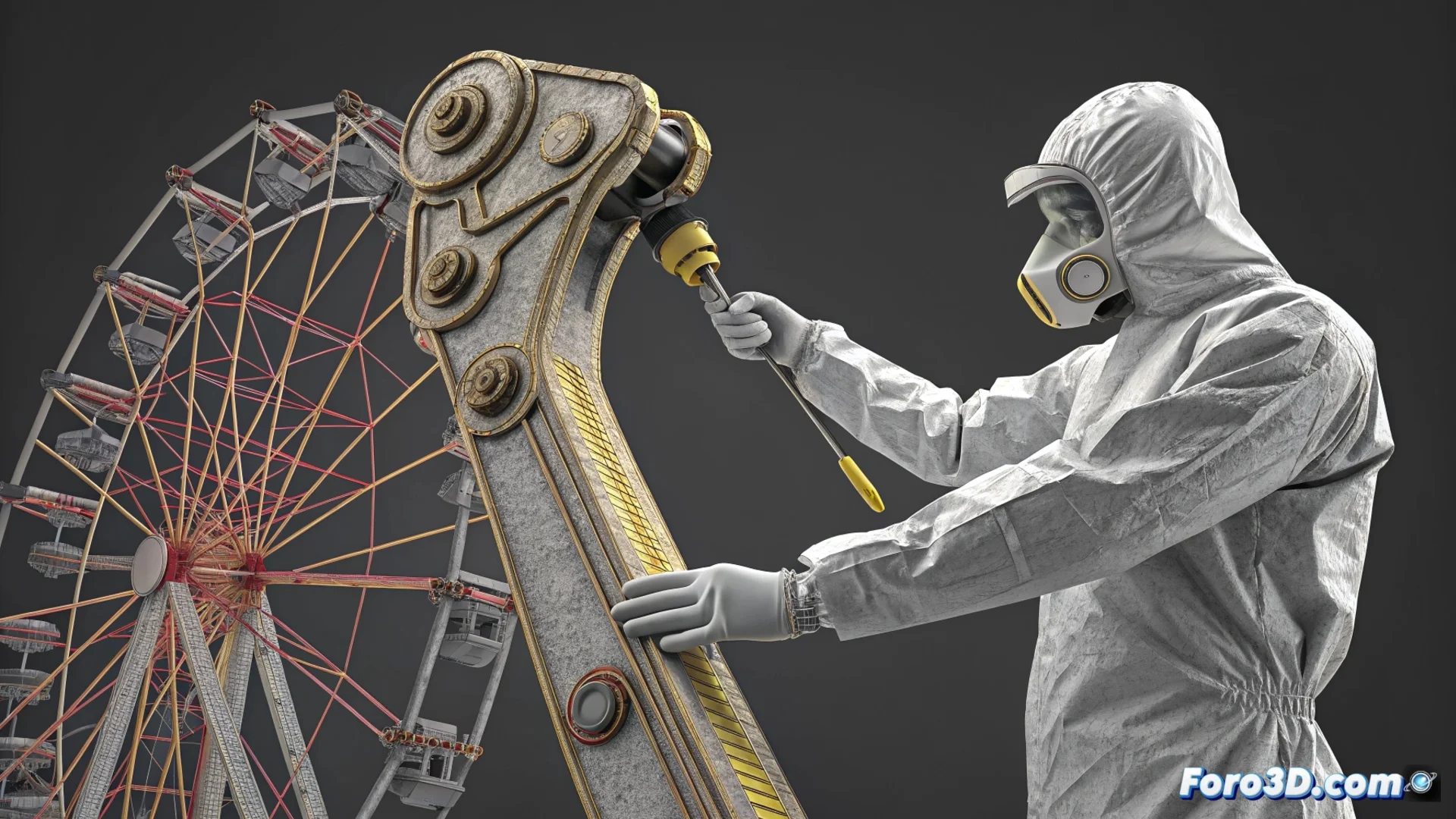
Forensic Analysis of Fatigue Fractures Using 3D Models
When a mechanical component, such as the arm of a fairground ride, fails, forensic engineers step in to discover why. The cause is often metal fatigue, a phenomenon where cracks expand progressively under repeated loads. For a thorough investigation, the broken surface is digitized with a high-precision industrial 3D scanner. 🛠️
Digitalizing the Fracture to Understand Its History
Systems like the GOM ATOS Q capture the complete topography of the break. This process records even microscopic details, including beach marks and striations left by the crack as it advanced. These data form a point cloud that serves as the basis for subsequent analysis.
Processing the 3D Scan:- Specialized software, such as GOM Inspect, processes the millions of captured points.
- Experts examine the 3D model to locate the beach marks, which are rings indicating periods when the crack stopped growing.
- Measuring the distance between these marks allows calculating the rate at which the crack propagated in each phase.
This topographic analysis reconstructs the chronology of the damage and estimates how many load cycles the part withstood before breaking.
Integrating Real Data into Virtual Simulations
The information extracted from the 3D model doesn't stop there. It is fed into finite element software like Ansys or Abaqus to simulate the stresses the component experienced during normal use. This correlation between the physical and digital worlds is key.
Objectives of the Correlated Simulation:- Verify if the calculated stress levels match the observed crack propagation rate.
- Determine if the crack size was sufficient to be detected in a maintenance inspection prior to the accident.
- Establish the technical causes of the failure objectively.
From Investigation to Prevention
This technical process is essential for two aspects: determining liabilities in an incident and, most importantly, improving safety protocols. The findings allow reviewing and strengthening inspection criteria and maintenance intervals for critical components. The ultimate goal is to prevent a fatigue failure, which develops silently, from ending in an unexpected collapse. 🔍