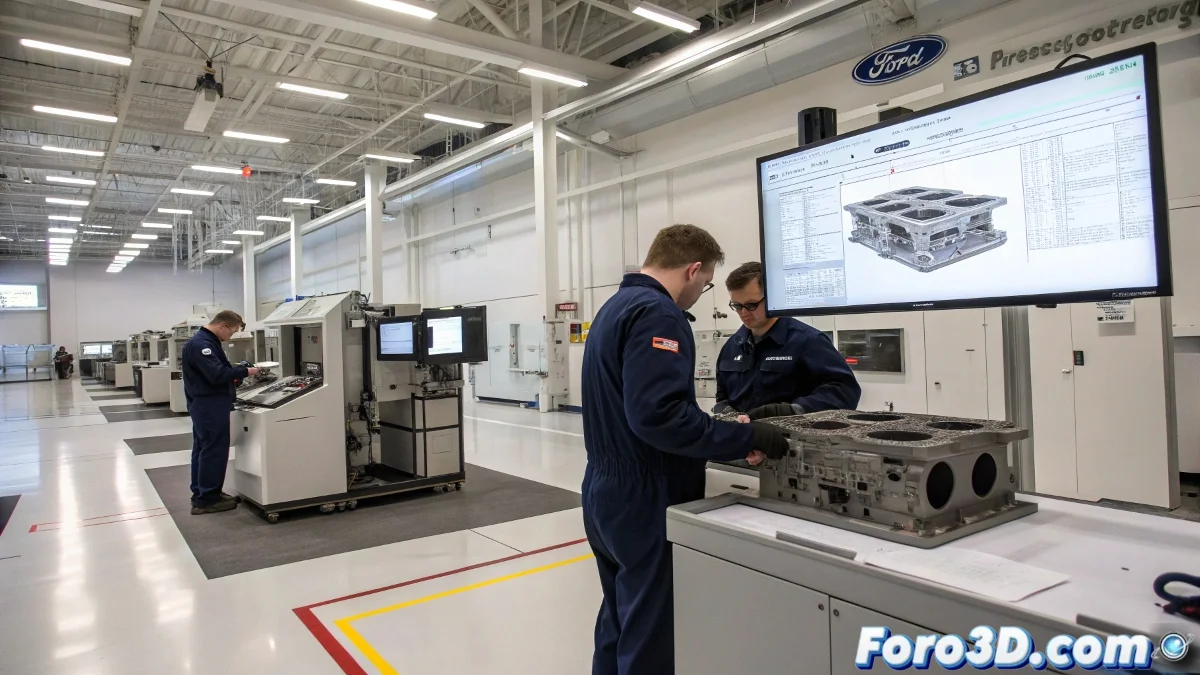
The Engine of the Future Printed in 3D
While some print documents, Ford and Red Bull are printing the future of Formula 1. Their ambitious project to develop the 2026 powertrain combines cutting-edge technology with high-performance engineering, all with an unexpected ally: the 3D printer. What began as a strategic collaboration now seems more like a race against time across continents.
From Michigan to Milton Keynes Non-Stop
The development process has as much pace as a fast lap:
- Design in Dearborn during breakfast
- Prototype printing before lunch
- Wind tunnel tests by tea time
"In 2026 F1, if your 3D printer jams, you lose the championship"
An Engine with Hybrid DNA
Ford came to bring its electrification expertise, but things have gotten complicated (in the best way). Now they are immersed in:
- Energy recovery systems that would make a conventional hybrid blush
- Power architectures that challenge the laws of thermodynamics
- Composite materials that weigh less than a driver's excuse after retiring
The World's Fastest Learning Curve
Red Bull Powertrains is the new team everyone fears. With Ford as a partner and an army of recruited experts, they are writing the manual on how to build a winning engine from scratch. The first data is promising, although as the chief engineer jokes: "Our engine lasts longer than a tire in Monaco... but that doesn't say much".
2026: The Big Technological Leap
The new regulations pose a huge challenge, but also a unique opportunity. While other teams tweak the existing, this alliance is:
- Redesigning concepts that haven't changed in decades
- Optimizing every gram as if it were gold
- Creating solutions that will make the technical regulations need their own update
In the end, it all boils down to a simple equation: take Red Bull's obsession with perfection, add Ford's industrial know-how, mix it with cutting-edge technology and you'll get... well, probably something that will make Verstappen smile (and that's saying a lot) 🏎️💨