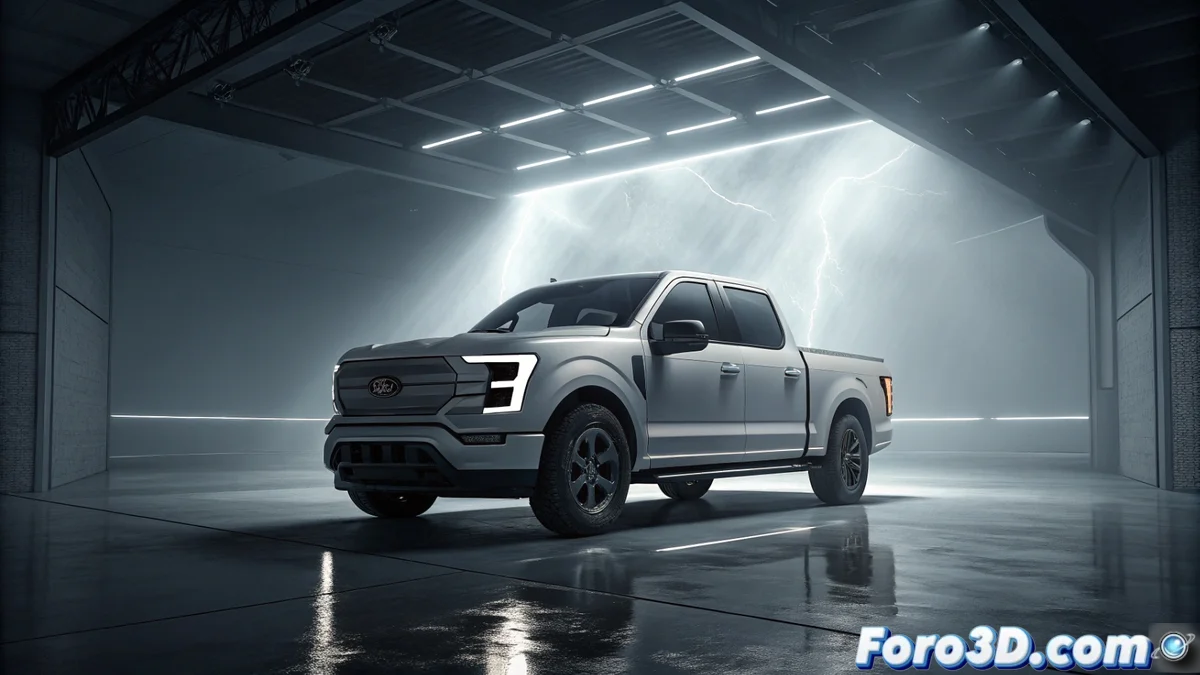
Ford Admits Its Strategy of Expensive Electric Vehicles Isn't Working
Jim Farley, Ford's CEO, has made a crucial statement: the tactic of marketing premium electric vehicles has not yielded the expected results in the United States. Buyers are rejecting paying a substantial premium just for electrification, forcing the company to completely rethink its roadmap. 🔄
The New Direction: Affordability and Profitability
Far from abandoning its bet on electrification, Ford is redirecting its efforts. The immediate future focuses on models like the F-150 Lightning pickup. The goal is clear: develop a second generation that is more accessible and, at the same time, profitable for the company. To achieve this, they plan to aggressively cut costs throughout the chain, from the battery to the design and manufacturing process.
Pillars of Ford's New Plan:- Create a second-generation F-150 Lightning with a significantly lower price.
- Achieve extreme efficiencies in production to reduce the final cost.
- Compete directly on price with traditional internal combustion vehicles.
"We have to make electric vehicles financially accessible. Mass adoption depends on it." – Market reflection.
The Reality of the US Market
This admission reflects a truth in the sector: the high initial cost remains the main barrier for most buyers. Ford now understands that to succeed in the US, electrification must convince the wallet first. The company is focusing on achieving economies of scale that allow offering products at a competitive selling price, without relying on government incentives. 💡
Key Challenges Facing Ford:- Match the price of electric models with their gasoline equivalents.
- Achieve this goal without the company incurring losses.
- Accelerate production innovation to lower structural costs.
The Difficult Balance Ahead
The initial idea of selling electric trucks at exorbitant prices has proven unviable. Now, the technical and financial challenge is to find the formula so they cost the same as combustion ones, while maintaining profitability. This challenge places Ford and the rest of the manufacturers in a complex race to optimize every component and process. The path to mass electrification in the US inevitably passes through affordability. 🏁