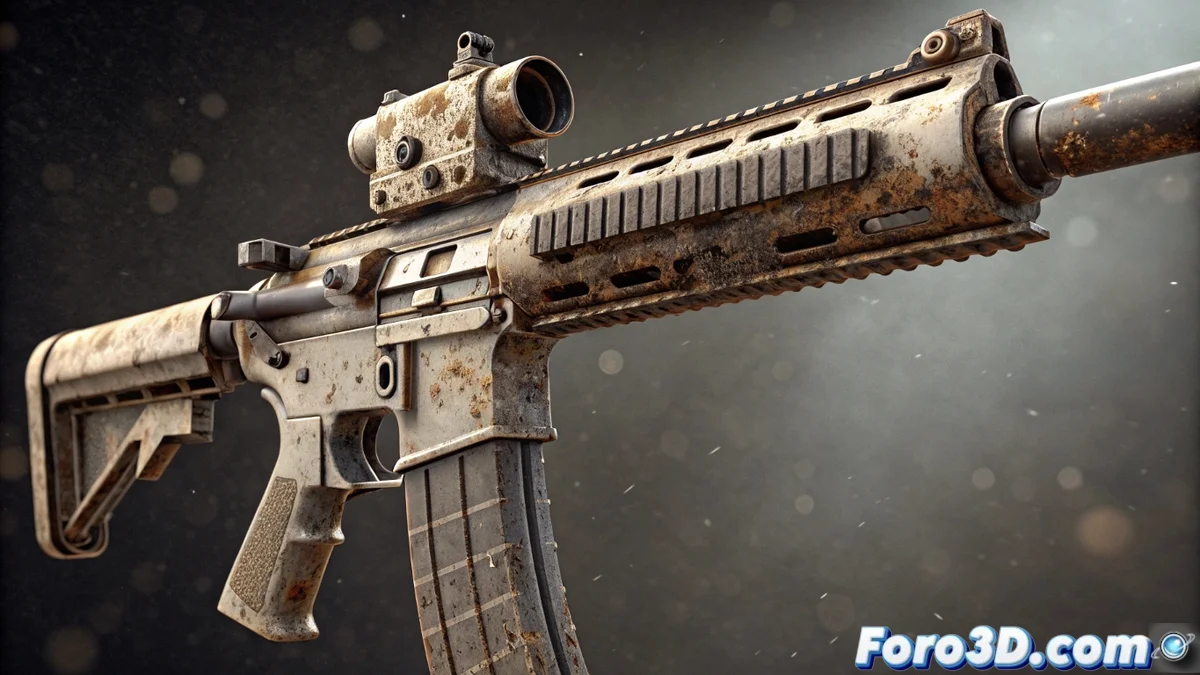
Forced Aging in 3D: When Wear Undermines Credibility
In the world of 3D rendering and 2D illustration, there is a very widespread technique: adding layers of dirt, rust, and scratches to almost any object to give it character instantly. This forced aging or forced weathering can become a double-edged sword. When applied without a reason to be, the result is an environment where everything seems equally deteriorated, completely losing its verisimilitude. 🎨
Wear Without a Story is Just Visual Noise
The central problem is not using wear textures, but how and why they are used. Seeing a new weapon completely rusted or a newly built spaceship with excessive carbonization makes the viewer stop believing. The scene fails because the wear does not arise from a coherent story, but from a generic texture template. Credibility is built with logic, not with automatic filters.
Examples of illogical wear that break immersion:- A luxury design piece of furniture with deep and random scratches all over its surface.
- A new industrial vehicle showing rust in areas protected from the weather.
- A sealed electronic device with dust accumulation on its main tactile surfaces.
Wear must tell a coherent story, not be mere decoration.
The Key: Think Like a Mark Detective
To use weathering well, you must investigate what story each imperfection tells. A scratch on a doorknob indicates where it is gripped; grease accumulates in joints and friction areas; rust progresses from points where protection fails. This selective and physics-based logic approach enriches the image. Applying dirt and dust homogeneously, just because "it looks good," impoverishes the result and creates a monotonous scene.
Key questions for applying wear meaningfully:- Does this object move? Where would it suffer friction or impact?
- Is it exposed to the elements? Where would water or dirt enter?
- Does someone use it? What areas would they touch or mistreat with use?
Balancing New and Old to Gain Contrast
The goal is not to avoid wear, but to dose it with narrative intent. In a hostile environment, a character's gear may be battered, but their main tool might be relatively well-maintained. An object in a dealership should look pristine, unless the specific story says otherwise. Leaving clean and perfect areas is as crucial as adding dirt, because that contrast defines the object's previous history and generates visual interest. This way, the artist avoids their render of a new helicopter looking like it survived three wars before its first flight. ✈️