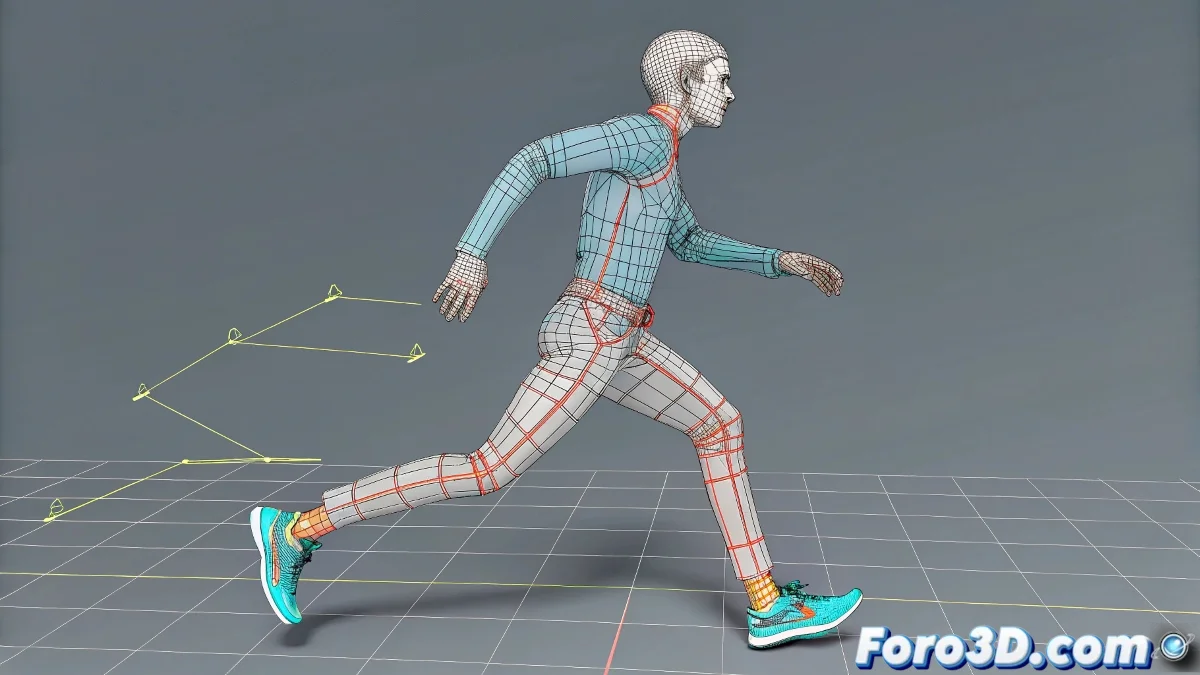
The Challenge of Elevated Heels in Virtual Actors
Working with pre-rigged virtual actors where the feet rest in an elevated heel position is like trying to dance in high heels on a slanted surface 🩰. This common issue wreaks havoc on motion capture systems, which expect flat feet as the base reference, resulting in grotesque ankle deformations and unnatural movements that ruin the illusion of life.
Understanding the Root of the Problem
Motion capture interprets the figure mode as the character's "zero pose" or rest position. When the heels are elevated in this reference pose, the mocap system applies additional rotations to bring the feet to the ground during animation, creating those unwanted deformations in the ankle joints.
A poorly configured figure mode is like a map with the wrong north: it always leads you to the wrong place.
Offset in Figure Mode: The Non-Destructive Solution
Applying an offset in the figure mode allows readjusting the reference position without altering the structure of the existing rig. This approach preserves all the skinning and controller work while correcting the fundamental problem.
- Selection of Foot Elements: Identify all components of the pedal system
- Precise Vertical Adjustment: Move heels to an anatomically correct position
- Maintenance of Rotations: Preserve existing bone orientations
- Alignment Test: Verify that the sole of the foot is parallel to the ground
Motion Layers for Selective Correction
When the figure mode cannot be modified directly, motion layers offer a powerful alternative for applying specific local corrections.
- Dedicated Animation Layers: Create specific layers for foot correction
- Selective Ankle Adjustments: Correct only the problematic joints
- Controlled Blending: Blend corrections with base animation
- Non-Destructiveness: Preserve original animation intact
Recalibration Techniques for Motion Capture
Once the figure mode is corrected, recalibrating the mocap system ensures it correctly interprets the new reference.
- Actor Re-referencing: Recalibrate the capture system with the new zero pose
- Software Offset Adjustment: Compensate for differences in the mocap software
- Validation Tests: Verify with simple test animations
- Change Documentation: Record adjustments for future consistency
Workflow for Safe Correction
Following a specific methodology prevents damage to the existing rig while ensuring effective corrections.
- Perform a complete backup of the existing rig and animation
- Identify all components of the pedal system
- Apply offsets in figure mode or motion layers
- Recalibrate the motion capture system
- Test with reference mocap data
- Finely adjust based on results
Prevention for Future Projects
Establishing standards from the start of the rigging process prevents the recurrence of this problem.
And when your corrections make the character walk as if on eggs, you can always argue it's a minimalist avant-garde acting style 🥚. After all, in the world of animation, sometimes technical "errors" become distinctive artistic signatures.