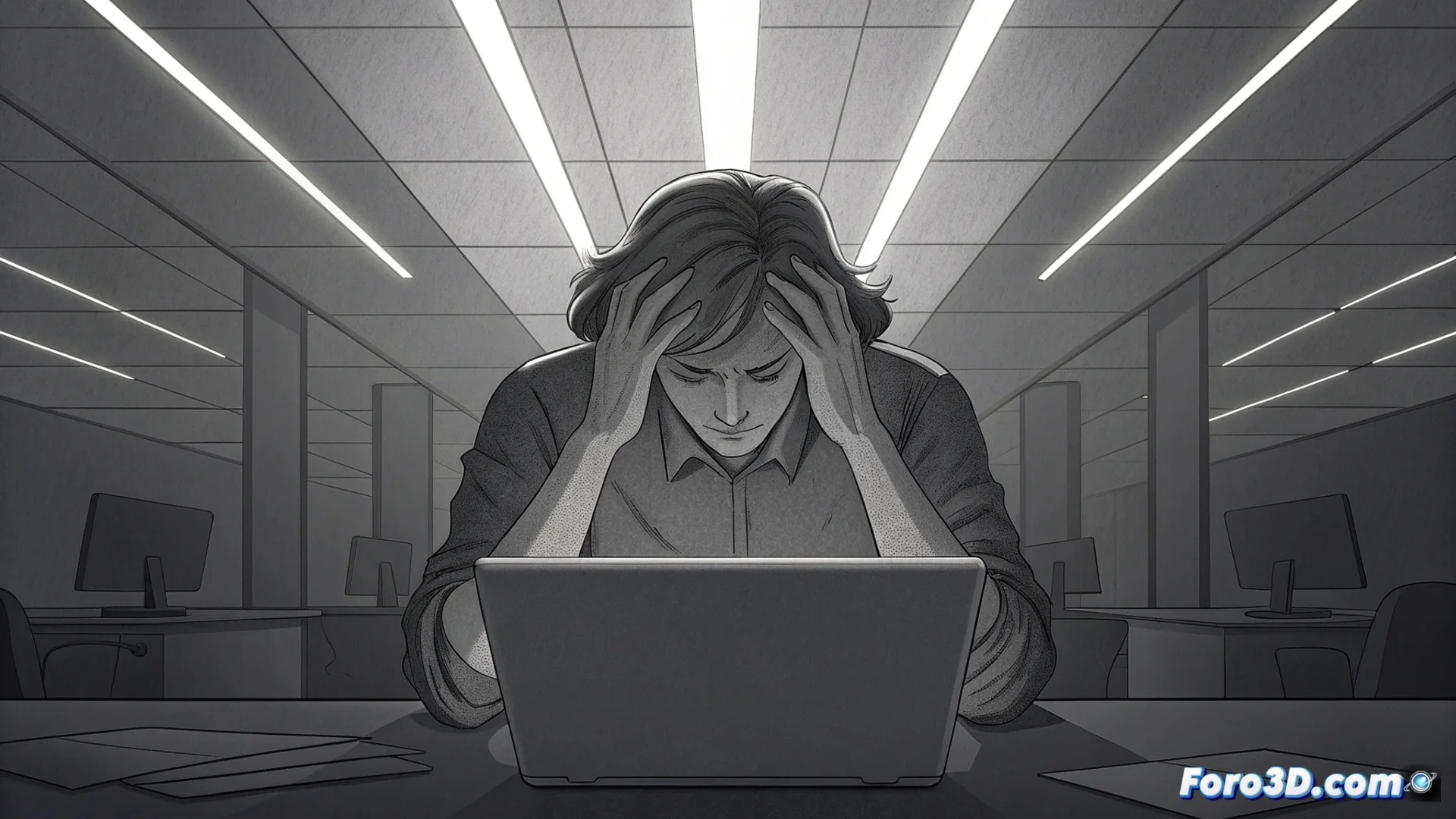
Fluorescent lighting can trigger headaches
In many work and commercial environments, fluorescent lighting is a common source of discomfort. For sensitive individuals, this light can act as a direct trigger for suffering headaches or even more intense migraines. The problem lies in how certain lighting systems interact with our nervous system, generating an additional load that the brain must process. 🔦
The hidden flicker: the triggering factor
The key element is not the light itself, but its instability. Many old fluorescent tubes, along with their electromagnetic ballasts, produce an extremely fast flicker or blinking. Although the eye does not register it consciously, the central nervous system does detect it and reacts to this intermittent stimulus. This phenomenon, combined with glare and high luminous intensity, overstimulates the visual system constantly.
Consequences of flicker on the body:- The brain is forced to adjust and process the light stimulus without pause.
- This continuous work generates tension and fatigue in the optic nerves and related brain areas.
- In predisposed people, this fatigue can be the trigger that activates the neurological cascade of headaches or migraines.
Imperceptible flicker forces the eyes and brain into continuous readjustment, creating a base of visual stress that can precipitate pain.
Practical solutions for spaces with artificial light
Mitigating these negative effects is possible with changes in the environment or habits. The most effective long-term solution is to replace the problematic technology. Modern systems with electronic ballasts drastically reduce flicker, but their adoption is not universal.
Strategies to create a healthier visual environment:- Opt for high-quality LED lamps that guarantee stable light emission without flickering.
- Use anti-glare filters on monitors or place diffusers over existing fluorescent tubes.
- Adjust the workstation position to avoid direct reflections and schedule visual breaks by looking into the distance.
Adapting to the immediate environment
When it is not possible to change the lighting in the space, personal measures can be taken. Choosing local lighting with a high color rendering index and a warm color temperature helps create a more comfortable light focus. In extreme cases, using hats or glasses with blue light filter lenses indoors can block part of the aggressive stimulus, although it may arouse curious looks. The priority should always be to protect visual and neurological well-being against constant and potentially harmful exposure. 🕶️