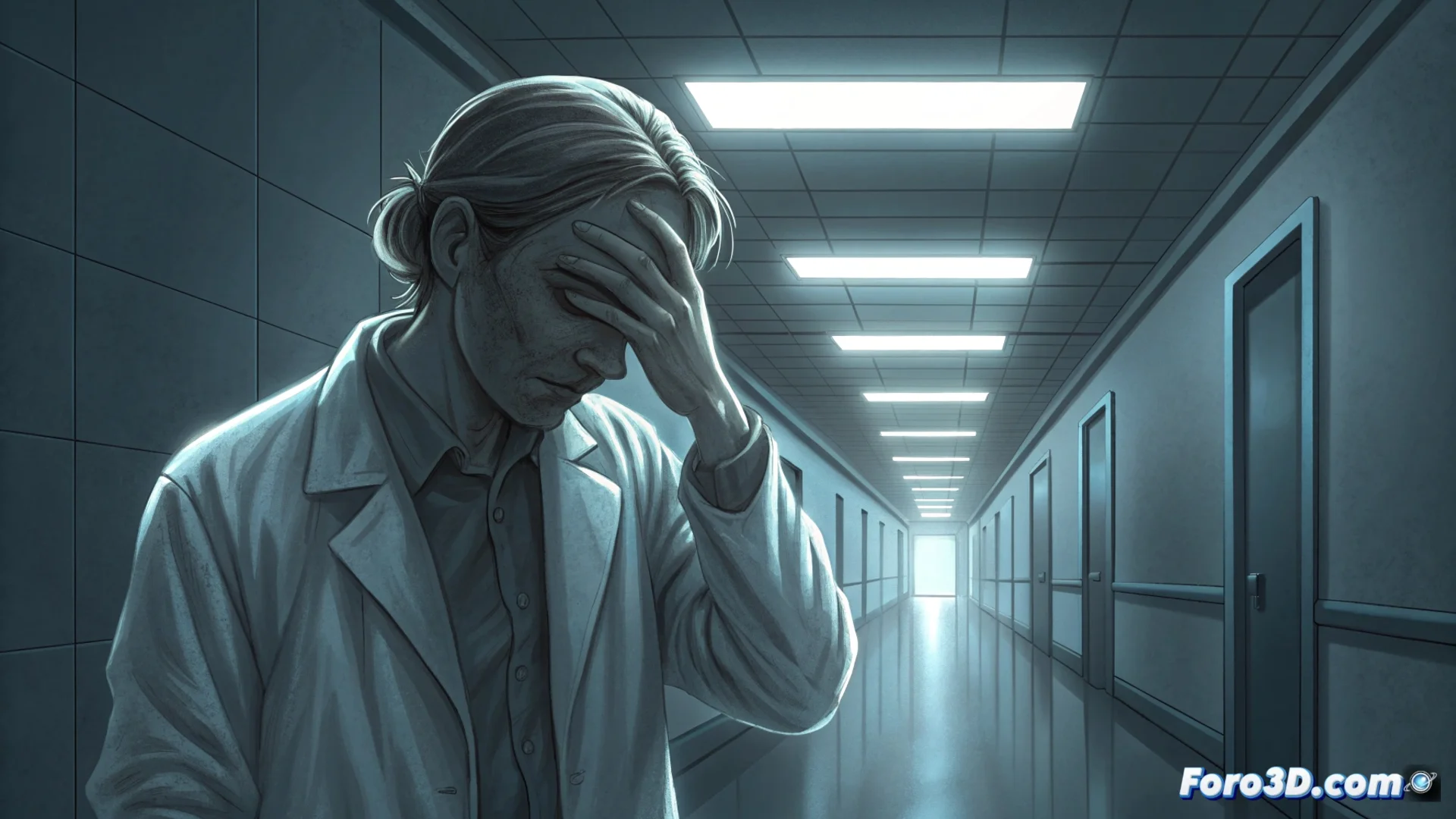
Fluorescent Light Worsens Multiple Chemical Sensitivity
For those who perceive Multiple Chemical Sensitivity (MCS) or photosensitivity, spaces illuminated with fluorescent tubes represent an invisible barrier. This technology, ubiquitous in offices, hospitals, and stores, generates a series of stimuli that the nervous system of these people processes as continuous aggression, triggering a cascade of debilitating symptoms. 😣
Flicker and Spectrum: A Neurological Assault
The central problem is not just the light, but how it is produced. Fluorescents emit a rapid flicker that, although invisible to most, directly interferes with brain waves in hyperreactive neurological systems. This phenomenon combines with an unbalanced luminous spectrum, which presents intense peaks in blue wavelengths. The brain perceives this combination as a danger signal, forcing the body to maintain a state of maximum alertness that depletes its resources.
Immediate Consequences of Exposure:- Intense headaches and migraines, often disabling.
- Dizziness, vertigo, and extreme difficulty concentrating, making cognitive tasks impossible.
- A marked increase in photophobia (light intolerance).
The irony is profound: a technology created to efficiently illuminate can plunge some people into a dimness of symptoms, confining them to spaces where they can control every light source.
When the Built Environment Becomes Hostile
This reality transforms the everyday into a challenge. Simple activities like grocery shopping, going to a medical appointment, or working in an office become sensory minefields. The widespread lack of alternatives, such as full-spectrum flicker-free LED lighting or the use of natural light, generates exclusion. Affected people are forced to develop complex survival strategies.
Adaptation Strategies and Their Limits:- Meticulously plan any outing, evaluating the lighting at the destination.
- Use special protective glasses with color filters to attenuate specific wavelengths.
- In the most severe cases, opt for home isolation to avoid incapacitating crises.
Towards Conscious and Inclusive Lighting
Understanding this impact is the first step to designing more inclusive spaces. The solution does not lie in turning off the light, but in choosing technologies that respect diverse neurology. Promoting the use of high-quality LEDs with a high color rendering index and no flicker, along with integrating more natural light, can mitigate this risk factor. Advancing in this direction not only alleviates the suffering of a group, but lights the way towards universal design that leaves no one in the shadows. 💡