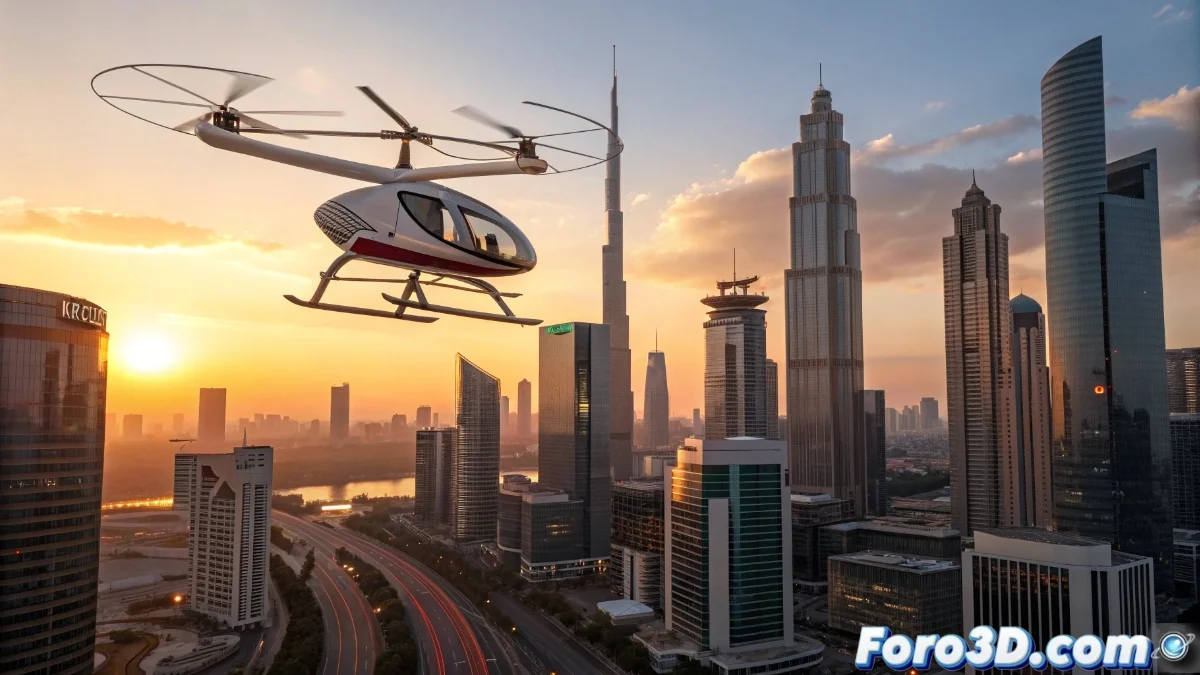
Fluid Antenna Systems for UAV Communications in Urban Environments
Wireless communication between unmanned aerial vehicles and their ground stations faces critical obstacles in high-mobility and densely urbanized scenarios, where multiple obstructions severely degrade link quality. Fluid antenna systems represent a revolutionary solution that enables drones to actively modify their radiation patterns to maintain stable connections during flight. This innovation employs electronically reconfigurable antenna configurations, adjusting their characteristics without resorting to physical mechanisms and autonomously responding to variations in relative position and channel conditions. 🚁
Operating Mechanism of Fluid Antennas
These systems operate through the controlled redistribution of conductive liquid materials or programmable metamaterials within a specialized cavity, generating diverse radiation configurations on demand. When a UAV detects signal loss or needs to switch between ground stations, the system computes the optimal configuration and reconfigures the antenna pattern in milliseconds. This continuous adaptation ensures that the main beam remains aligned with the ground receiver despite the drone's movements, counteracting adverse effects such as shadow fading and temporary blockages. 🔄
Key Operational Features:- Use of conductive liquid materials or programmable metamaterials to alter radiation
- Automatic calculation of optimal configurations in response to environmental changes
- Ultra-fast reconfiguration in milliseconds without mechanical components
The ability to dynamically adapt antenna patterns marks a milestone in UAV mobile communications, overcoming limitations of traditional fixed systems.
Benefits in UAV-to-Ground Mobile Communications
Integrating this technology into drone-to-ground links provides substantial improvements in spectral efficiency and reliability compared to fixed or switched antennas. UAVs can maintain high transmission rates while transiting between points of interest, even in low-altitude flights between buildings where multipath effects are prominent. The ability to create precise directional beams without physical moving parts reduces system energy consumption and weight, crucial aspects for drone flight autonomy. 📡
Key Advantages:- Significant increase in spectral efficiency and link reliability
- Maintenance of high transmission rates during movements in complex environments
- Reduction in weight and energy consumption by eliminating mechanical components
Reflection on Technological Advancement
It is ironic that while home users struggle to stabilize their Wi-Fi signal, UAVs are already reconfiguring liquid antennas in mid-flight to ensure their communications. This contrast highlights how technology advances at disparate paces, demonstrating that sophisticated solutions like fluid antenna systems are solving complex challenges that, until recently, seemed insurmountable. The dynamic adaptability of these systems not only optimizes drone performance but sets precedents for future innovations in mobile telecommunications. 🌟