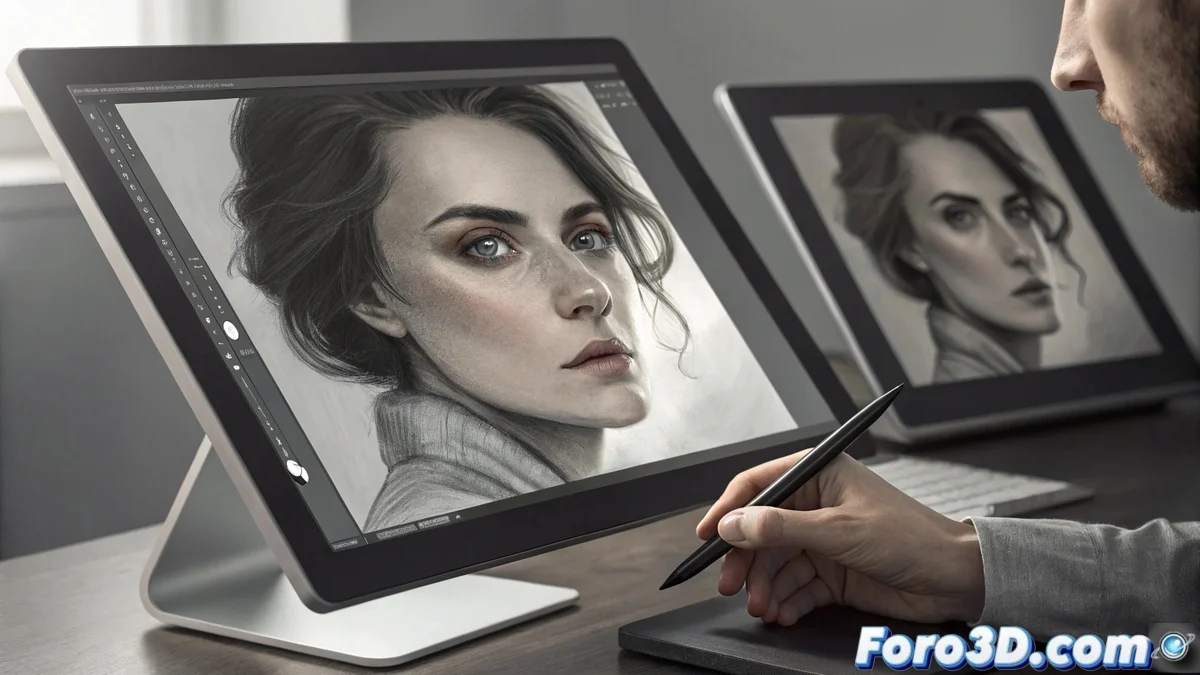
Flip the Canvas to Draw Better
In digital drawing, there is a simple but transformative habit: flipping the canvas horizontally. This action works as a reset for your visual perception, which tends to get used to and overlook flaws after observing the same image for a long time. By inverting the composition, your brain processes the shapes as if they were new, revealing symmetry, proportion, and balance problems that were previously invisible. Integrating this check regularly is essential to polish your art. 🔄
How to Integrate Flipping into Your Workflow
You don't need to finish a sketch to start using this tool. Its effectiveness lies in applying it frequently throughout the entire creative process, from the first strokes to the final details. Almost all drawing programs include a keyboard shortcut for this function, commonly the H key or a combination you can customize. Set up this quick access and make it a habit to press it every time you complete a key element, such as defining a main outline, placing a facial feature, or applying shading to an area. This constant practice prevents your eye from adapting and forces you to analyze the structure objectively and freshly.
Key Errors that Flipping Helps Find:- Asymmetry in Faces and Figures: Eyes at different heights, deviated noses, or incorrectly placed ears become evident instantly.
- Imbalance in Composition: Visual weight that tilts too much to one side of the image, creating a sense of instability.
- Perspective Problems: Lines or objects in environments that do not converge correctly and break the sense of three-dimensional space.
It's the humblest trick: it doesn't add pixels, it just removes the errors your brain stubbornly insisted on not seeing.
The Impact on Different Artistic Styles
This technique is not exclusive to realism. For non-realistic styles, such as cartoon or conceptual illustration, flipping the canvas ensures that the drawing holds up visually and communicates the artist's intention more clearly. It corrects inconsistencies in character design or visual narrative that could distract the viewer, even if the anatomy is not faithful to reality. It serves to verify that the lines of action, silhouettes, and energy of the piece work from any angle of perception.
Main Benefits of Adopting This Method:- Real-Time Correction: Allows adjustments on the fly, building a stronger foundation from the early stages.
- Renewed Objectivity: Breaks the "blindness" generated by staring at a work, offering a fresh perspective.
- Improves Final Quality: By eliminating fundamental structural errors, the result is more polished and professional.
Conclusion: A Simple Gesture, a Big Change
Incorporating the habit of flipping the canvas every few minutes is one of the most effective practices for any digital artist. It's an instant quality filter that challenges visual complacency. A simple flip can completely transform the perception of your work, revealing that the character you thought was flawless might have needed a crucial adjustment. Mastering this resource is essential for developing a critical eye and producing more coherent and balanced art. 🎨