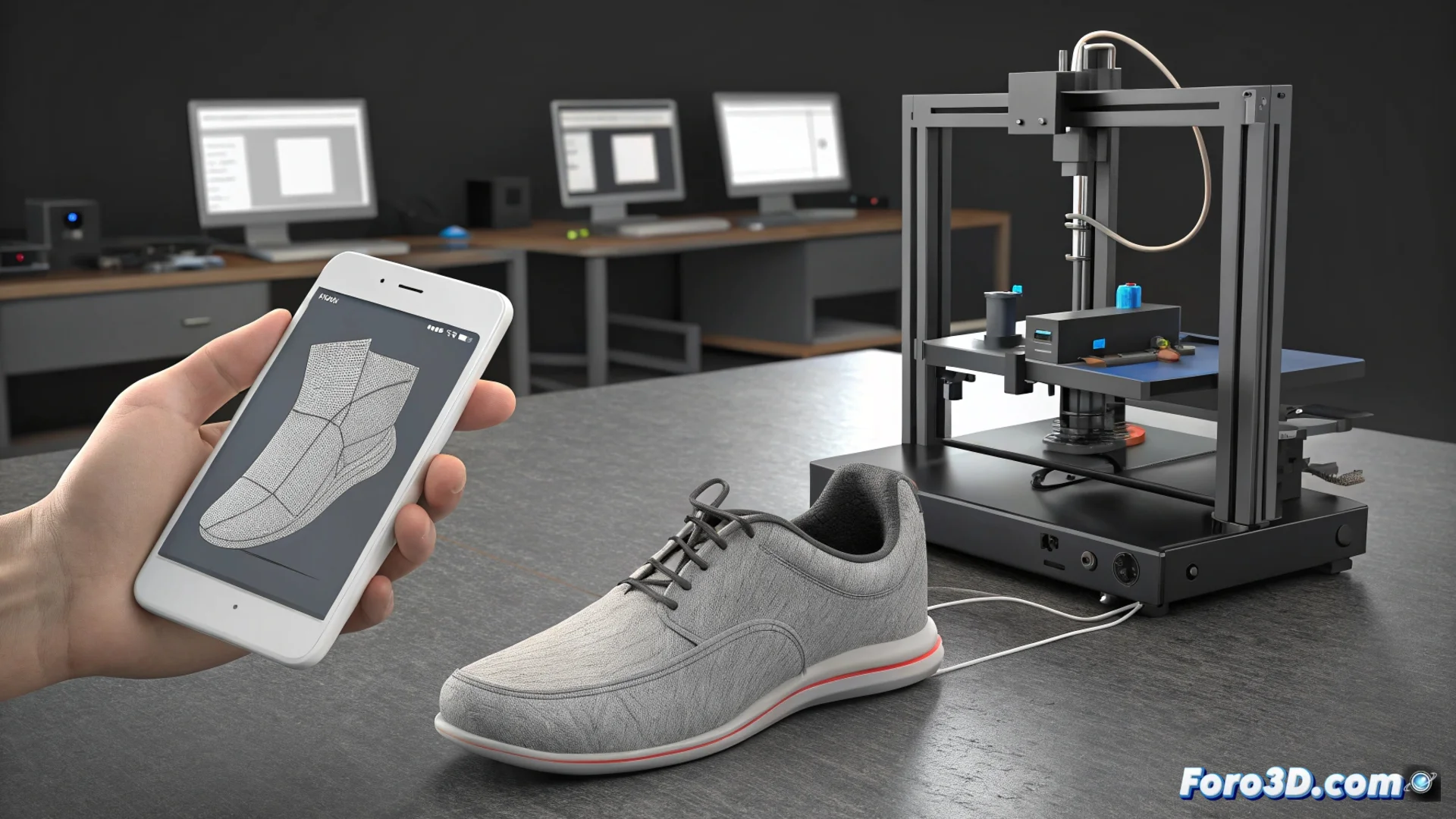
Fitasy Launches a Process to Create Custom Shoes with 3D Printing
The company Fitasy has introduced an innovative method for manufacturing footwear. This system combines mobile scanning technology with 3D printing to produce shoes that uniquely fit each user. The central purpose is to transform how we perceive comfort and support in everyday footwear. 👟
The Workflow: From Scanning to Printing
The process begins with the user using their own smartphone. A specialized application guides the capture of multiple photographs of the foot from various angles. Subsequently, an advanced algorithm processes these images to build a precise 3D digital model. This file is sent to a 3D printer, which manufactures the upper part of the shoe and, in certain models, sole components, using flexible and durable materials.
Key Advantages of the System:- Eliminates the need to visit a physical store for measurements.
- Generates an exact 3D model of each foot's unique morphology.
- Allows selection from various designs and colors before printing.
By starting from each foot's unique geometry, the resulting footwear aims to eliminate unnecessary pressure points and provide more appropriate support.
Focusing on Individual Comfort
Geometric customization seeks to address common issues like wide, narrow, or unconventionally shaped feet. By creating a shoe that is an exact reflection of the foot, it aims to distribute weight evenly and improve the user experience. The company emphasizes that this approach can benefit a wide spectrum of people.
Customization Features:- Total adaptation to the user's foot shape and dimensions.
- Possibility to adjust the aesthetic design according to preferences.
- Use of materials selected to combine comfort and durability.
Technical Challenges to Overcome
For this system to be robust, the scanning algorithm must correctly interpret data captured in suboptimal conditions, such as over a complex-textured carpet or with thick socks. Handling these variables is crucial to ensure the accuracy of the final 3D model and, therefore, the effectiveness of the entire manufacturing process. The commercial success of the method will largely depend on consistently overcoming these technical obstacles.