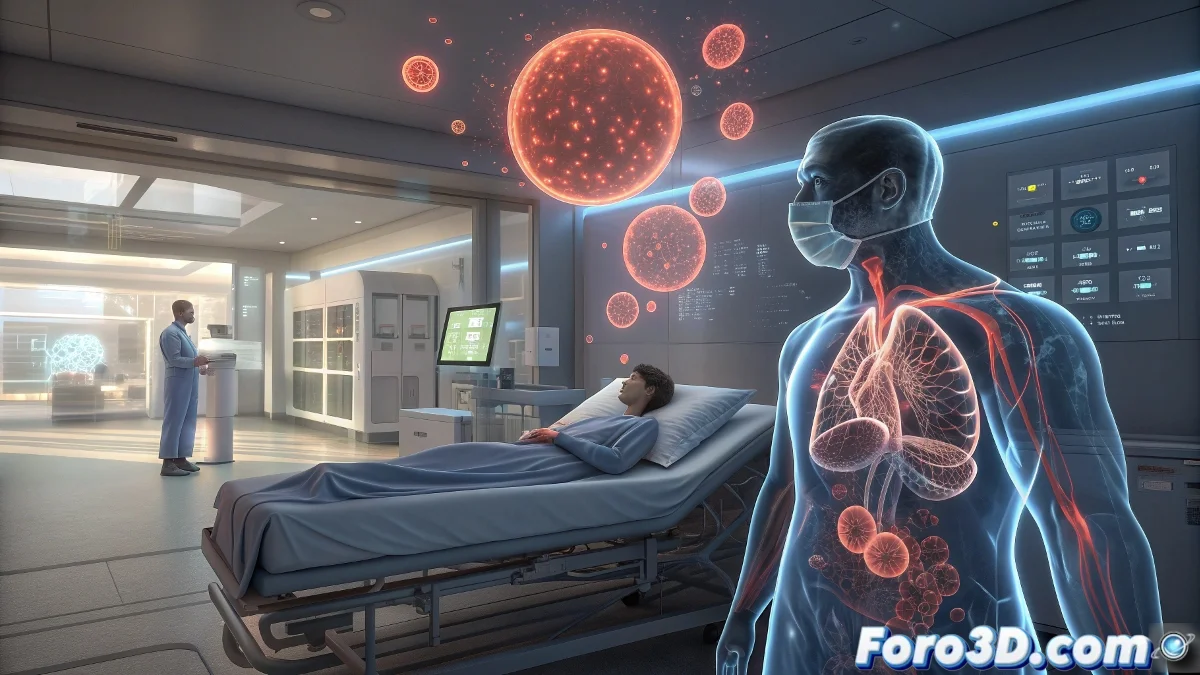
First Gene Therapy in Spain and Its Visualization in Blender
Spanish medicine has just reached a historic milestone at Hospital La Paz in Madrid 🏥. For the first time in the country, gene therapy has been applied to a patient with advanced heart failure, a revolutionary procedure that involves introducing genetic material into heart cells to improve their function. This medical advance marks the beginning of a new era where DNA becomes the key to recovery, opening doors to previously inconceivable treatments. To understand and communicate this complex process at the microscopic level, Blender emerges as an invaluable tool, allowing visualization of how gene therapy interacts with cardiac cells in a precise and comprehensible way.
When medicine corrects genes and 3D artists continue correcting mesh normals.
Modeling Cardiac and Cellular Structures
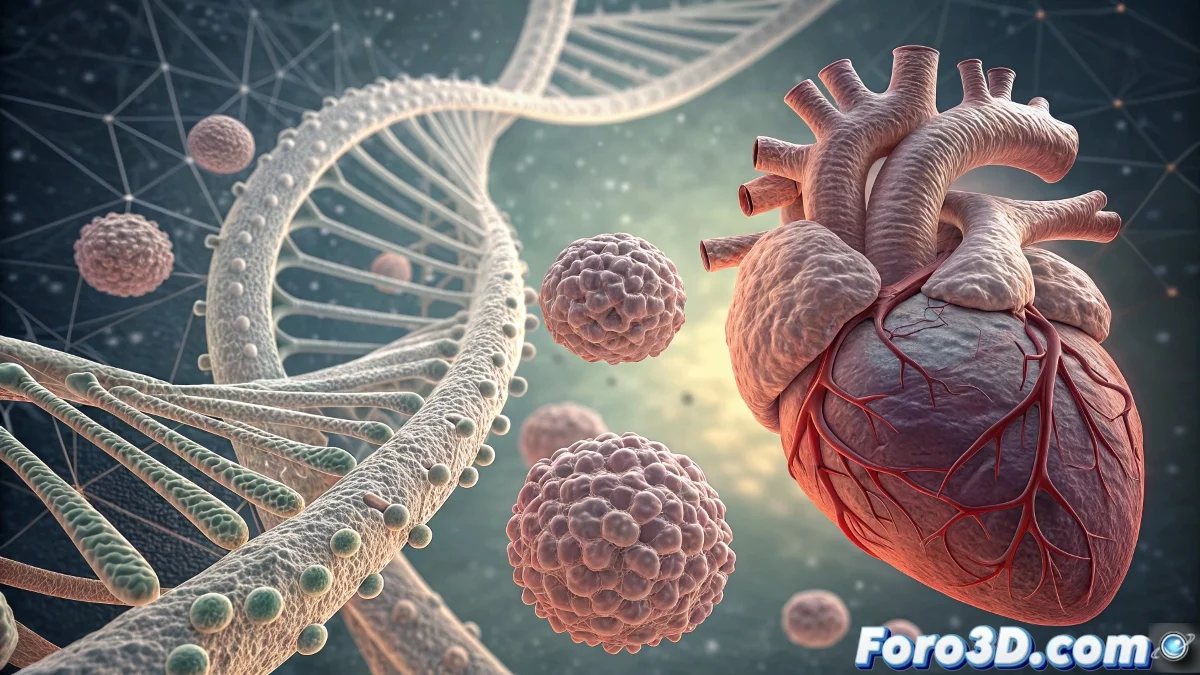
The first step to recreate this medical scene in Blender is modeling cardiac structures and cells with anatomical precision. We start by adding UV Spheres to represent individual cardiac cells, scaling them according to realistic proportions. For the complete heart, we use a base 3D model of human anatomy available in free online resources, applying Subdivision Surface to smooth the geometry and achieve an organic finish. The key is to maintain a realistic scale that allows subsequent integration of particle systems representing the genetic material, creating a solid foundation for biological simulation. ❤️
Materials and Biological Shaders Systems
The visual credibility of medical visualization crucially depends on materials that convincingly simulate biological tissues. We create materials for the cells using Principled BSDF shaders, adjusting Transmission and Subsurface to achieve that characteristic partially transparent appearance of living cellular tissue. For the heart, we use red and pink tones with Subsurface Scattering that capture how light interacts with cardiac muscle. The genetic material fragments use Emission shaders with controlled intensity, creating the effect of glowing particles that visually contrast with the more organic cellular structures.
Particle Systems for Gene Therapy
The core of the visualization lies in setting up particle systems that simulate the insertion of genetic material. In the Particle Properties tab, we create a new particle system, adjusting the emission so that the particles physically interact with the cardiac cells. We use Boids or Fluid particle physics to achieve organic and credible movements, configuring behaviors that simulate how the genetic material seeks and penetrates target cells. The animation of these particles is controlled via keyframes or physical simulation, creating a dynamic representation of the therapeutic process that is both educational and visually impactful.
Medical Lighting and Camera Setup
Lighting is crucial for conveying the medical and scientific context of the scene. We place a main Area Light pointing directly at the heart, highlighting its volumes and textures. We complement with soft secondary lights that simulate the controlled lighting of a hospital or laboratory environment, avoiding harsh shadows that distract from the main elements. We set up two camera angles: a medium shot showing the heart in context and an extreme close-up focusing on the genetic particles penetrating the cells, using depth of field to direct the viewer's attention to the most significant details of the process.
Rendering and Scientific Post-Production
We use the Cycles engine to achieve maximum realism in the representation of biological materials. We enable Screen Space Reflections and Subsurface Scattering to capture the characteristic light interactions of organic tissues, setting sampling to medium-high values to balance quality and render time. In Blender's compositor, we add subtle color grading adjustments to emphasize the cardiac red tones and the glow of the genetic particles, along with very contained glow effects that highlight the scientific aspect without falling into sensationalism. The final result is a visualization that perfectly bridges medical precision and explanatory clarity.
While scientists correct genes to save lives, in Blender we continue fighting with Auto Smooth that never turns out perfect. Maybe we should ask them for gene therapy for our meshes too... but until then, we'll keep rendering medical advances with the tools we have. 😉