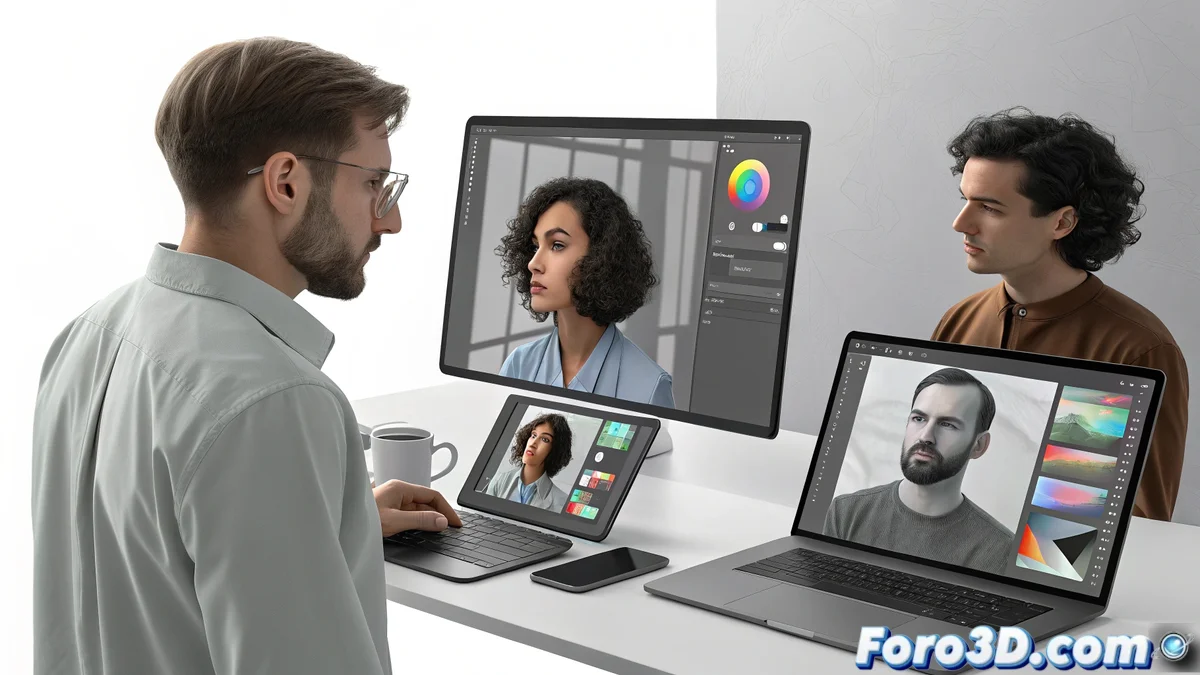
Figma: The Collaborative Revolution in Digital Design
In the current landscape of digital design, Figma emerges as a transformative platform that redefines how teams create user interfaces and develop interactive prototypes. Its cloud-based architecture enables an unprecedented work environment where physical distance ceases to be an obstacle to collective creativity 🚀.
Borderless Real-Time Collaboration
Figma's collaborative capability represents a paradigm shift in the industry, allowing globally distributed designers to interact on the same project as if they were in the same room. This instant synchronization eliminates traditional versioning issues and ensures that all involved parties always access the most up-to-date information.
Key advantages of simultaneous collaboration:- Immediate visualization of modifications made by other team members
- Fluid communication between designers, developers, and stakeholders through contextual comments
- Complete elimination of the need to export and share heavy files via email
Figma's true superpower might be making clients believe it's just moving some little squares while secretly avoiding a hundred file and version synchronization meetings
Seamless Integration with Development Ecosystems
Figma masterfully integrates with contemporary agile workflows, offering a range of plugins and extensions that connect directly to project management tools and development environments. Engineers can extract precise technical specifications, exact color codes, and pixel-perfect measurements directly from the designs.
Advanced integration features:- Detailed design inspection to automatically obtain CSS, Swift, or Android code
- Reusable component system that maintains visual consistency in complex projects
- Team libraries that ensure brand and style consistency in scalable applications
Transformative Impact on Work Methodologies
The adoption of Figma has redefined creative processes in organizations of all sizes, significantly accelerating design cycles and reducing implementation errors. Its native collaborative nature fosters a culture of transparency and continuous feedback, where iterations are performed more agilely and final results achieve greater quality and visual coherence ✨.