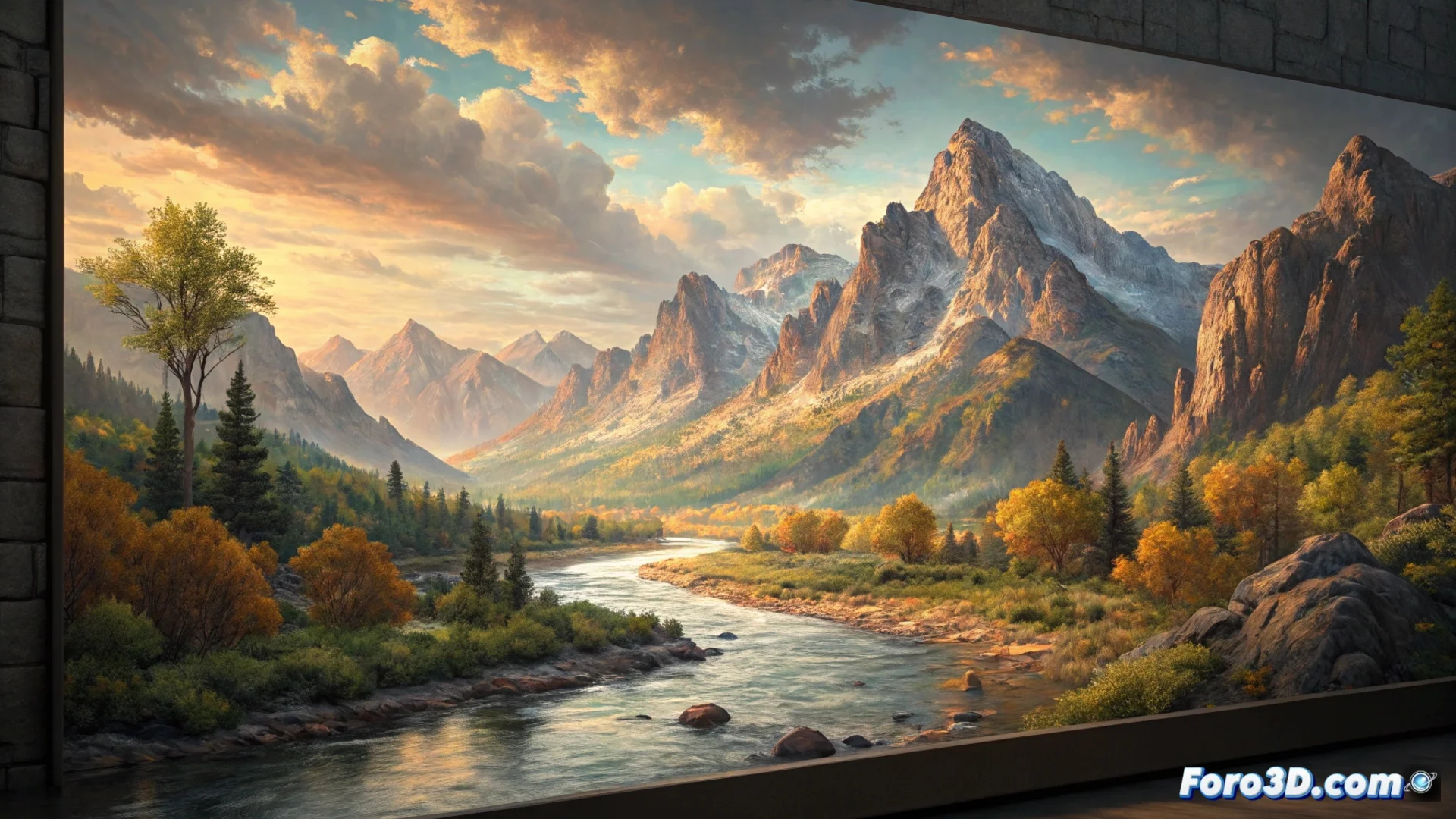
Feather: Applies Pictorial Styles to 3D Renders Procedurally
In the world of digital graphics, achieving the look of a traditional work of art can be complex. Feather emerges as a specialized system that transforms 2D images or 3D renders by applying artistic styles automatically and, most importantly, non-uniformly. It doesn't just paint over them, but generates organic and distinct variations every time it runs. 🎨
How does it achieve that manual touch?
The core of Feather lies in its ability to analyze the scene. It examines the geometry of objects and lighting data to distribute brush strokes, color blotches, or textures that mimic techniques like oil or watercolor. The goal is clear: avoid any mechanical repetition and achieve the feel of a handmade piece, where each stroke is unique.
Main features of the process:- Generates unique results in each execution, without fixed patterns.
- Simulates real pictorial media based on 3D scene data.
- Creates an organic distribution of visual elements that avoids predictability.
The system promises to give a unique artistic touch to each render, although sometimes the result may be so organic that even the artist themselves doesn't know how to replicate it exactly.
A node-based workflow
The user operates within a nodal environment, connecting different modules that control how the visual style is generated. Parameters such as the direction, length, and density of brush strokes, the viscosity of the pictorial medium, or how colors blend are adjusted. These controls do not define a fixed pattern, but feed a procedural algorithm that introduces random variations within established limits.
Control offered by the nodal system:- Adjust the anatomy of brush strokes (direction, length, density).
- Define medium properties, such as viscosity or fluidity.
- Govern color behavior when blending and overlapping.
Integration into production pipelines
Feather can be used as a final step within a render engine or as a post-production filter in compositing software. Its power increases when it receives information from render passes such as depth, normals, or lighting passes. This allows brush strokes to follow the shape of objects and respond to light, making the style interact with the scene in three dimensions and not apply as a simple flat texture. The artist always maintains control over the intensity and the area where the effect acts. 🔧