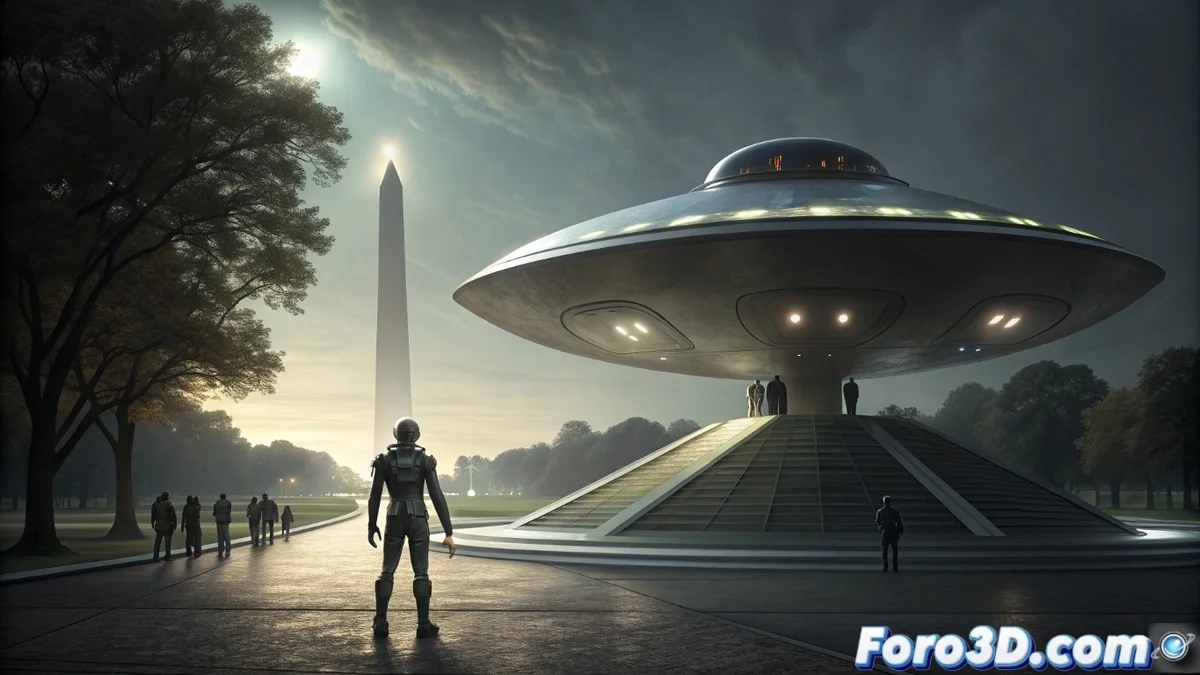
Farewell to the Master: the story that inspired a cinema classic
Published in 1940 by Harry Bates, the short story Farewell to the Master forms the narrative core of the film The Day the Earth Stood Still (1951). This short story presents an event that disrupts the planet: the arrival of a mysterious ship in the capital of the United States. 🛸
The plot from within
The narrative is built through the eyes of a journalist who observes how two beings emerge from the spaceship. On one hand is Klaatu, a humanoid with a peaceful appearance, and on the other Gnut, a giant and silent robot that escorts him. The story does not focus on an invasion, but on exploring how people react with panic and distrust to what they cannot understand.
Key events from the story:- The death of Klaatu, caused by an act of human fear shortly after landing.
- Gnut remains inactive and is exhibited as a museum piece, while the protagonist investigates in secret.
- The story raises deep questions about miscommunication and the true nature of the bond between the visitors.
Bates' final twist suggests that sometimes we judge who commands and who obeys based solely on appearances.
From page to screen
The adaptation directed by Robert Wise takes the basic premise but introduces substantial changes to reflect the Cold War context. The cinematic Klaatu's message becomes explicitly pacifist, moving away from the ambiguity of the original character. The robot, renamed Gort, has its role in the plot expanded.
Main differences with the film:- The philosophical and ironic ending of the story, which redefines the master-servant relationship, is completely omitted in the film.
- The film incorporates a different warning message, giving rise to one of the genre's most iconic phrases.
- The change in the outcome completely alters the central theme that Bates wanted to convey.
The legacy of an idea
The core of Farewell to the Master remains relevant: a reflection on fear of the unknown and the dangers of misinterpreting others' intentions. While the film became a classic in its own right, the original story offers a more subtle perspective and a final twist that invites reflection on who really holds the control. 🤖