Fake Briefs: A Creative Engine for 2D Illustrators
In the realm of 2D illustration, innovation often arises from confronting well-defined limits. An underrated strategy to unlock artistic potential is the creation of fictional client briefs. These simulated scenarios pose concrete challenges, transforming free practice into a quest for ingenious solutions within a narrative framework. 🎨
The Power of Invented Limitations
Imagine receiving the commission to design an alien warrior for a comic. The premise requires organic armor inspired by nature, with the ability to adapt to icy deserts, but under the strict rule of using only primary colors and basic geometric shapes. This type of directive is not real, but its magic lies in how it forces the artist to balance conceptual complexity with visual simplicity, directing creativity toward a tangible goal.
Key Elements of an Effective Fake Brief:- Defined Context: Establish a clear framework, such as "illustration for the cover of an indie video game" or "character for a graphic novel".
- Specific Restrictions: Include limits on color palette (maximum 3 colors), shape style (only curves or only straight lines), theme, or technology.
- Integrated Narrative: The directive must tell a mini-story that justifies the limitations, giving meaning to the challenge.
Creativity thrives in controlled chaos. An absurd brief, like a dancing robot with butterfly wings in an ice world, can lead to the unexpected masterpiece.
Building Your Own Creative Challenge
To craft a productive fake brief, the first step is to define a project scenario. For example: "Design a sea creature for a children's book that is friendly but incorporates mechanical elements, using a palette limited to two pastel colors". This approach ensures that imagination does not wander aimlessly, but is channeled toward solving concrete problems, where each limitation becomes an opportunity to explore new techniques.
Practical Benefits for the Illustrator:- Overcoming Blockages: By focusing on solving a specific puzzle, the paralysis of the blank page dissipates.
- Reinforcement of Technical Skills: Essential competencies such as composition, color handling, and shape synthesis are exercised under simulated pressure.
- Development of a Diverse Portfolio: Generates unique pieces that demonstrate the ability to work under guidelines, something highly valued professionally.
From Theory to Illustrated Practice
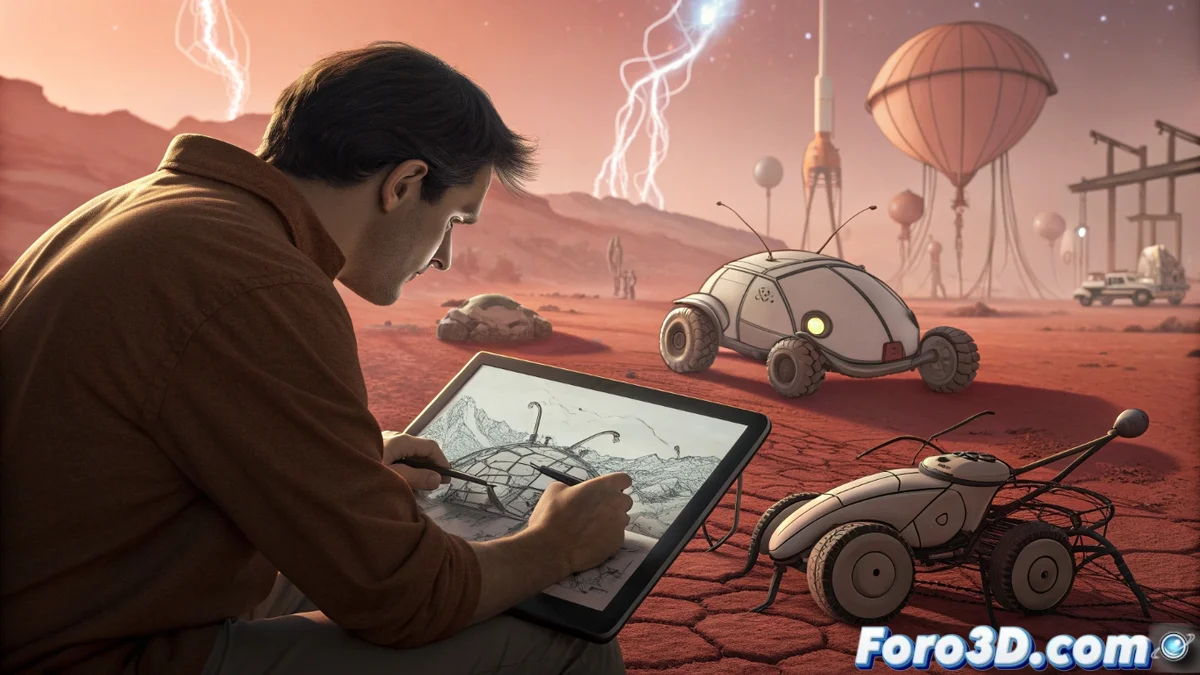
By adopting this method, artists not only generate work, but evolve their style. Facing a restriction like "design an electric vehicle with insect aesthetics" drives experimentation with textures and silhouettes that, in a completely free approach, might never have been explored. The result is more dynamic, personal, and technically bold illustrations. In essence, fake briefs are the gym where disciplined creativity strengthens its muscles, preparing the illustrator for any real challenge that may come. 💪