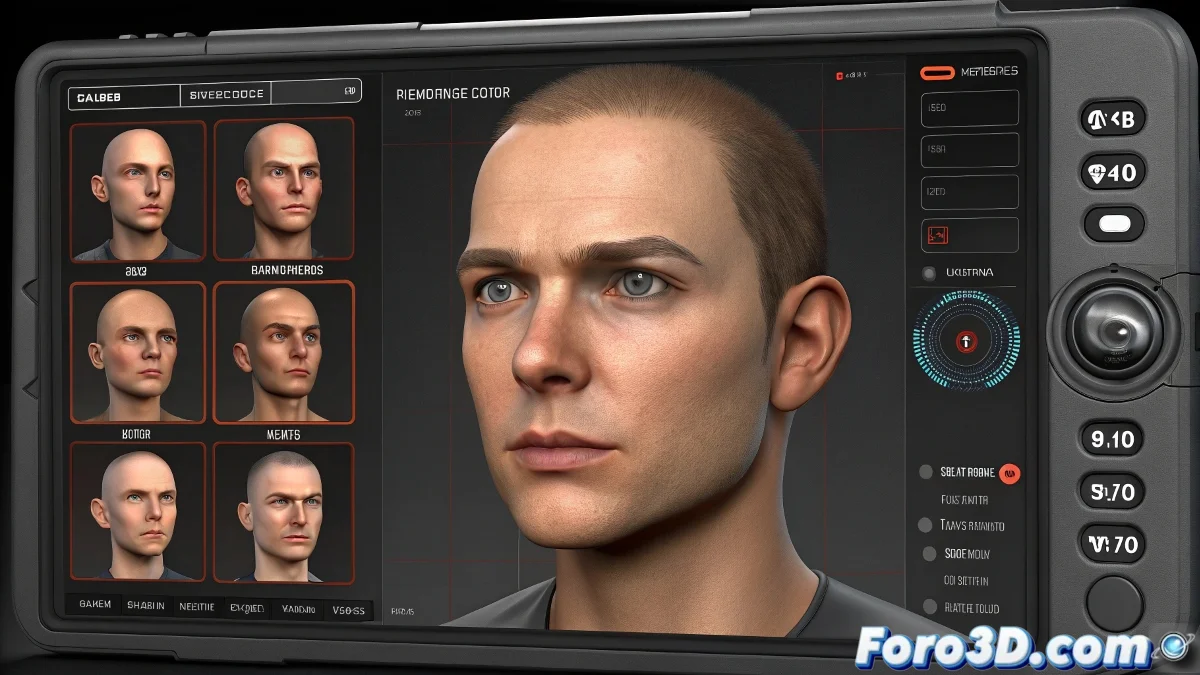
The Art of Bringing a Face to Life with 3ds Max
Animating a digital face is like being a puppeteer of emotions 🎭. In 3ds Max, one of the most powerful tools for this task is the Morpher modifier. This ingenious device allows artists to manipulate a character's mesh to create a wide range of expressions, from a captivating smile to a frown of deep concentration. Essentially, you work with morph targets, which are modified versions of the base mesh in specific poses. The trick is to blend them intelligently to achieve a natural and believable result.
Deciphering the Morpher Control Panel
Upon opening the Morpher panel, one might feel like they're facing the dashboard of a spaceship 🚀. That interface with its multiple lines and circles is nothing more than the control center for all facial expressions. Each of those sliders represents an assigned morph target, such as left_eye_closed or right_eyebrow_up. The artist can manipulate these sliders with keyframes over time, resulting in a smooth and nuanced animation. Good organization here is the key to not losing your sanity halfway through a project.
A well-organized facial rig is the best defense against chaos in animation.
Tips for an Impeccable Expression Library
The organization of morph targets is fundamental for an agile workflow. Clear and descriptive names are your best friends, avoiding cryptic terms that only you will understand (and maybe not even you a week later). Some recommended practices include:
- Using descriptive names: like wide_smile or pursed_lips.
- Grouping similar expressions: putting all mouth controls in a logical category.
- Testing in isolation: testing each morph target individually before blending it with others.
Elevating Realism with Advanced Techniques
For those looking to take their creations to the next level, combining the Morpher modifier with a joint rigging system can be revealing. This combination offers extraordinary flexibility for more extreme and complex deformations. It allows movements of the jaw or cheeks to be much more anatomically precise. The final result is characters that not only move but truly feel and convey emotions to the viewer 😊.
At the end of the day, the goal is to make that mass of vertices and polygons come to life in a way so convincing that the audience forgets they are watching a render. And if you don't succeed on the first try, you can always blame the rig... it's a classic in the industry 😉.