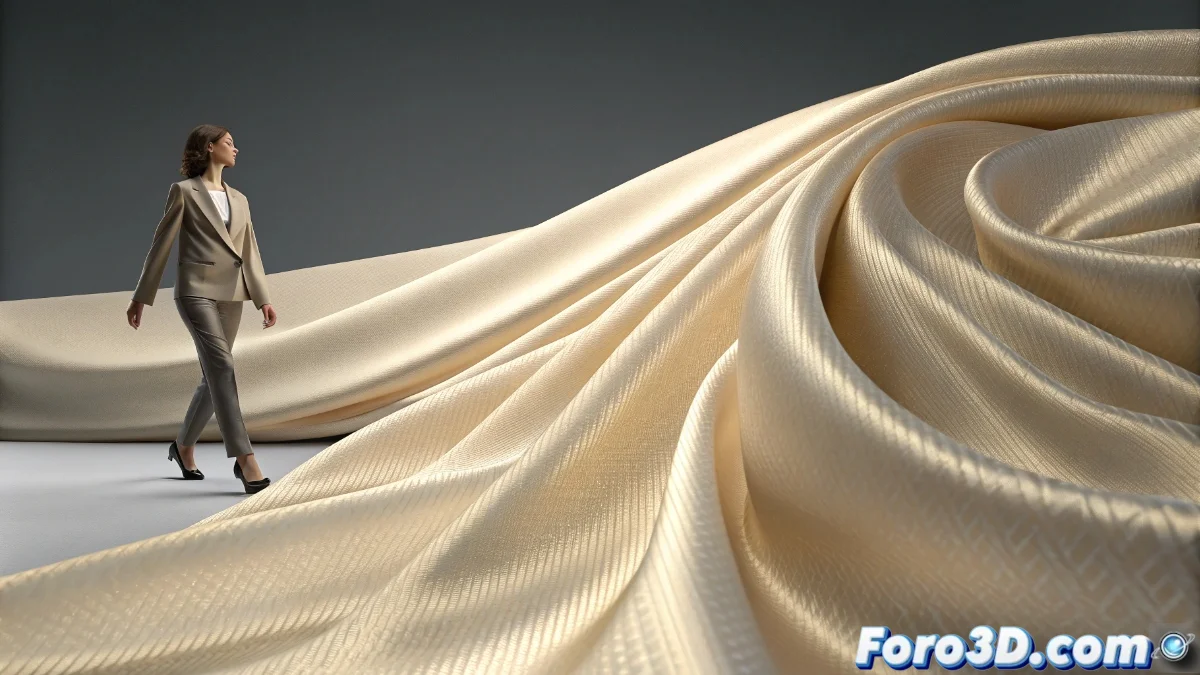
Cloth Simulation in Unreal Engine 5 with Chaos Cloth
The evolution in cloth simulation within Unreal Engine 5 marks a milestone for developing hyperrealistic textile materials that work in real time. Thanks to the integrated Chaos Cloth engine, it is possible to reproduce authentic physical behaviors of various fabrics, automatically calculating collisions, gravity, friction, and wind forces to generate organic movements that enhance immersion in interactive experiences 🎮.
Initial Chaos Cloth Setup
To get started with textile simulation, the first step is to import a 3D mesh with optimized topology and assign the Chaos Cloth component from the details panel. It is crucial to calibrate parameters such as stiffness, damping, and density according to the desired fabric type. Artists can preview and iteratively adjust in the editor, achieving precise results without additional code 🛠️.
Key parameters to consider:- Stiffness adjustment to control fabric flexibility
- Damping configuration to manage movement resistance
- Density definition to simulate textile material weight
The physics behind a virtual curtain can be more understandable than the folds of a real shirt, but in Unreal Engine 5, at least, we can attribute the imperfect folds to simulated wind.
Multiplatform Optimization Strategies
The simulation performance is directly linked to the mesh complexity and number of vertices. In projects for multiple platforms, it is recommended to implement progressive levels of detail (LOD) that reduce resolution on limited devices. Collisions can be optimized by using simplified shapes, such as capsules, instead of detailed meshes, preserving visual quality while saving system resources 💻.
Recommended optimization techniques:- Use of progressive LODs to adapt the simulation to different hardware
- Replacement of complex meshes with simplified capsule collisions
- Balance between vertex resolution and runtime performance
Impact on User Experience
The integration of Chaos Cloth not only improves visual realism but also enriches user immersion through believable textile movements. From character clothing to environmental elements like flags or curtains, each simulation contributes to a more dynamic and engaging experience. The ability to adjust physical parameters in real time allows developers to experiment and refine until achieving the perfect balance between authenticity and performance 🌟.