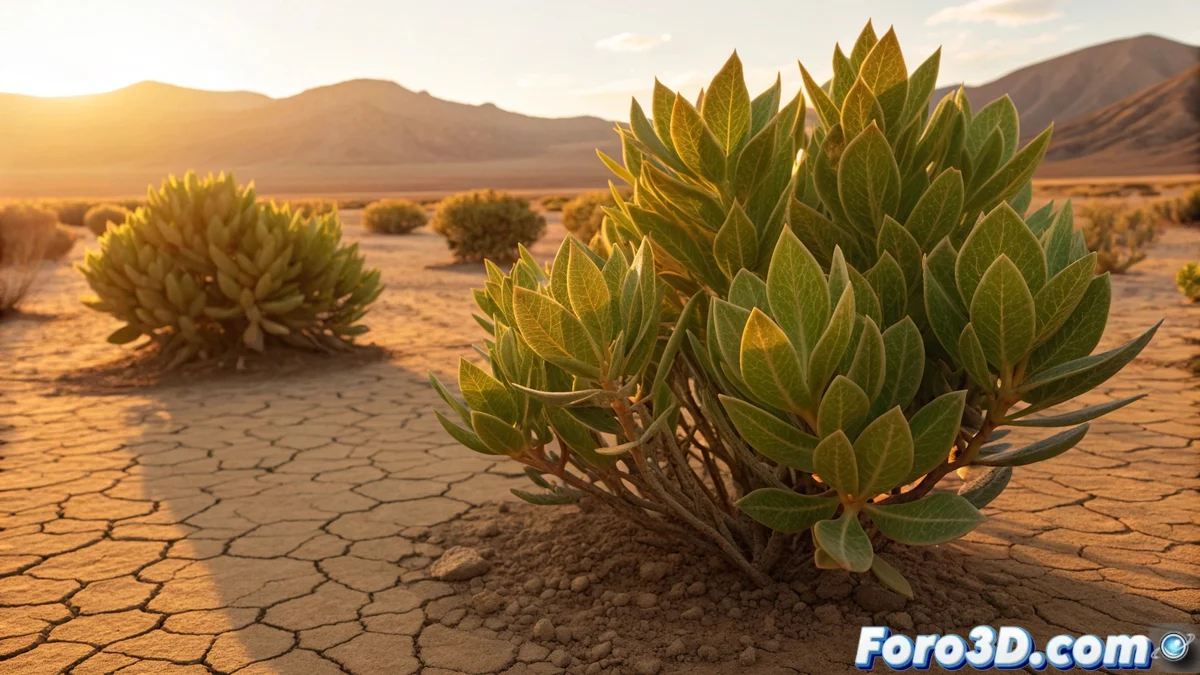
Extremophile Shrubs: Adaptations to Heat and Drought
Numerous species of resilient shrubs exhibit extraordinary capabilities to thrive in environments with extreme temperatures and water scarcity, establishing themselves where other plant forms simply cannot survive. An emblematic case is Tidestromia oblongifolia, which inhabits the inhospitable Death Valley in the United States and reaches its peak development with temperatures around 50°C, even demonstrating accelerated photosynthesis under these extreme conditions. These characteristics are not mere coincidences, but the product of sophisticated evolutionary mechanisms specialized for hostile environments 🌵
Morphological Strategies Against Thermal Stress
Scientific research has documented various structural adaptations that allow these shrubs to effectively face intense heat. Among the most significant are leaf miniaturization, which reduces the area exposed to solar radiation, and the vertical positioning of leaves to minimize heat absorption. Complementarily, the increase in leaf perimeter favors thermal dissipation, allowing the plant to maintain lower internal temperatures and optimize water conservation in arid environments.
Key Morphological Adaptations:- Reduction of leaf size to decrease the surface area exposed to the sun ☀️
- Vertical orientation of leaves that reduces radiation absorption
- Increase in leaf perimeter that improves heat diffusion
While humans complain about a hot day, these shrubs grow happily as if hell were their playground
Anatomical Modifications for Water Management
Studies conducted in the Qaidam Basin in China have revealed specific anatomical variations in stems and leaves that facilitate certain shrubs in managing the combined water stress and high temperatures. These transformations include structural developments such as alterations in the configuration of leaves and stems, along with physiological adjustments that perfect water use and heat tolerance. These mechanisms demonstrate how plant species can evolve to survive in extreme climates, often through what researchers call resilient morphological changes.
Identified Anatomical Variations:- Structural transformations in the shape of leaves and stems 🍃
- Physiological adjustments that optimize water use
- Mechanisms of combined resistance to heat and drought
Lessons from Extreme Nature
The ability of these extremophile shrubs to not only survive but thrive in conditions that would be lethal to most plants represents a fascinating example of evolutionary adaptation. Their combined strategies - both morphological and anatomical - offer valuable lessons about plant resilience and could inspire advances in sustainable agriculture for arid regions. These species demonstrate that even in the most hostile environments, life finds extraordinary ways to flourish 🌿