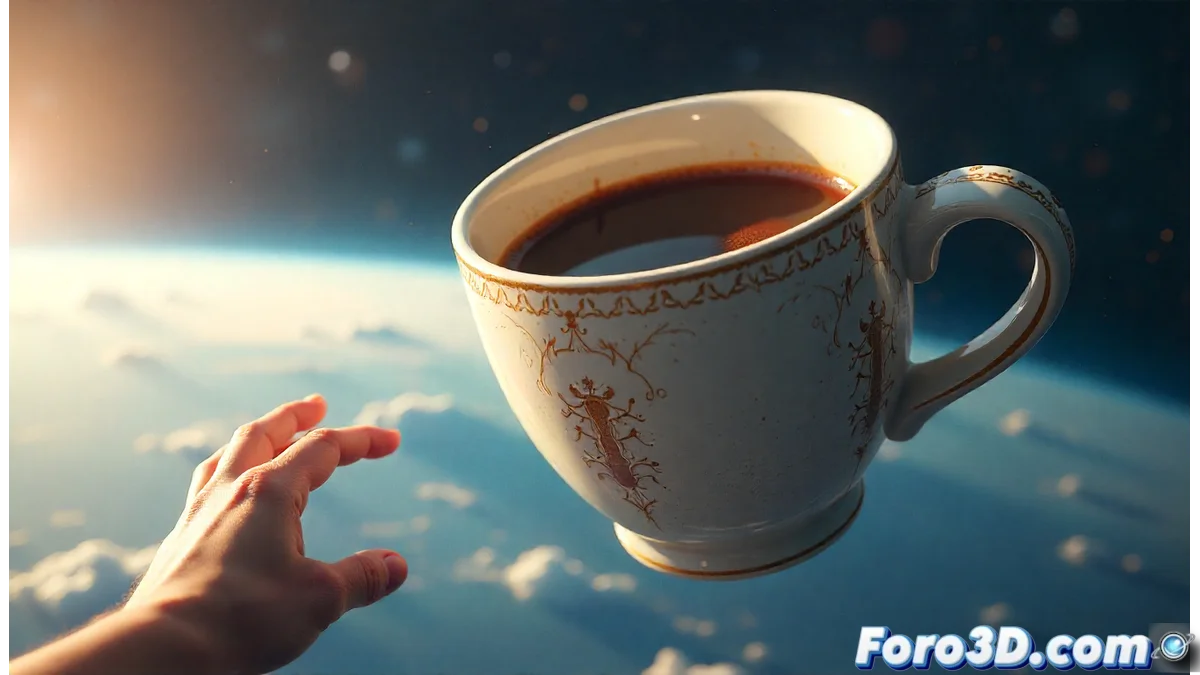
Extreme Scales: Creative Technique for 3D Designers
This innovative methodology is based on mentally visualizing common elements from radically altered dimensional perspectives, allowing to break conventional thinking patterns and discover original solutions in creative projects. 🎨
Neurocreative Foundations
By mentally manipulating the scale of objects and landscapes, our brain establishes unprecedented connections between seemingly unrelated concepts. This different neuronal activation is particularly useful when facing creative blocks, as it completely transforms our spatial and conceptual relationship with the elements we are designing.
Practical Application Process:- Selection of a common object (cup, building, natural element)
- Mental enlargement to planetary scale or reduction to microscopic level
- Detailed imagination of transformed textures, shadows, and proportions
Visualizing leaf pores as gigantic caverns or skyscrapers as grains of sand reveals normally invisible structural patterns
Integration into Creative Pipelines
3D design professionals incorporate this technique during conceptualization phases, using extreme visual references such as electron microscopy images or astronomical photographs. The constant alternation between macro and micro scales demonstrates that technical solutions for large-scale problems can be applied inversely at a diminutive level.
Specific Fields of Application:- Video game design and virtual environments
- Conceptual architecture and imaginary spaces
- Creation of innovative shaders and visual effects
Permanent Perceptual Transformation
The creative irony of this method lies in how it permanently modifies our everyday perception. After intensive sessions visualizing mountains as tiny particles, we begin to observe common objects with new dimensional depth, wondering if that simple morning coffee deserves to be modeled in Blender as if it were a colossal geological formation. 🌋