The Machine That Explores the Invisible
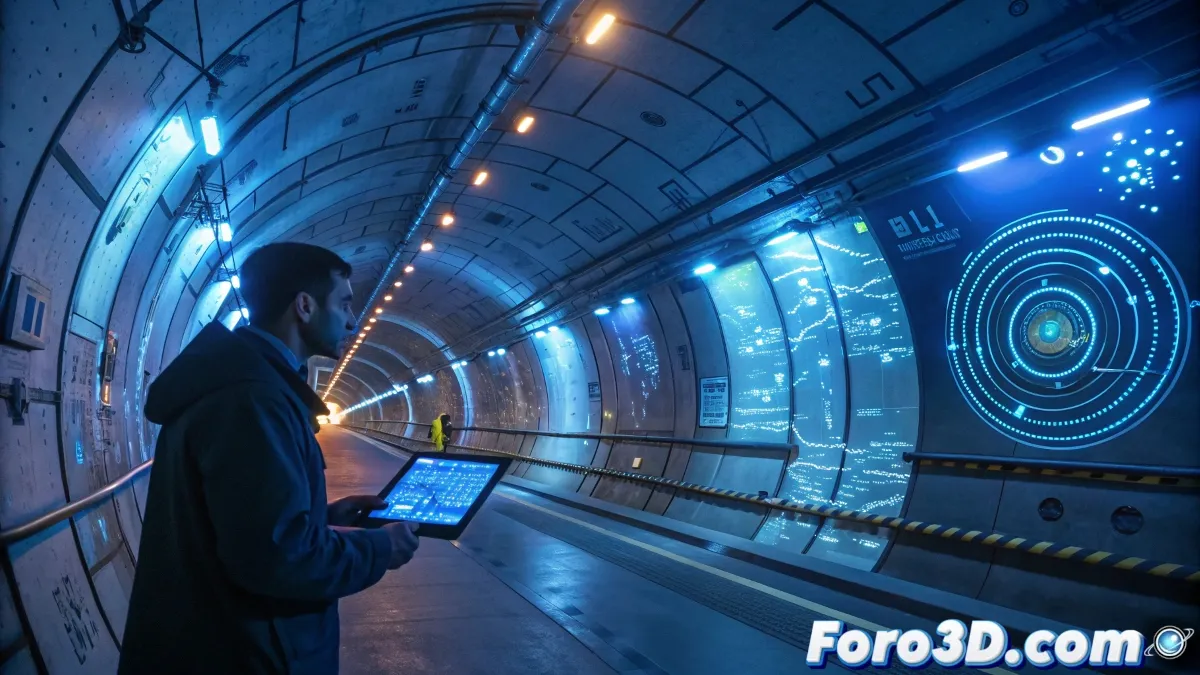
Beneath the Earth's surface, between France and Switzerland, one of the most impressive scientific structures ever created by humankind operates. It is a 27-kilometer circular tunnel where subatomic particles are accelerated to extreme speeds. When these particles collide, they generate information equivalent to tens of thousands of hard drives filling up every second, from which physicists extract knowledge about the fundamental components of matter.
A Recent Scientific Milestone
In the second decade of the 21st century, this complex instrument allowed the experimental verification of a theoretical prediction made decades earlier: the existence of a key particle for understanding why objects have mass. This achievement represented one of the greatest triumphs of modern physics, recognized with the highest international scientific award. Since then, the detailed study of this particle has occupied much of the research conducted at the complex.
"Understanding the properties of this particle is essential to advance our knowledge of the universe"
The Limits of Current Knowledge
The theoretical framework that explains the behavior of fundamental particles, although successful, presents important gaps. It fails to adequately incorporate one of the most familiar forces—gravity—and does not explain the nature of a certain type of matter that seems to constitute most of the cosmos. These limitations have led researchers to propose the need to develop even more powerful instruments than the current ones.
- New particle accelerator designs
- Higher energy levels in collisions
- Use of different types of particles for experiments
Technological and Human Obstacles
The construction of these new scientific facilities faces considerable challenges. From a technical standpoint, materials capable of withstanding extreme conditions and precision control systems never before implemented must be developed. However, organizational and political challenges are equally complex, requiring international agreements and long-term financial commitments.
Medium-Term Prospects
The next generations of these scientific instruments will not come into operation for at least three decades. Nevertheless, the current design and planning work will determine which fundamental questions can be investigated in the future. This characteristic of basic research—where results cannot be predicted with exactitude—constitutes both its greatest challenge and its main appeal.