Exploring the Alien Mystery in Rendezvous with Rama
Humanity in the 22nd century faces an unexpected visitor: a colossal cylindrical object named Rama that is navigating toward the solar system. To investigate it, the Endeavour spacecraft is sent on a mission of pure discovery. What they find redefines the limits of the imaginable 🪐.
An Artificial and Baffling Interior World
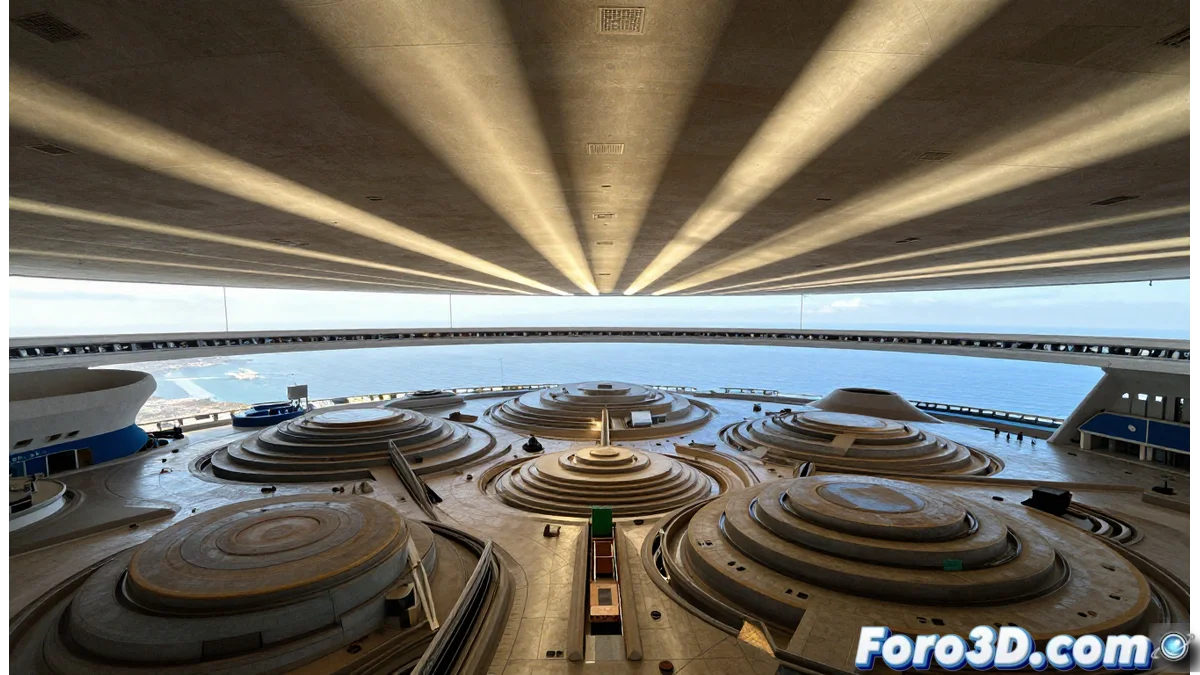
Upon penetrating Rama, the explorers do not find its creators, but a automated ecosystem of monumental scale. The interior is a dark cavity, where six beams of light act as artificial suns. A perfectly cylindrical sea surrounds the central axis, in an absolute silence that heightens the sense of mystery.
Key Findings from the Mission:- Geometric Cities: Sets of buildings with perfect hexagonal shapes that seem designed by an alien intelligence.
- The Biot: Biological-mechanical creatures that perform maintenance tasks, like organic robots without apparent consciousness.
- The Islands: Structures in the cylindrical sea that add another layer of complexity to the environment, without a clear function.
"Sometimes, the universe is not interested in giving us the answers, only in showing us how small our knowledge is."
Science Facing the Incomprehensible
Arthur C. Clarke builds a narrative where direct conflict shines by its absence. Instead, he privileges the scientific process: mapping, measuring, hypothesizing. Rama behaves like a transit spacecraft, completely autonomous, indifferent to its temporary observers.
Characteristics of the Exploration:- Pure Observation: The crew can only document and analyze, without the possibility of interacting with a creating intelligence.
- Constant Speculation: Each new datum generates more questions about the origin, purpose, and destination of Rama.
- Open Ending: After using solar energy to recharge its systems, the cylinder resumes its interstellar journey and disappears, taking the enigma with it.
The Legacy of the Encounter
The novel leaves a deep mark by presenting a first contact that is not a dialogue, but a monumental exhibition. The underlying message is powerful: the cosmos contains wonders that may surpass our capacity to comprehend them, and the true discovery sometimes lies in learning to accept the mystery 🚀.