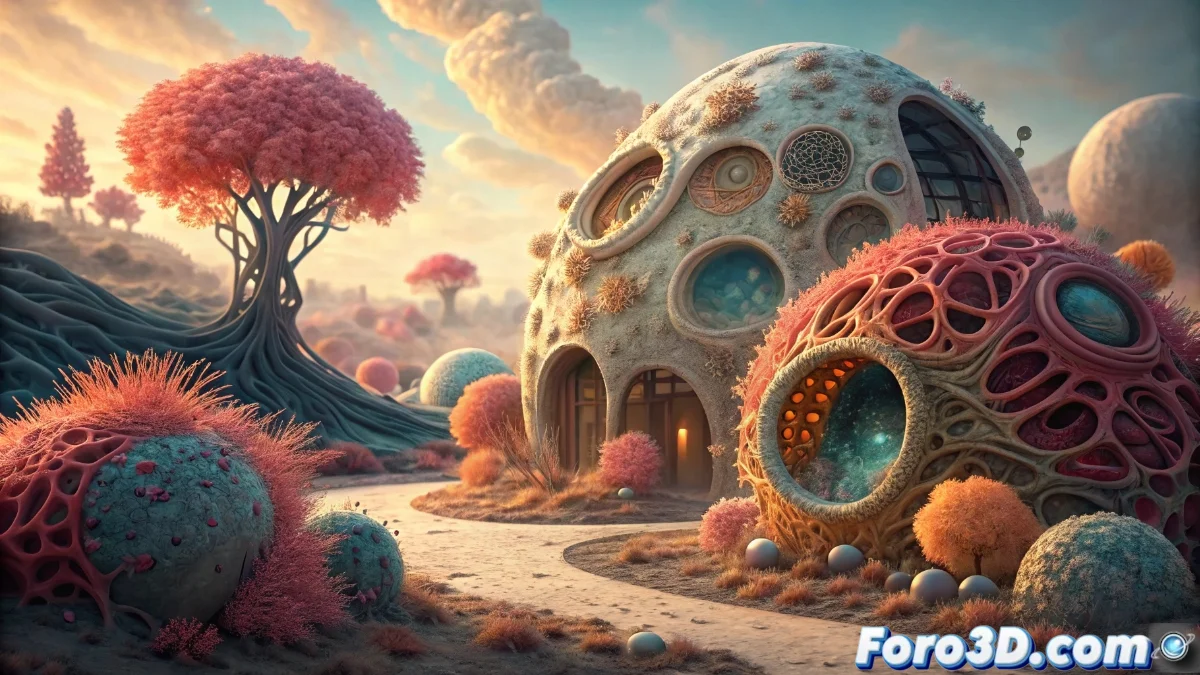
Experimental Techniques in 3D Modeling for Innovative Results
Exploring unconventional methods in the field of three-dimensional modeling represents a gateway to surprising visual discoveries that deeply enrich the creative process. By implementing abstract textures and unexpected deformations, digital artists can access formal and narrative universes that transcend traditional approaches, stimulating an unrestricted flow of ideas 🎨.
The Transformative Power of Abstract Textures
The integration of non-figurative surfaces within 3D environments has the unique ability to transform common elements into extraordinary visual experiences. Through the use of algorithmically generated images or photographs of real materials subjected to distortion processes, textures are created that convey emotions and add layers of perceptual complexity. The strategic combination of computational shaders with pictorial spill patterns or fractal structures generates dynamic backgrounds that inspire unique visual narratives, definitively breaking away from the monotony of predictable finishes ✨.
Practical Applications of Abstract Textures:- Generation of dynamic backgrounds using shaders and fractal patterns
- Creation of emotional surfaces using distorted captures of real materials
- Combination of procedural textures with pictorial elements for unique visual narratives
The best idea arises when you accidentally apply a deformation that transforms your model into something that looks like it came from a feverish dream, and you end up calling it advanced concept art.
Creative Deformations and Style Fusion
Unconventional distortions, achieved through non-linear mesh modifiers or the conscious fusion of seemingly incompatible artistic styles, produce hybrid forms that immediately capture the viewer's attention. Visualizing a classically inspired architectural model subjected to organic curves, or a hyperrealistic character integrated with low-poly components, represents the type of experimentation that leads to the discovery of fresh and differentiating aesthetics, especially valuable in visually saturated markets 🚀.
Strategies for Innovative Combinations:- Implementation of non-linear mesh modifiers for organic distortions
- Fusion of disparate styles like realism and low-poly in the same model
- Transformation of classical architecture through curves and unexpected deformations
The Value of Systematic Experimentation
The methodological experimental approach not only challenges established creative routines but fundamentally drives innovation in digital projects of all scales. This deliberate approach toward the unexpected and unconventional allows ideas to flow without restrictions, generating results that often exceed initial expectations and establish new aesthetic paradigms within the 3D modeling industry 💫.