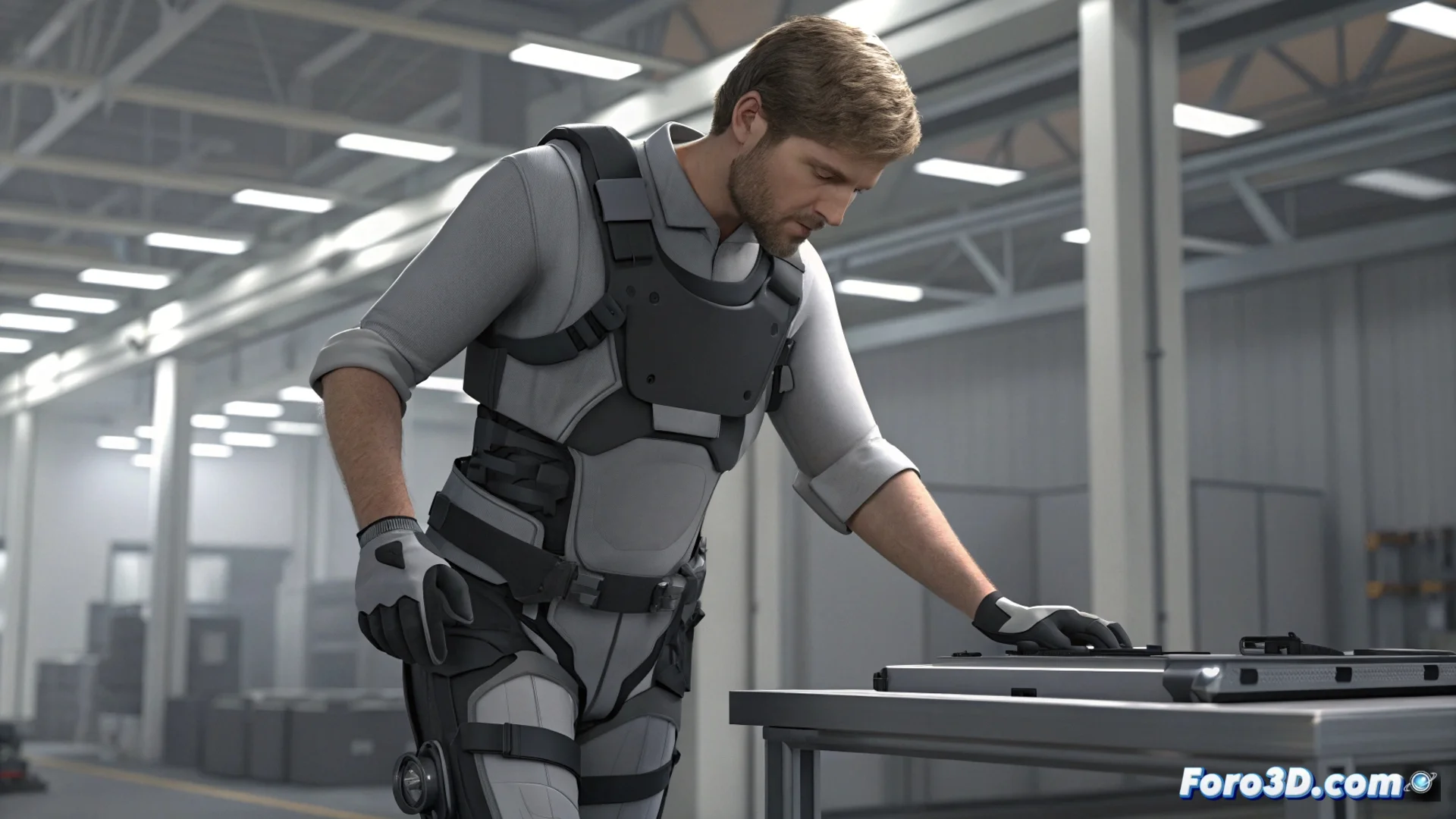
ExoSpin Designs a Passive Lumbar Exoskeleton for Torso Rotation
The company ExoSpin, spun off from a university, presents an innovative device: a rotary lumbar exoskeleton that operates without external power. Its goal is clear: to assist those who must repeatedly rotate their torso in their work, transferring part of the effort from the spine to the hip structure. This aims to protect one of the most vulnerable areas of the human body. 🔄
A Passive System that Harnesses Movement Energy
This passive exoskeleton stands out for not using motors, batteries, or power sources. Instead, it integrates elastic components and an ingenious mechanism that captures and stores energy when the person initiates a rotation. It then releases that stored energy to facilitate the return to the neutral posture or assist in the next torsion movement. It adjusts to the body and does not limit the natural range of motion, remaining discreet when its assistance is not needed.
Key Features of the Device:- Passive Operation: Does not require motors or batteries to function.
- Energy Storage Mechanism: Uses elastic components that capture the force of the rotation.
- Adaptive Assistance: Releases energy to help with the return or next rotation, without obstructing free movements.
The technology stems from research in biomechanics and soft robotics, seeking a symbiosis between human and machine.
Focus on Injury Prevention in Key Sectors
The device is designed for environments where rotation is a constant task. Its application focuses on industry and the healthcare sector, areas with a high incidence of injuries from repetitive movements. By reducing the load on the lumbar muscles, it aims to decrease accumulated fatigue and the risk of long-term damage.
Main Areas of Application:- Assembly and Packaging Lines: Where workers frequently rotate to handle objects.
- Healthcare Assistance: For nursing staff who must move or reposition patients.
- Logistics and Warehouses: In picking tasks and manual handling of loads with torsion.
A Development with Impact on Workplace Ergonomics
ExoSpin represents a practical approach to a common ergonomic problem. By transferring mechanical load from the spine to the hips, it acts as a passive shield for the lumbar area. Its passive design ensures it is a lightweight and non-invasive tool that assists only when the movement pattern it was designed for is detected. Perhaps the biggest twist is how natural its use feels until the moment it is removed. 🛡️